
Light
Filtered Sun
Filtered or indirect sunlight is best; avoid harsh afternoon sun to prevent sunburn.
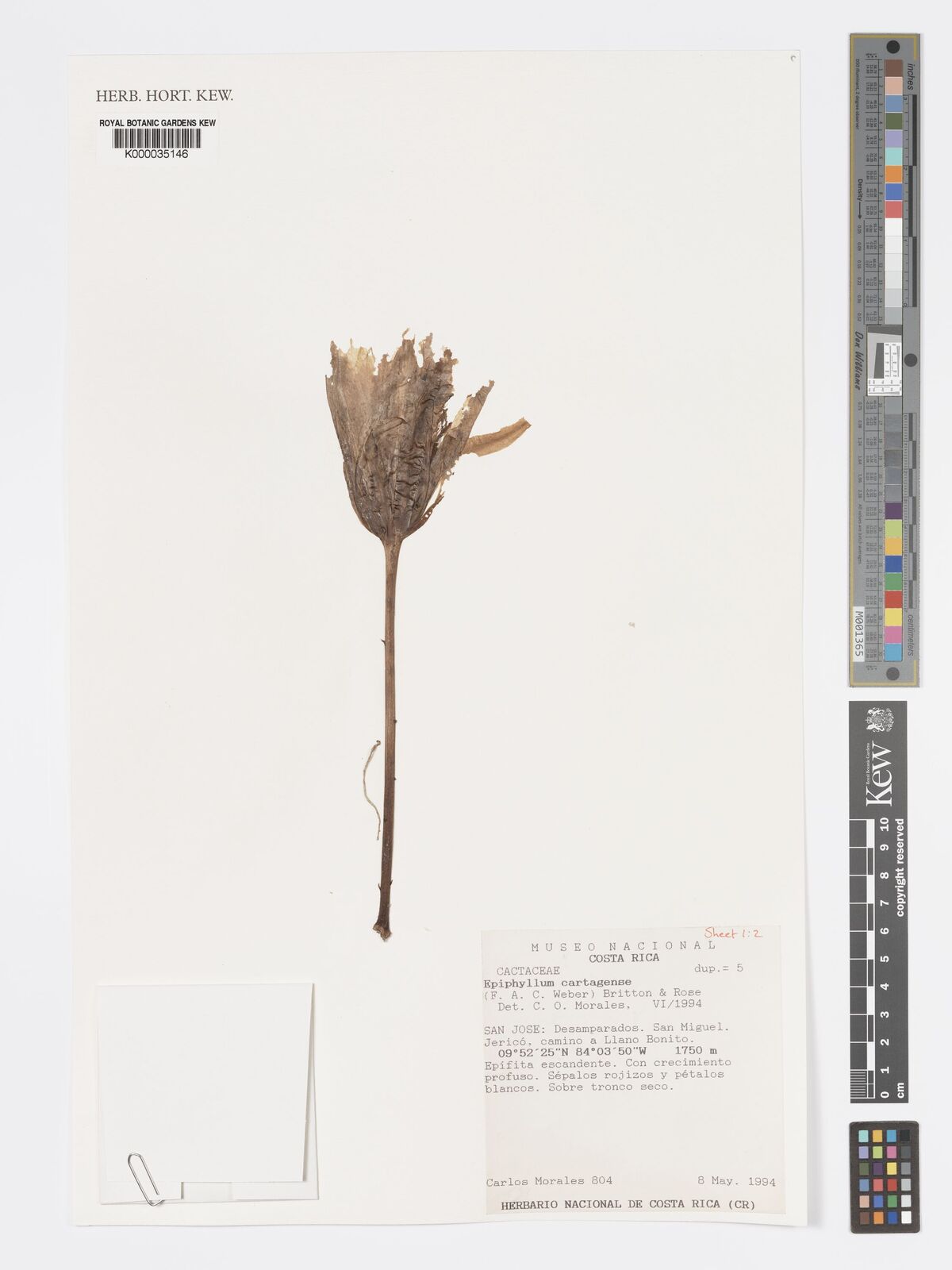 Reference image
Cartago Orchid Cactus
Epiphyllum cartagense is a captivating, night-blooming epiphytic cactus belonging to the Cactaceae family 1. Commonly referred to as an orchid cactus, this plant grows on tree trunks in wet tropical forests, relying on high humidity and dappled light.
The species was historically documented by leading cactus taxonomists and derives its specific epithet cartagense from Cartago, a province in Costa Rica where it was famously collected 2. The genus name Epiphyllum comes from Greek, meaning 'upon the leaf,' referencing the flowers that appear to bloom from leaf-like stems.
This species is native to Central and Southern America, specifically abundant in Costa Rica and Panama 1. It thrives as an epiphyte in wet tropical biomes, clinging to mossy branches where organic debris accumulates.
It features flattened, leaf-like green stems with lobed or wavy margins. The nocturnal flowers are large, fragrant, and predominantly white or cream, sometimes flanked by yellowish or reddish outer tepals 2.
Unlike desert cacti, Epiphyllum cartagense requires filtered sunlight and moderate to high humidity. It thrives in an airy, acidic soil mixture enriched with orchid bark, perlite, and peat. Water when the top inch of the soil feels dry, ensuring excellent drainage.
Overwatering and poor soil drainage are the most common causes of root rot. Conversely, keeping the plant under direct, harsh sunlight will scorch the delicate stems, while complete dehydration leads to shriveled growth.
Filtered or indirect sunlight is best; avoid harsh afternoon sun to prevent sunburn.
Water thoroughly once the top inch of soil dries; reduce frequency in winter.
Use a well-aerated, free-draining medium rich in organic matter and orchid bark.
Completely non-toxic and safe to keep around cats, dogs, and other pets.
Moderate difficulty; success depends on keeping humidity levels up and soil draining well.
Native to the wet tropical forests of Central America, this plant lives high up on host trees, benefiting from the consistent moisture and filtered forest light.
