
Light
Filtered Sun
Thrives in bright, indirect light or filtered sun; shield from direct afternoon rays.
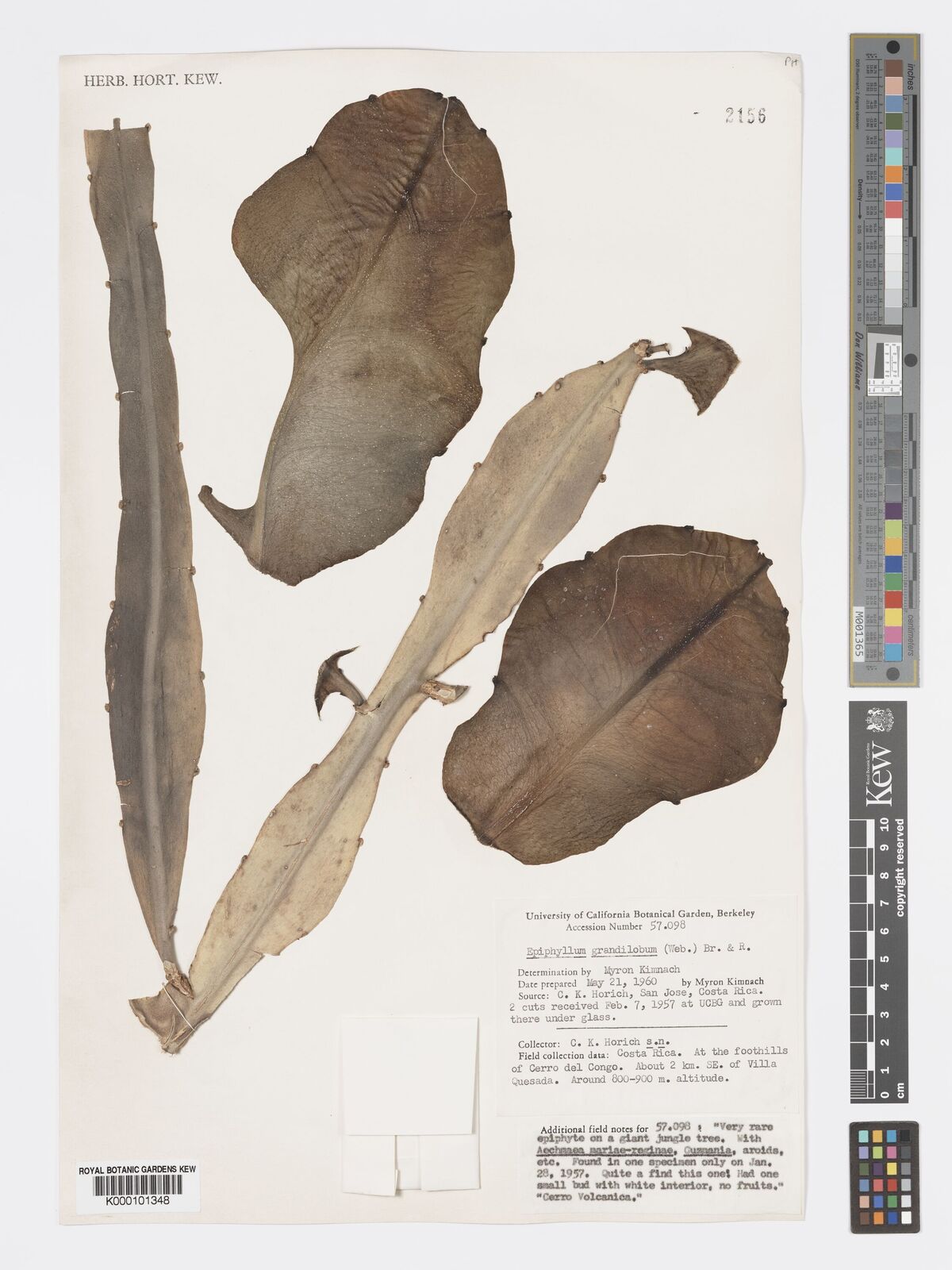 Reference image
Large-Lobed Orchid Cactus
Epiphyllum grandilobum is a striking epiphytic cactus species belonging to the family Cactaceae, highly recognized for its deeply lobed, leaf-like flattened stems and nocturnal blooming habits 1. Unlike typical terrestrial desert cacti, this tropical epiphyte thrives on tree branches in rainforest canopies.
Within the genus Epiphyllum, it is classified under the tribe Hylocereeae. The specific epithet grandilobum originates from Latin, translating to 'large lobes,' directly describing the deeply scalloped margins of its vegetative stems 2. It is commonly known as the large-lobed orchid cactus.
This species is native to the wet tropical biomes of Central and Southern America, specifically occurring in Costa Rica, Nicaragua, and Panama 1. It grows as an epiphyte in humid, shaded lowland forests, often near watercourses where air moisture levels remain constantly elevated.
The primary stems are flat, fleshy, and bright green, exhibiting remarkable deeply lobed margins that give them an oak-leaf appearance. Its nocturnal flowers are large, fragrant, white to cream-colored, designed to attract moth pollinators during the night 2.
In cultivation, it requires conditions mimicking its tropical canopy habitat. Bright, filtered light is essential, as direct midday sun can scorch the delicate epidermis. The growing medium must be highly porous, such as a coarse mix of orchid bark and perlite, ensuring superb aeration around the roots.
The most prevalent issue is overwatering coupled with dense soil, leading to root rot 1. Low humidity environments can also cause stem shriveling and slow growth.
Thrives in bright, indirect light or filtered sun; shield from direct afternoon rays.
Water thoroughly once the topsoil dries out; reduce frequency during winter months.
Requires an airy, organic-rich orchid bark and perlite mix with excellent drainage.
Non-toxic to cats, dogs, and humans, making it a safe indoor plant option.
Moderate care level, requiring high humidity and careful watering to prevent rot.
Native to the wet tropical rainforests of Costa Rica, Nicaragua, and Panama, where it grows as an epiphyte nestled in the humid canopies of tall forest trees.
