
Light
Filtered Sun
Filtered bright light or partial shade. Avoid direct scorching sunlight.
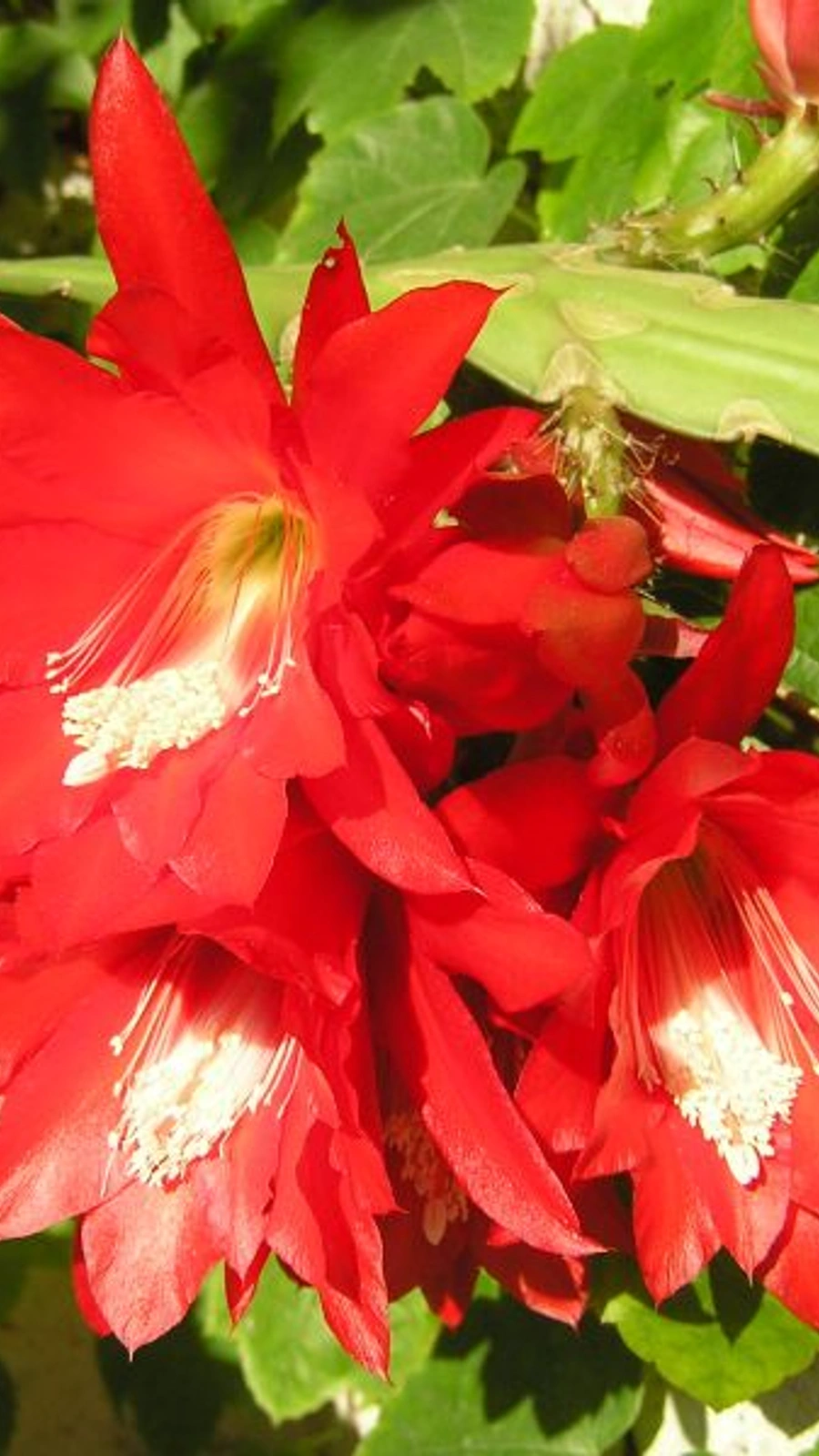 Reference image
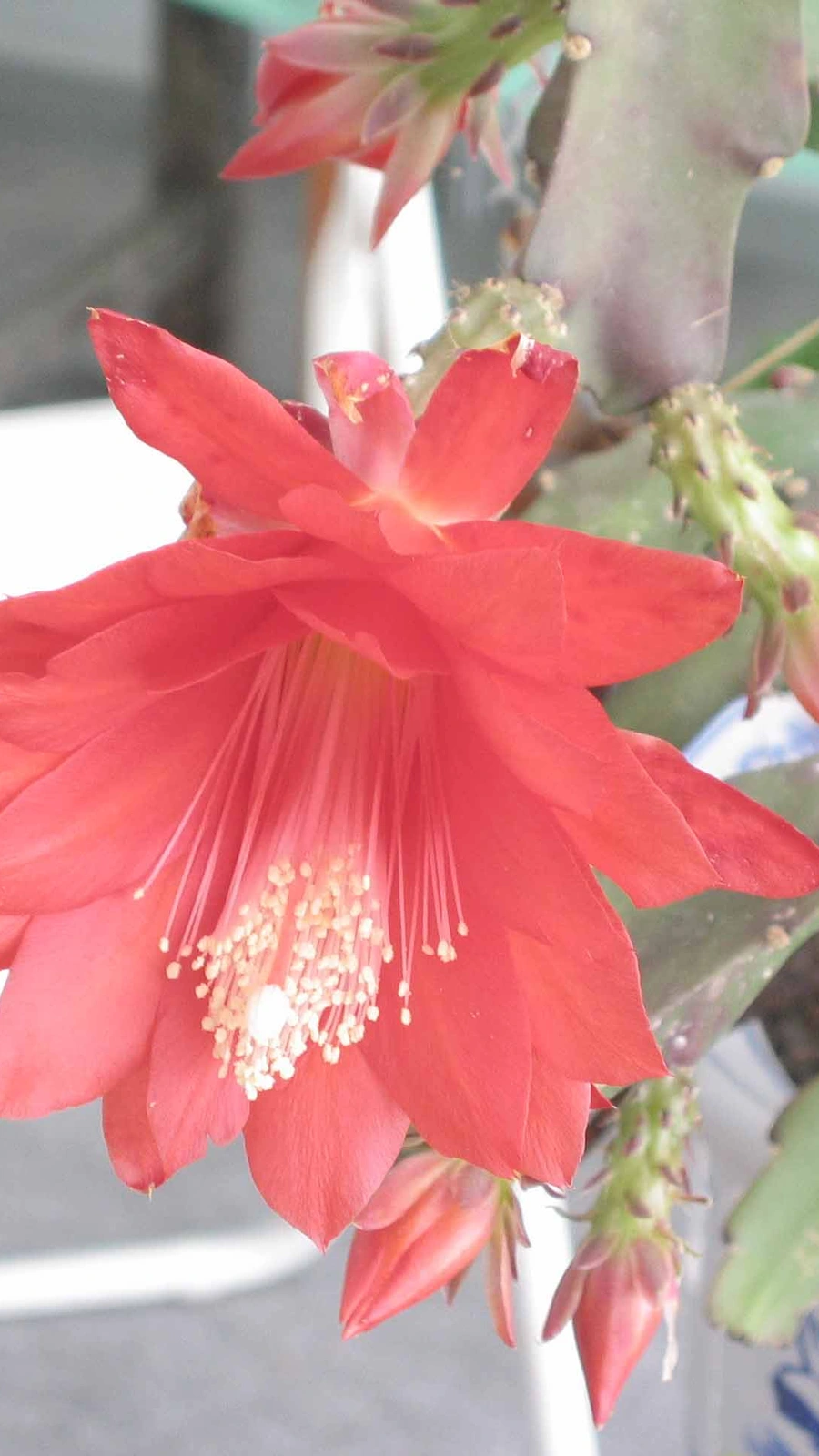 Reference image
Red Orchid Cactus
Epiphyllum × jenkinsonii is a highly celebrated epiphytic hybrid cactus belonging to the family Cactaceae. Famed for its spectacular, fiery red blooms, this classic cultivar is a favorite worldwide for hanging baskets and indoor culture 1.
Scientifically designated as Epiphyllum × jenkinsonii (often referred to under Disocactus × jenkinsonii), this plant is a historical hybrid primarily resulting from the cross-breeding of Disocactus phyllanthoides and Disocactus speciosus 2. It is commonly referred to as the Orchid Cactus.
As an artificial hybrid, it does not possess a wild native range. Its parental species, however, hail from the lush, humid tropical forests of Central and South America, where they grow non-parasitically on tree branches (epiphytes) or rocky cliffs 1.
It features long, flattened, leaf-like green stems with scalloped margins that gracefully arch and trail over time. In late spring, giant, funnel-shaped, radiant scarlet flowers emerge from the margins, creating a breathtaking display 2.
Unlike desert cacti, it thrives in bright, filtered light and high humidity. It requires a coarse, porous potting medium rich in organic matter that mimics its natural canopy environment. Thorough watering should be done only when the top layers of soil dry out 1.
Overwatering and using heavy, dense soils are the primary causes of root rot. In addition, failing to provide a cooler winter resting period often leads to poor budding and lack of flowers in spring 2.
Filtered bright light or partial shade. Avoid direct scorching sunlight.
Keep soil lightly moist in summer; allow to dry more in winter.
Loose, well-aerated mix with orchid bark, perlite, and organic peat.
Non-toxic to cats, dogs, and humans. Safe for household placement.
Very easy to care for once its light and watering needs are balanced.
This plant has no natural wild distribution. It is a horticulturally created hybrid whose parent species originate from the humid tropical forests of Central and South America.
