
Light
Bright Indirect Light
Prefers bright, indirect or filtered sunlight. Direct midday sun can scorch the stems.
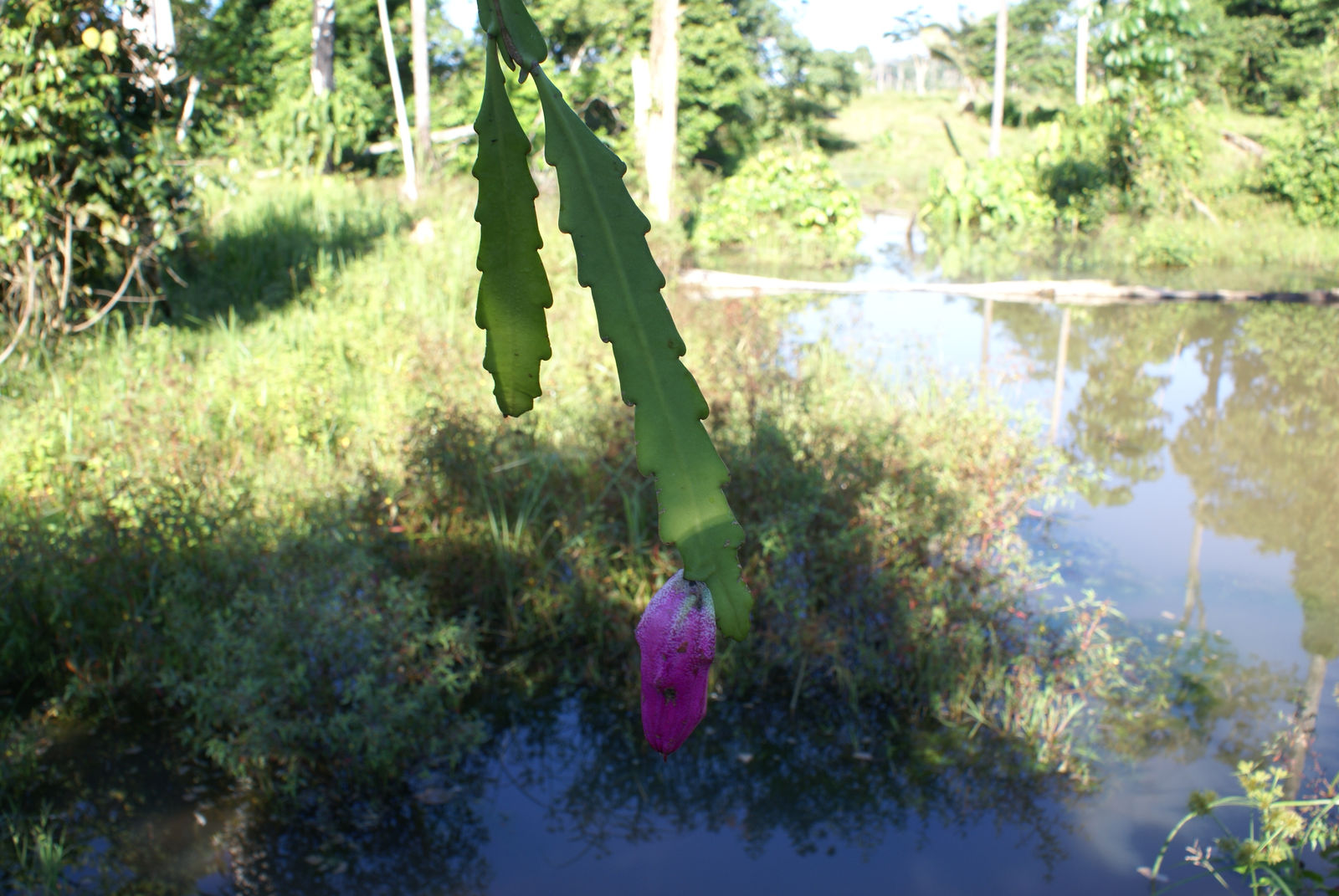 Reference image
Climbing Cactus
Epiphyllum phyllanthus is a striking epiphytic succulent belonging to the family Cactaceae 1. Commonly known as the climbing cactus, this species is highly valued among collectors for its flat, leaf-like photosynthetic stems and nocturnal, tubular flowers.
Originally described by Carl Linnaeus as Cactus phyllanthus, it was subsequently placed in the genus Epiphyllum 1. The generic name translates from Greek as 'upon the leaf', reflecting the peculiar way the floral tubes emerge from the margins of the leaf-like branches (cladodes).
This species enjoys a vast native range spanning from southern Mexico and the Caribbean through Central America down to tropical South America, including Brazil and Suriname 2. It thrives in seasonally dry tropical forests, growing non-parasitically on tree branches.
The plant features elongated, flat, and thin green stems with wavy or scalloped margins. Spines are practically absent in mature specimens. Its elegant white or cream flowers open at night, emitting a sweet fragrance to attract nocturnal pollinators, followed by bright pinkish-red fruits.
Unlike desert cacti, this forest epiphyte requires bright, indirect light and moderate to high humidity. The growing medium must be highly porous yet organic, kept lightly moist during the growing season and drier in the winter.
Overwatering in heavy, compacted soil leads rapidly to root rot. Conversely, keeping the plant in bone-dry conditions under direct, scorching sunlight causes severe sunburn and stem shriveling.
Prefers bright, indirect or filtered sunlight. Direct midday sun can scorch the stems.
Water thoroughly once the top inch of soil is dry. Reduce watering in winter.
Thrives in a chunky, well-draining mix containing peat, perlite, and orchid bark.
Non-toxic to cats, dogs, and humans. Safe for household cultivation.
Very easy to care for when provided with adequate humidity and aerated soil.
Naturally distributed across seasonally dry tropical biomes, extending from Southern Mexico through the Caribbean islands down to Brazil, growing as an epiphyte on host trees.
