
Light
Filtered Sun
Bright indirect or filtered sunlight. Protect from harsh midday sun.
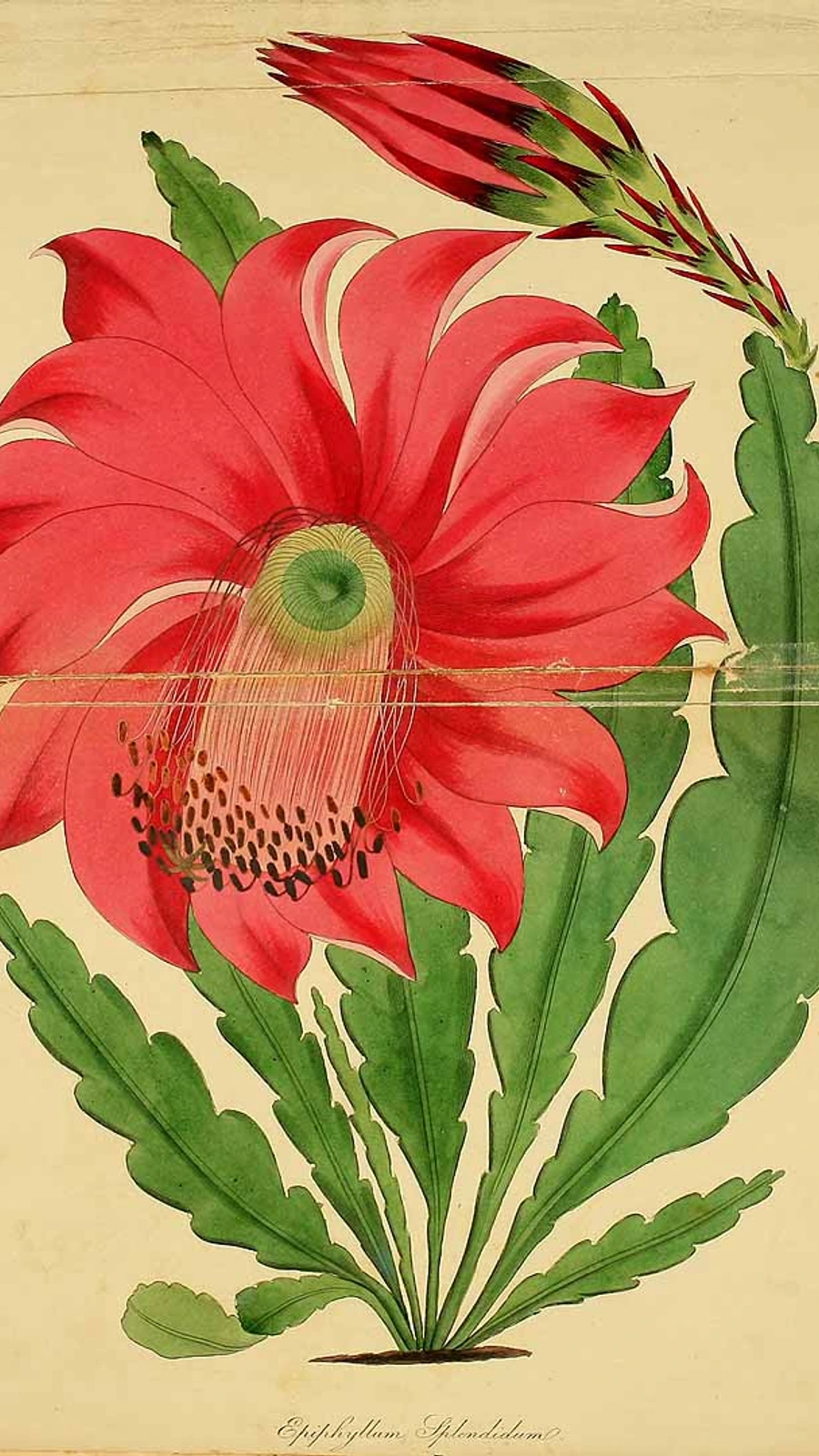 Reference image
Splendid Orchid Cactus
Epiphyllum × splendidum is one of the most stunning hybrid cultivars within the orchid cactus group. Celebrated for its massive, vibrant blossoms, this epiphytic cactus has secured a lasting spot among indoor plant collectors 1.
Belonging to the Cactaceae family and the genus Epiphyllum, this plant is a horticultural hybrid. The "×" in its botanical name represents its hybrid lineage, resulting from selective breeding of closely related tropical epiphytic species 2.
While this hybrid itself originates in cultivation, its parental species are native to the humid canopy systems of Central and Southern American rainforests. Unlike terrestrial desert cacti, it lives on tree trunks and requires higher atmospheric humidity 1.
It features flattened, leaf-like green stems with scalloped margins that cascade beautifully from hanging baskets. The absolute highlight of this plant is its giant, trumpet-shaped flowers, showcasing shades of brilliant orange, scarlet red, and deep pink during late spring 2.
It thrives under bright, filtered sunlight, mimicking the dappled shade of forest canopies. The medium should be rich in organic matter but exceptionally fast-draining, such as an orchid bark mix. Regular watering is vital during the growing phase 1.
Treating it like a desert cactus by letting it dry out completely for long periods will lead to shriveled stems and bud drop, while heavy clay soil leads to root rot.
Bright indirect or filtered sunlight. Protect from harsh midday sun.
Keep soil lightly moist during the growing season; allow to dry slightly in winter.
Aerate-rich, fast-draining orchid bark and perlite compost.
Non-toxic and safe for dogs, cats, and humans. Virtually spineless.
Easy to moderate. Highly rewarding when correct winter rest is provided.
This is a cultivated hybrid of tropical epiphytic cacti, whose wild ancestors originate from the lush rainforests of Central and South America.
