
Light
Filtered Sun
Avoid harsh direct afternoon sun; dappled shade or bright indirect light behind a sheer curtain is optimal.
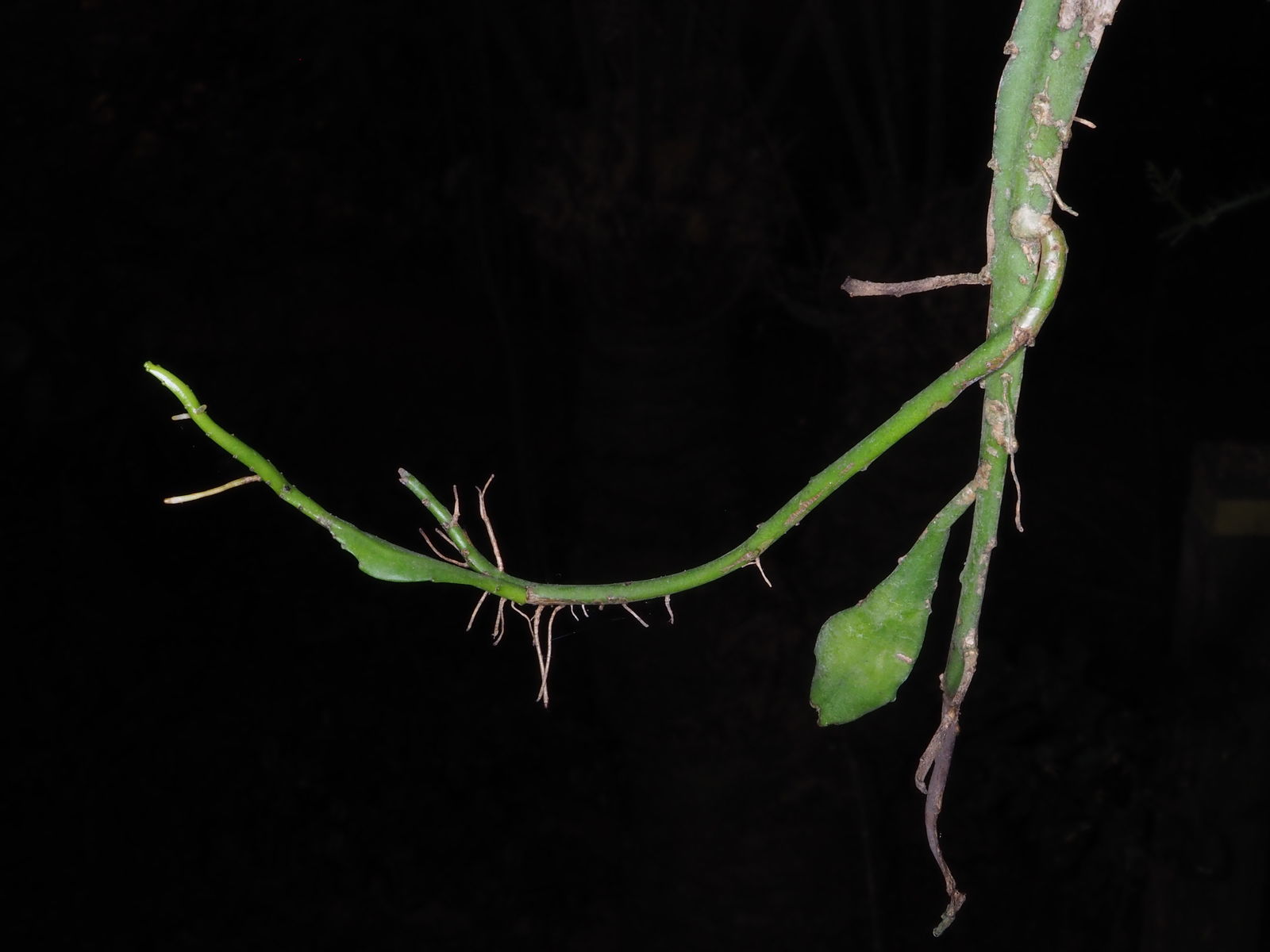 Reference image
Thomas' Orchid Cactus
Epiphyllum thomasianum is a majestic epiphytic cactus belonging to the family Cactaceae, famous for its giant, nocturnal white flowers and arching, leaf-like flattened stems 1.
The species was formally described and placed in the genus Epiphyllum, which derives from the Greek words 'epi' (upon) and 'phyllon' (leaf), referring to flowers arising from leaf-like stems 1. It is commonly known as Thomas' Orchid Cactus.
This succulent epiphyte is native to a broad range spanning from southern Mexico through Guatemala, Honduras, Nicaragua, Panama, and into parts of Colombia 2. It thrives in seasonally dry tropical forests, growing on tree trunks.
It features long, flattened, leaf-like stems that are woody at the base. The spectacular nocturnal flowers can reach impressive sizes, boasting golden-bronze outer tepals and pure white inner petals, releasing a strong, sweet fragrance to attract pollinators.
Unlike desert cacti, E. thomasianum requires filtered light, high humidity, and a rich, highly aerated growing medium. Regular watering is necessary during active growth in spring and summer, with a dry cool rest period in winter 2.
Overwatering in dense, heavy soils leads rapidly to root rot. Conversely, keeping the substrate bone-dry for extended periods during the growing season will stunt growth and shrivel the stems.
Avoid harsh direct afternoon sun; dappled shade or bright indirect light behind a sheer curtain is optimal.
Water thoroughly once the top soil layer dries out. Let the soil dry almost completely in winter.
Requires a highly porous, organic-rich epiphytic mix with orchid bark and peat.
Non-toxic to cats and dogs, making it a very safe addition to pet-friendly homes.
Moderate; requires slightly more attention to moisture and humidity than desert cacti.
Native to the tropical humid forests extending from southern Mexico through Central American countries including Guatemala, Honduras, Nicaragua, and Panama, reaching northern Colombia.
