
Light
Bright Indirect Light
Requires bright, filtered sunlight. Protect from extreme, scorching midday sun behind glass in peak summer.
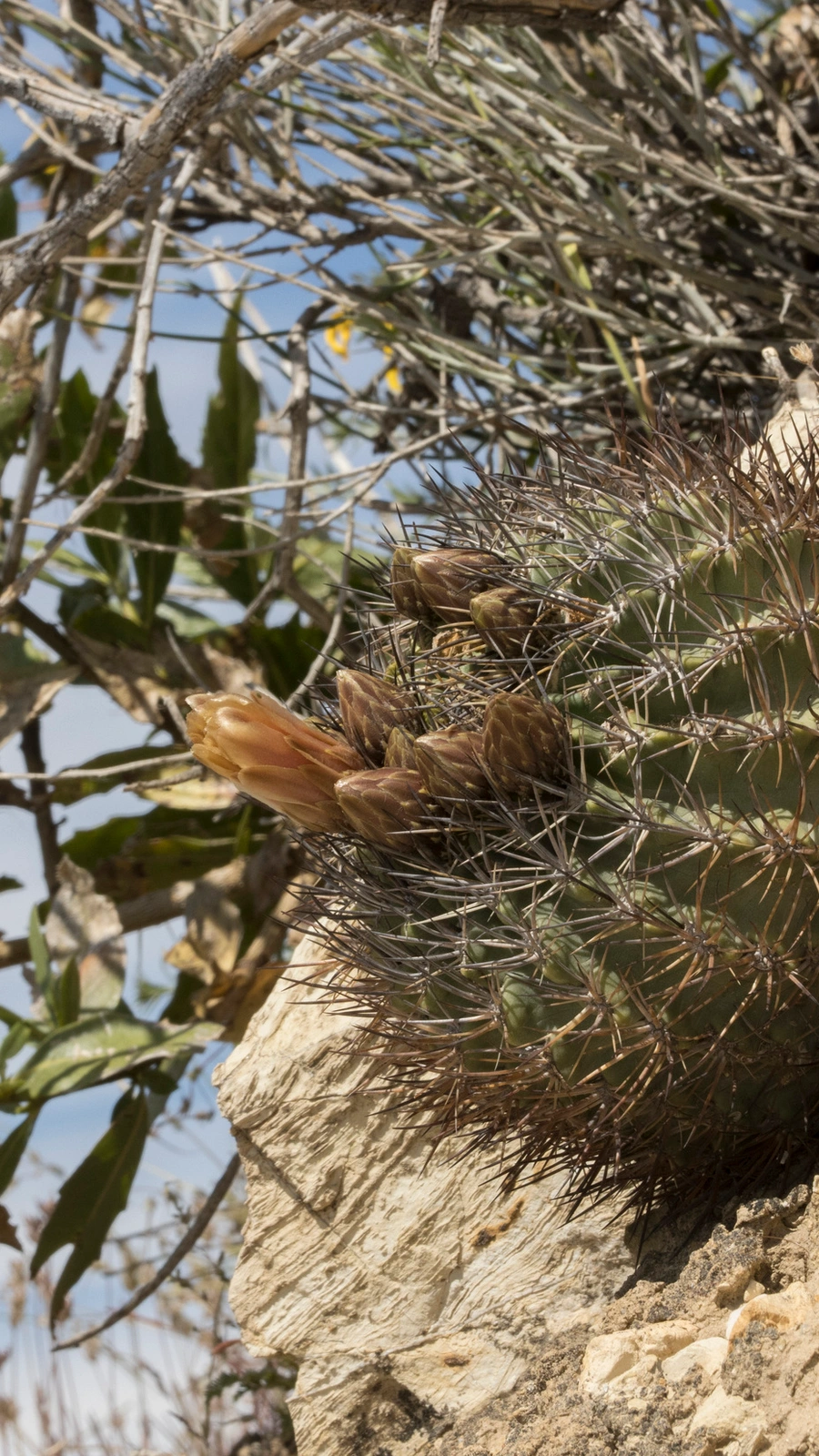 Reference image
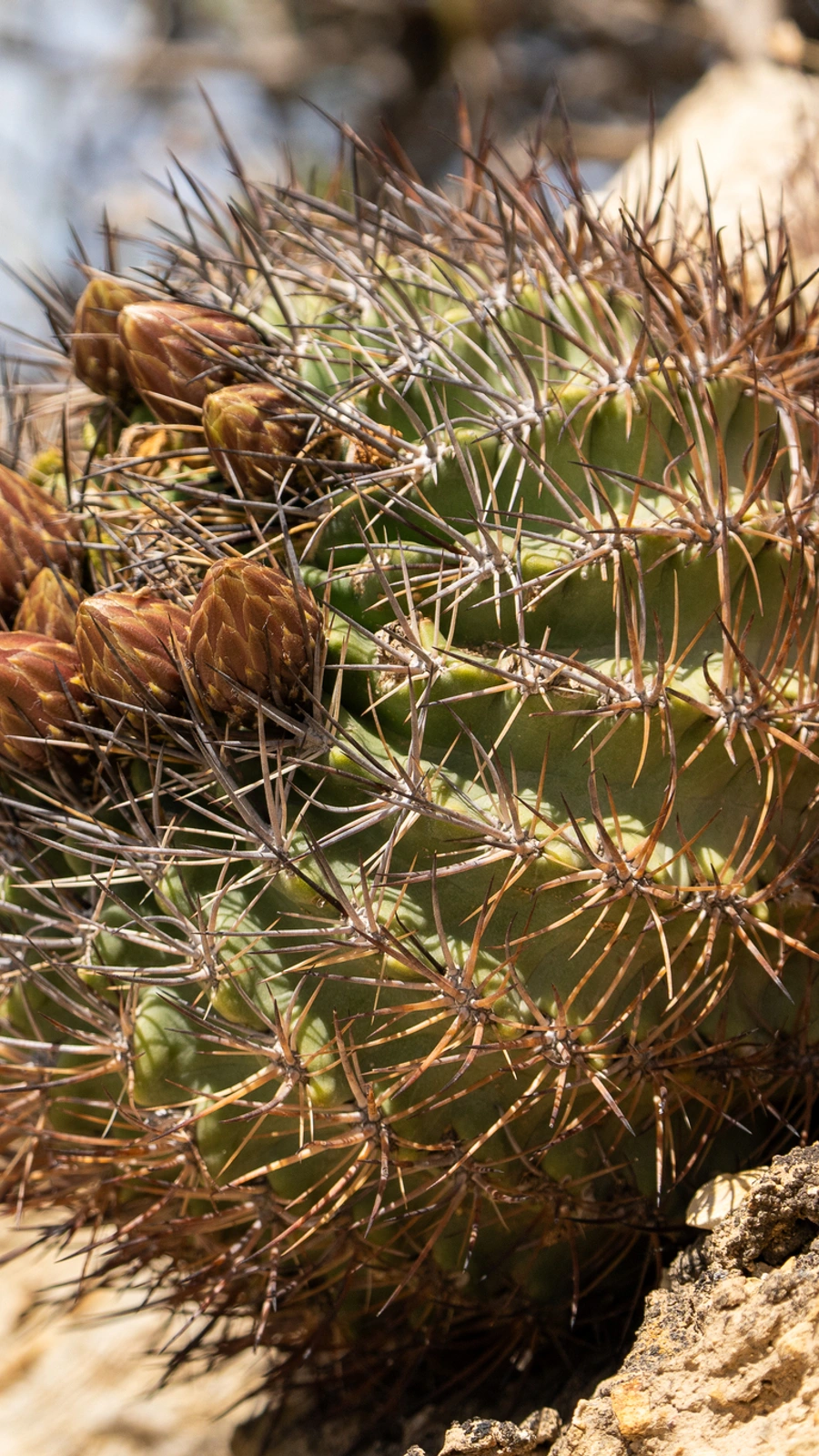 Reference image
Aconcagua Eriosyce
Eriosyce aconcaguensis is a distinctive and highly sought-after member of the Cactaceae family, native to the rugged mountainous terrains of South America. Known as a succulent subshrub, it forms a globose to short cylindrical body heavily armed with spines, adapted to survive extreme droughts and high diurnal temperature swings 1.
This species was originally described under different genera before modern phylogenetic and morphological studies consolidated it into the broad genus Eriosyce 2. The specific epithet "aconcaguensis" honors the geographic region near Mount Aconcagua, the highest peak in the Western Hemisphere, which straddles the Chile-Argentina border.
Its native range is concentrated in central Chile, spanning regions like Valparaíso, Coquimbo, and Santiago 1. It thrives in subtropical, semi-arid high-altitude habitats, clinging to rocky slopes, gravelly flats, and volcanic soils. The environment is characterized by intense sunlight, dry air, and minimal annual precipitation.
Eriosyce aconcaguensis typically grows solitary, displaying a flattened globose to ovoid body with a greyish-green to dark matte green epidermis. It features prominent vertical ribs adorned with dense, rigid, and sometimes curved spines. During its blooming season, it produces funnel-shaped flowers ranging from pale yellow to creamy pink at the apical meristem 2.
In cultivation, it requires a very porous, mineral-rich potting medium with superb drainage. Water deeply during spring and summer only when the substrate has dried out completely. Over winter, it must be kept dry and cool to trigger dormancy and prevent root rot.
Overwatering is the primary cause of failure, leading to rapid root rot. Poor air circulation combined with high humidity and insufficient lighting will cause the plant to lose its compact shape, a condition known as etiolation.
Requires bright, filtered sunlight. Protect from extreme, scorching midday sun behind glass in peak summer.
Let the soil dry out completely between waterings. Halt watering entirely during the winter.
Use a low-organic, mineral-based cactus mix containing abundant pumice, perlite, and coarse sand.
Non-toxic, but sharp and stiff spines can cause physical injury to curious pets and children.
Moderately demanding due to its sensitivity to overwatering and strict requirement for a dry winter rest.
Native to the high-altitude, semi-arid Andean slopes of central Chile, primarily growing on well-draining volcanic gravel and rocky outcrops.
