
Light
Bright Indirect Light
Requires bright, filtered sunlight. Protect from intense, scorching afternoon sun in mid-summer.
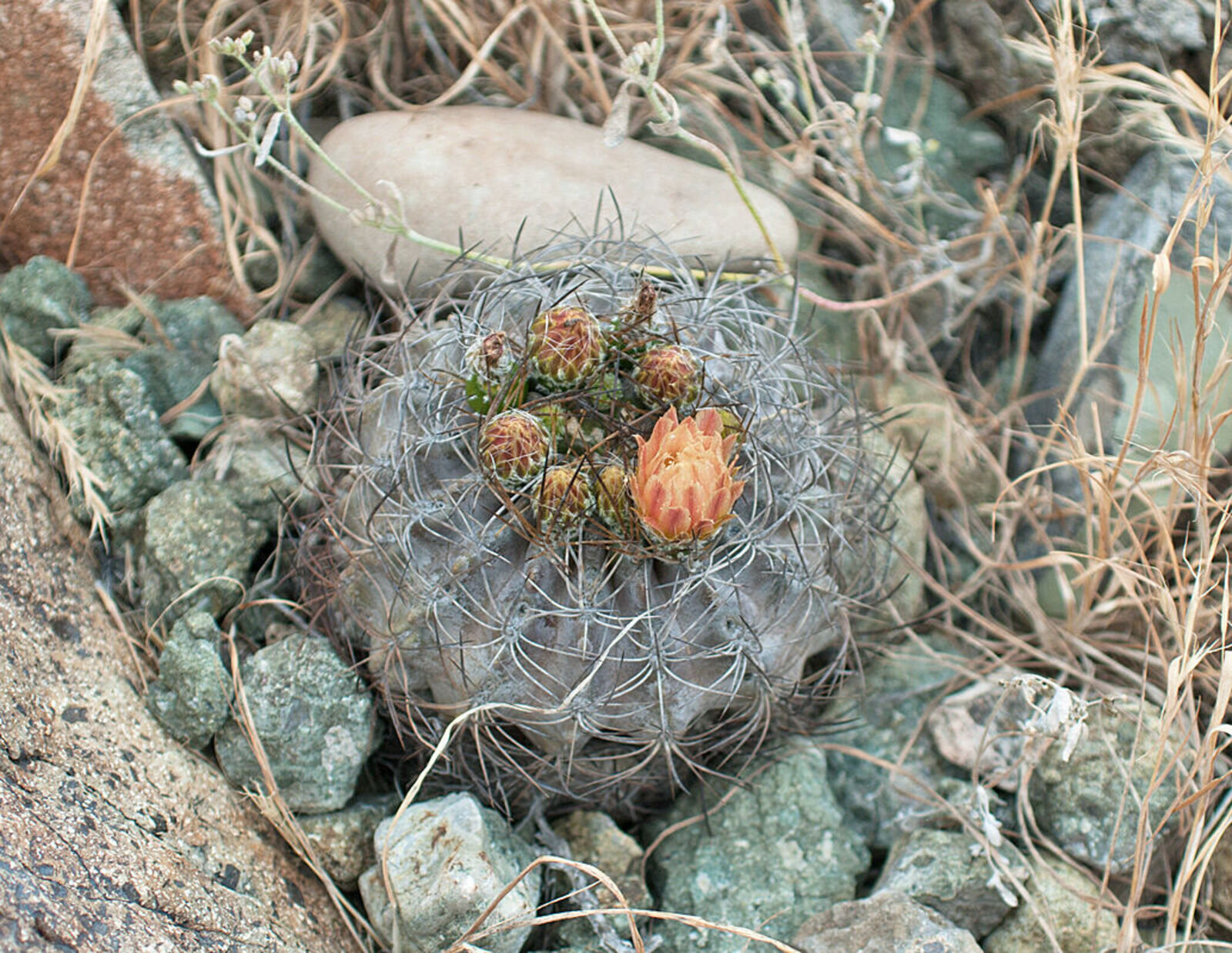 Reference image
Eriosyce atroviridis is an exquisite, slow-growing cactus species native to the arid desert regions of Chile. Characterized by its dark, almost black-green globose stem, this plant is highly prized among succulent enthusiasts for its rugged texture and unique presentation 1.
Belonging to the family Cactaceae, the species epithet 'atroviridis' combines the Latin words for 'dark' and 'green'. Over time, the taxonomy of Eriosyce has absorbed several former genera (like Pyrrhocactus and Neoporteria), but this species remains recognized under its current name 2.
This species is restricted to the arid and semi-arid regions of northern and central Chile, particularly within the Atacama and Coquimbo administrative zones 1. It thrives on steep, rocky hillsides where rainwater is sparse, relying heavily on the coastal fog locally known as 'Camanchaca'.
Eriosyce atroviridis forms a single, globose to short-columnar succulent subshrub. Its epidermis is typically a very dark grayish-green, sometimes turning purplish in intense light. The ribs are deeply notched into distinct tubercles, adorned with rigid, dark spines. It produces funnel-shaped flowers ranging from cream to soft pinkish-yellow 1.
In cultivation, this cactus requires excellent drainage and a high-mineral potting medium. Watering must be done carefully, mimicking its dry desert environment. During the winter dormancy, the soil should be kept entirely dry, while a cool temperature range promotes healthy bud initiation 2.
The most prevalent issue is root rot caused by organic-rich soils that retain moisture for too long. Overwatering during winter and insufficient light—which leads to etiolation (stretching of the stem)—are also common mistakes.
Requires bright, filtered sunlight. Protect from intense, scorching afternoon sun in mid-summer.
Water thoroughly only when the soil is completely dry during spring/summer; keep bone-dry in winter.
Extremely porous mineral substrate with very low organic content, enriched with pumice and coarse grit.
Spiny stems can cause minor injury; keep out of reach of children and curious pets.
Moderate. Demands strict watering discipline and a cold, dry winter rest period.
Native to the coastal desert slopes of northern and central Chile, where it survives in exceptionally dry conditions, relying on the condensed moisture of maritime fogs.
