
Light
Full Sun
Requires at least 6-8 hours of direct, unfiltered sunlight daily to maintain spine density.
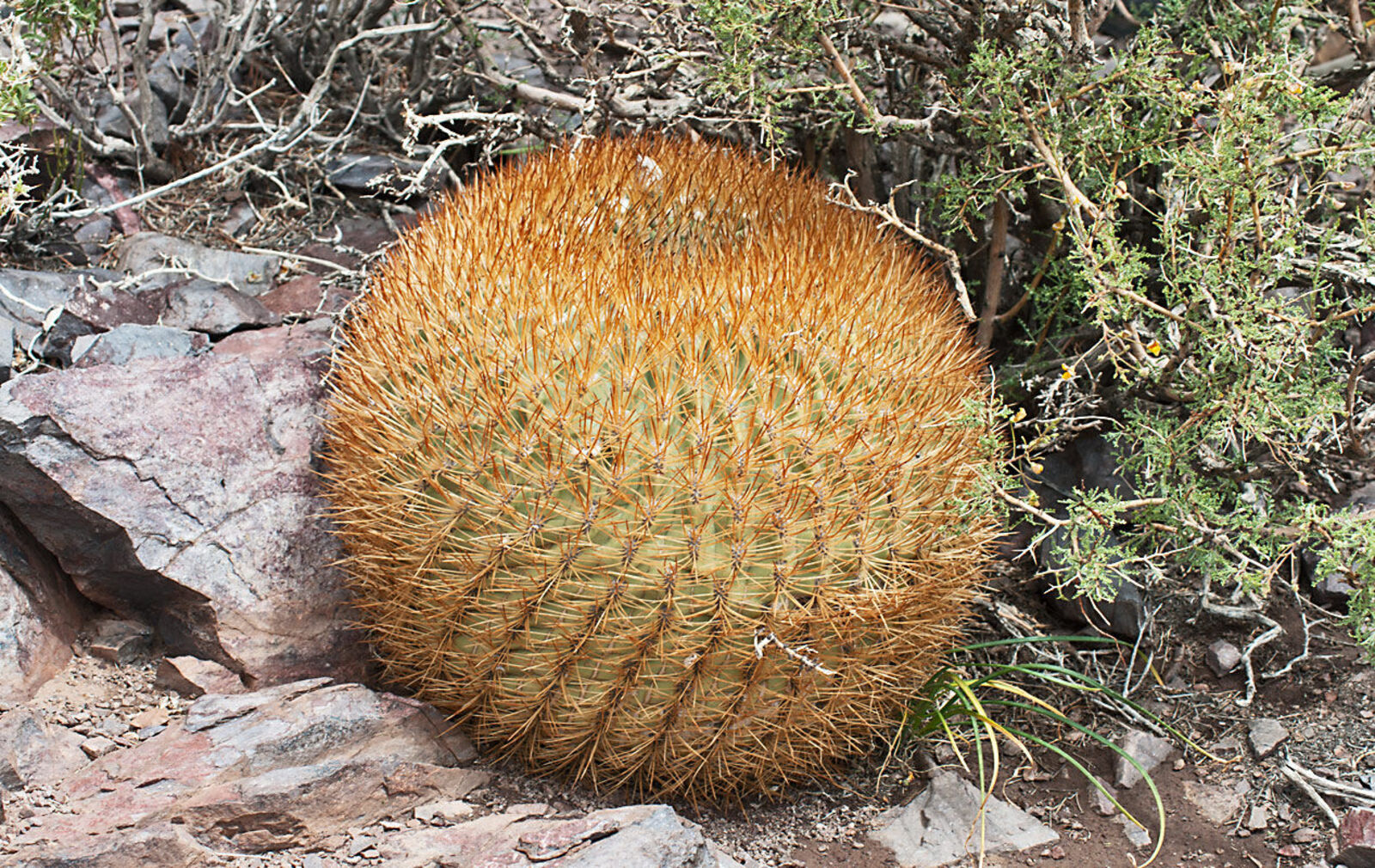 Reference image
Golden Sandkaktus
Eriosyce aurata is an iconic, slow-growing succulent subshrub in the Cactaceae family, renowned for its massive globose body clothed in dense golden-yellow spines. Adapted to extremely arid montane environments, this species is highly prized among succulent collectors for its sculptural form and challenging cultivation 1.
Belonging to the diverse genus Eriosyce, it was originally described under various synonyms before being established as Eriosyce aurata (Pfeiff.) Backeb. The specific epithet aurata translates from Latin as 'gilded' or 'golden', highlighting the brilliant yellow-orange coloration of its heavy, curved spines 2.
This cactus is endemic to the dry shrublands and semi-desert slopes of the Chilean Andes, spanning from the Coquimbo to the Valparaíso and Santiago regions. It thrives at elevations between 1000 and 2500 meters above sea level, anchored in rocky, mineral-rich crevices with exceptional gravity-fed drainage 1.
The stem is solitary, globose to short-cylindrical with age, reaching up to 50 cm or more in diameter. It features numerous ribs covered with large, woolly areoles. Each areole bears 16 to 20 thick, curved, golden-brown spines. In summer, mature specimens produce bell-shaped, yellow to reddish flowers heavily covered in wool and bristles at the apex 2.
Cultivating Eriosyce aurata requires meticulous care. It demands maximum sunlight, perfect ventilation, and an almost entirely mineral substrate. Watering should be highly restricted, matching the dry winter dormancy of its native Andean habitat 1.
The most frequent pitfall is overwatering coupled with organic-rich potting soil, which triggers rapid root rot. Insufficient light leads to etiolation, causing the plant to lose its compact shape and intense spine coloration.
Requires at least 6-8 hours of direct, unfiltered sunlight daily to maintain spine density.
Water only when the substrate is bone-dry. Keep completely dry in winter.
Use a 100% mineral mix composed of pumice, lava rock, and coarse sand.
Armed with very sharp, rigid spines. Keep away from pets and children.
Very slow-growing and highly sensitive to excess humidity; suited for expert growers.
Found naturally on the high-elevation, rocky slopes of the Andes in central Chile, where it survives under intense sun and minimal rainfall.
