
Light
Full Sun
Requires at least 6 hours of direct sun daily to maintain its form.
 Reference image
Chilean Eriosyce
Eriosyce chilensis is a highly sought-after, rare cactus species belonging to the family Cactaceae. Due to its very restricted natural habitat and anthropogenic pressures, it is classified as Critically Endangered on the IUCN Red List 1.
Originally described by Friedrich Ritter, it is classified under the diverse genus Eriosyce. The specific epithet "chilensis" refers to its native country of Chile. Common synonyms include Neoporteria chilensis and Pyrrhocactus chilensis 2.
This species is endemic to the coastal cliffs and dry rocky hillsides of central Chile, mainly spanning the Coquimbo and Valparaíso regions. It thrives in arid, coastal desert scrublands where morning coastal fogs, known locally as Camanchaca, provide essential moisture 1.
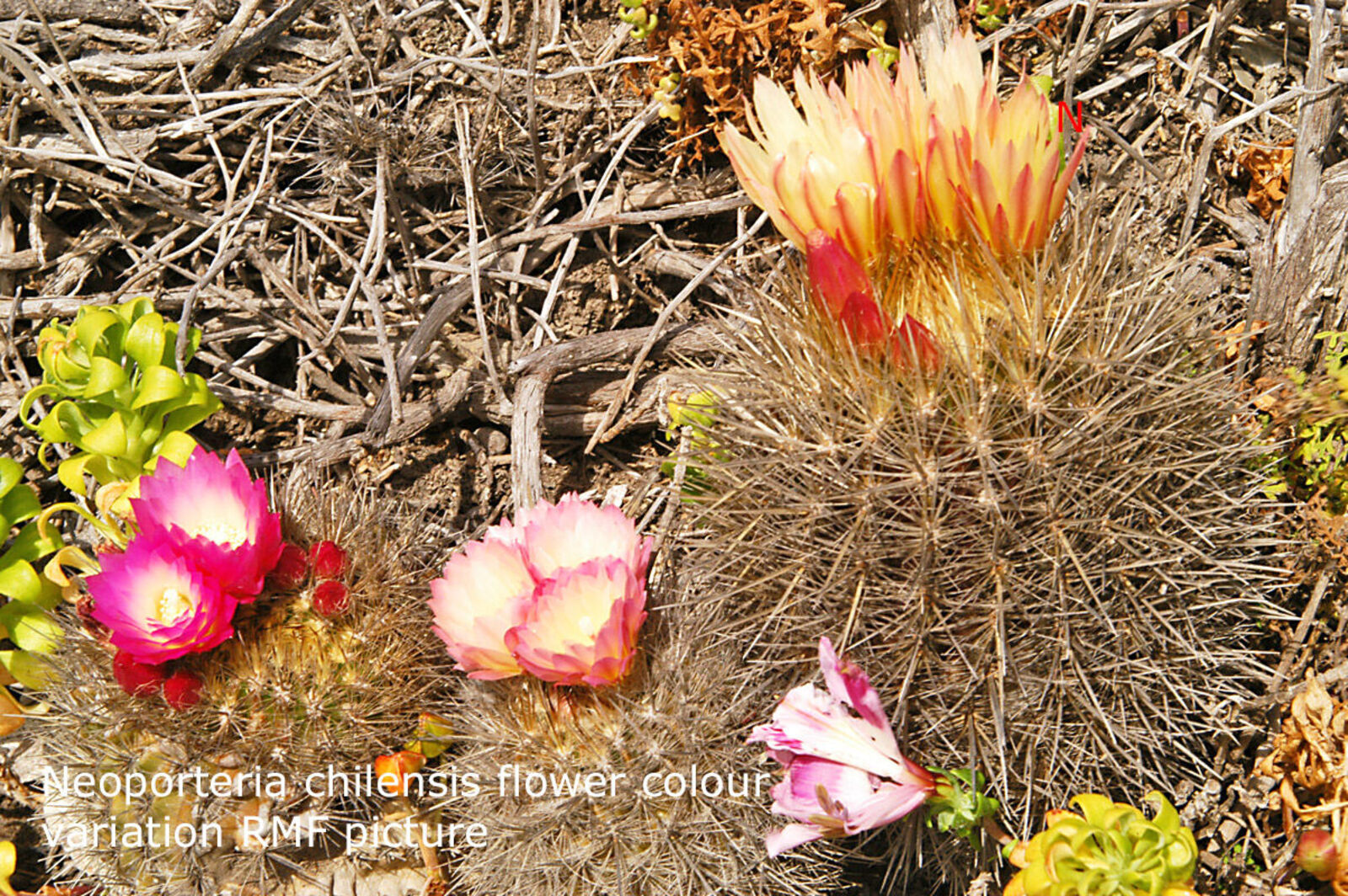
It grows as a succulent subshrub, initially globose and becoming cylindrical with age. The stem is green to grayish-green, featuring prominent ribs adorned with dense clusters of yellow to pale brown spines. During late spring to early summer, it produces beautiful funnel-shaped flowers ranging in color from pale yellow-green to soft pinkish tones at the apex 2.
In cultivation, it requires intense direct sunlight to maintain its compact shape and dense spination. Watering must be done with extreme care; the substrate must be highly porous and mineral-heavy. It needs a cold, completely dry winter dormancy to trigger successful spring flowering 2.
The most common issues are overwatering, which leads to immediate root rot, and insufficient light, which causes the cactus to stretch and weaken (etiolation).
Requires at least 6 hours of direct sun daily to maintain its form.
Allow soil to dry out completely. Keep dry in winter.
Highly inorganic, mineral-based cactus mix with plenty of pumice.
Non-toxic, but sharp spines can cause physical injury to pets and children.
Moderate difficulty due to strict watering and light requirements.
Endemic to the rugged coastal cliffs of central Chile, where it relies on the cool, moisture-laden ocean fogs of the Pacific to survive the arid climate.
