
Light
Full Sun
Requires full sun to maintain its compact shape and produce strong, dark spines.
 Reference image
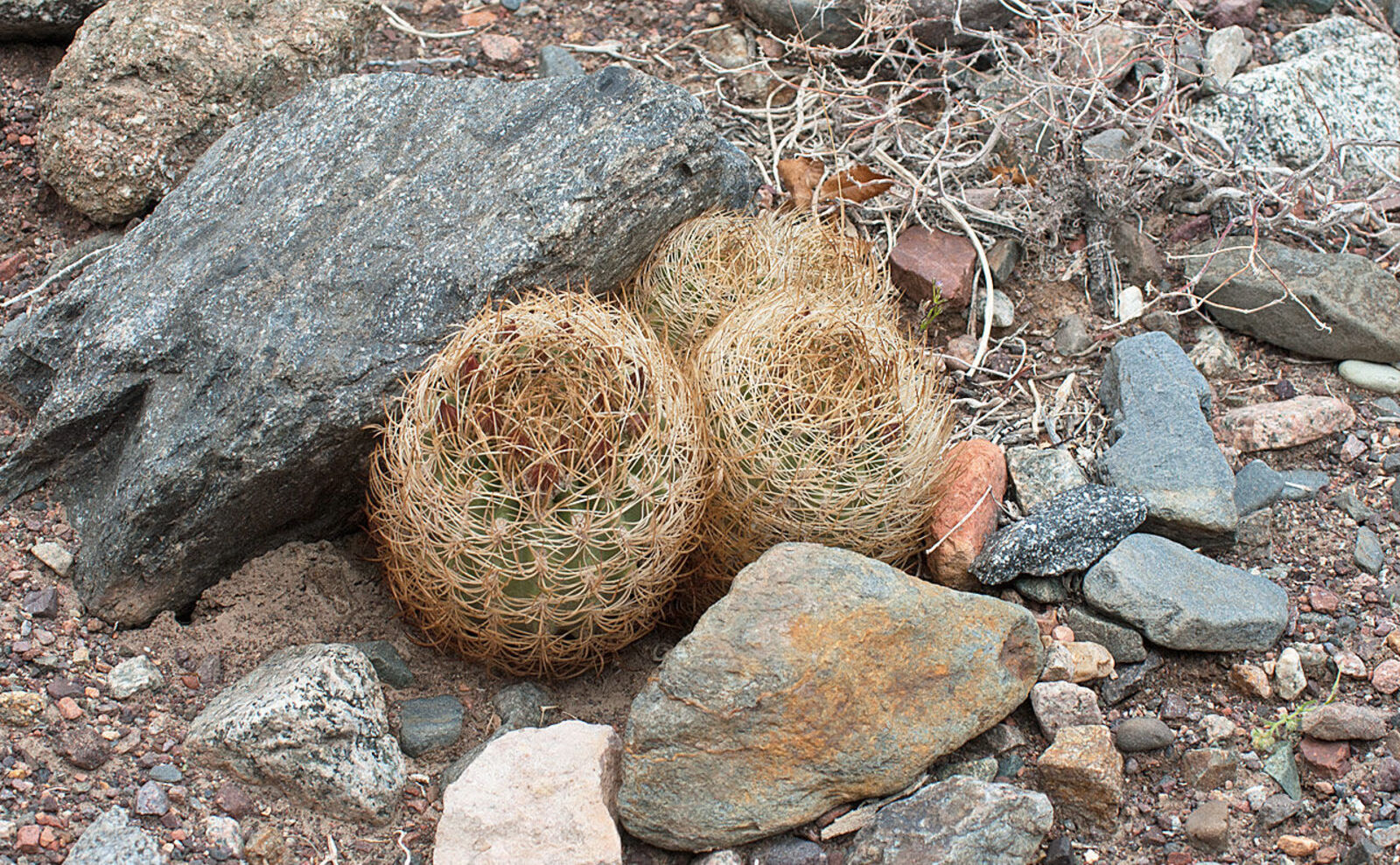
Eriosyce eriosyzoides is a slow-growing, globose to subcylindrical succulent cactus in the Cactaceae family. Known for its tough epidermis and remarkably dense, curved spine structure, this species is highly valued by collectors for its rugged, wild appearance and attractive flowers that emerge from woolly crown areoles 1.
Belonging to the diverse genus Eriosyce, this species has historically been classified under Pyrrhocactus and Horridocactus due to changing taxonomic classifications. The specific epithet eriosyzoides relates to the dense woolly and hairy character found on its floral tubes and apical meristem 2.
This species is native to northern and central Chile, specifically throughout the arid regions of Atacama and Coquimbo. It thrives in desert or dry shrubland biomes, clinging to steep, rocky mountain slopes and gravelly soils where water drains instantly 1.
The stem is solitary, deep green to grayish-green, and divided into numerous prominent ribs. The areoles are prominent, covered with thick whitish wool when young. Spines are stout, curved upward, ranging from dark brown to black, turning gray with age. Flowers are funnelform, varying from pale yellow to reddish, pushing through the dense wool at the apex.
In cultivation, it requires maximum light exposure and exceptional drainage. Full sun stimulates dense spine growth and healthy flowering. Water deeply only when the potting medium is bone dry, and suspend watering entirely in winter to respect its dormancy.
Overwatering and using heavy, clay-rich soil mixes are the leading causes of root and stem rot. Lack of ventilation combined with high humidity can also encourage fungal infections, while insufficient light leads to unsightly etiolation.
Requires full sun to maintain its compact shape and produce strong, dark spines.
Water strictly on a soak-and-dry cycle; keep completely dry during the cold winter dormancy.
Highly porous mineral mix composed of pumice, lava rock, and coarse sand.
Non-toxic, but features extremely sharp spines that can cause physical injury.
Moderate. Easy if kept dry and sunny, but highly sensitive to overwatering.
Native to the arid slopes of the Andes and coastal hills of Chile, adapting to gravelly soils, low rainfall, and intense solar radiation.
