
Light
Bright Indirect Light
Requires bright light with some direct sun to maintain compact growth and dense spination.
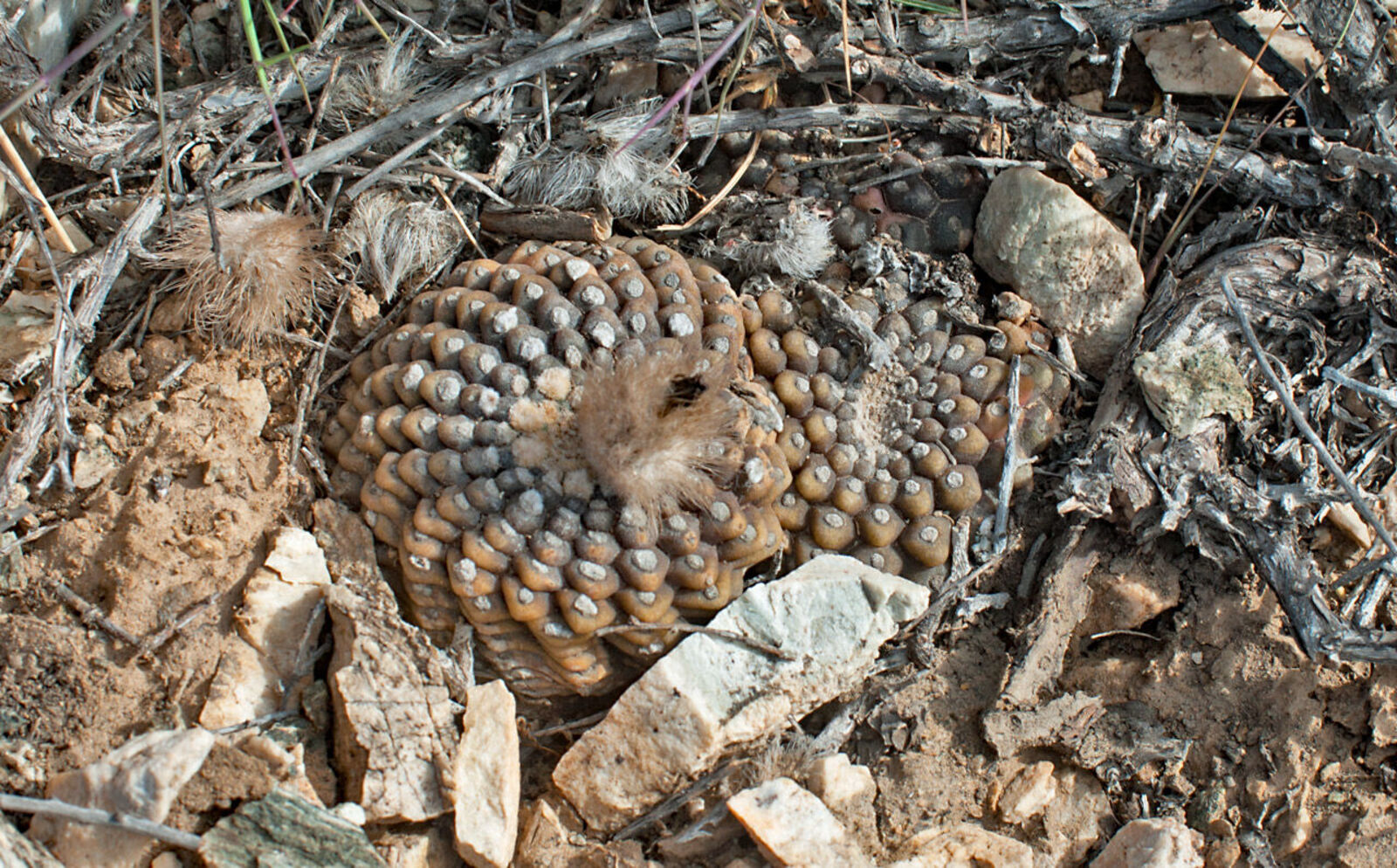 Reference image
Eriosyce fankhauseri is an extremely rare, solitary, and globose cactus species native to the arid coastal regions of Chile. Highly prized by specialized succulent collectors, it is known for its intense spine cover and beautiful, slow-growing form 1.
Belonging to the family Cactaceae and the diverse genus Eriosyce, this taxon has historically been referred to under Pyrrhocactus. The specific epithet honors the Fankhauser family, prominent contributors to cactus study and preservation 2.
This species is restricted to the rocky, barren slopes of Chile's Coquimbo region. It survives in hyper-arid desert conditions, heavily relying on coastal fog, locally known as camanchaca, for its moisture needs 1.
It forms a flattened globose, dark grey-green stem wrapped in stiff, upward-pointing, interlacing spines that protect it from intense solar radiation. The funnel-shaped, yellowish to reddish flowers emerge from woolly areoles at the apex during late spring or summer.
In cultivation, it requires maximum light, exceptional air movement, and a strictly mineral substrate. Watering should follow a soak-and-dry cycle during active growth, and must be completely withheld during the cold winter dormancy 2.
The most prevalent failure is root rot caused by organic-rich soils or overwatering. Lack of adequate direct sunlight leads to etiolation, causing the natural compact globose body to stretch unnaturally.
Requires bright light with some direct sun to maintain compact growth and dense spination.
Strict soak-and-dry method. Keep completely dry in winter.
Highly porous, low-organic mineral mix with excellent drainage properties.
Features sharp, rigid spines. Place out of reach of children and pets.
Best suited for intermediate to advanced growers due to strict moisture control needs.
Native to the rocky cliffs and dry coastal hillsides of Chile, surviving in highly barren soils under the influence of marine fogs.
