
Light
Direct Sun
Requires at least 6 hours of direct sunlight daily to maintain its compact shape and promote strong spine color.
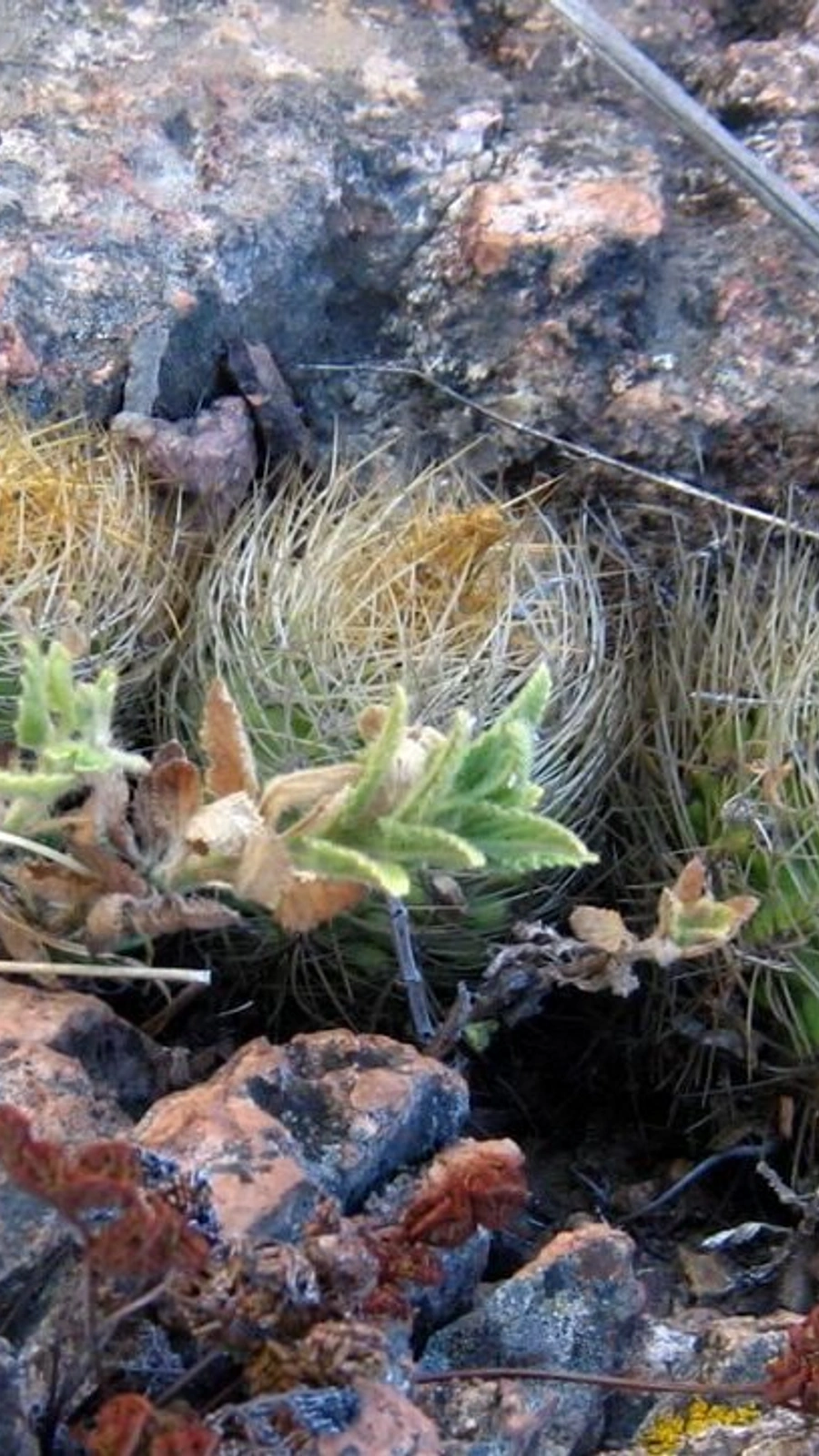 Reference image
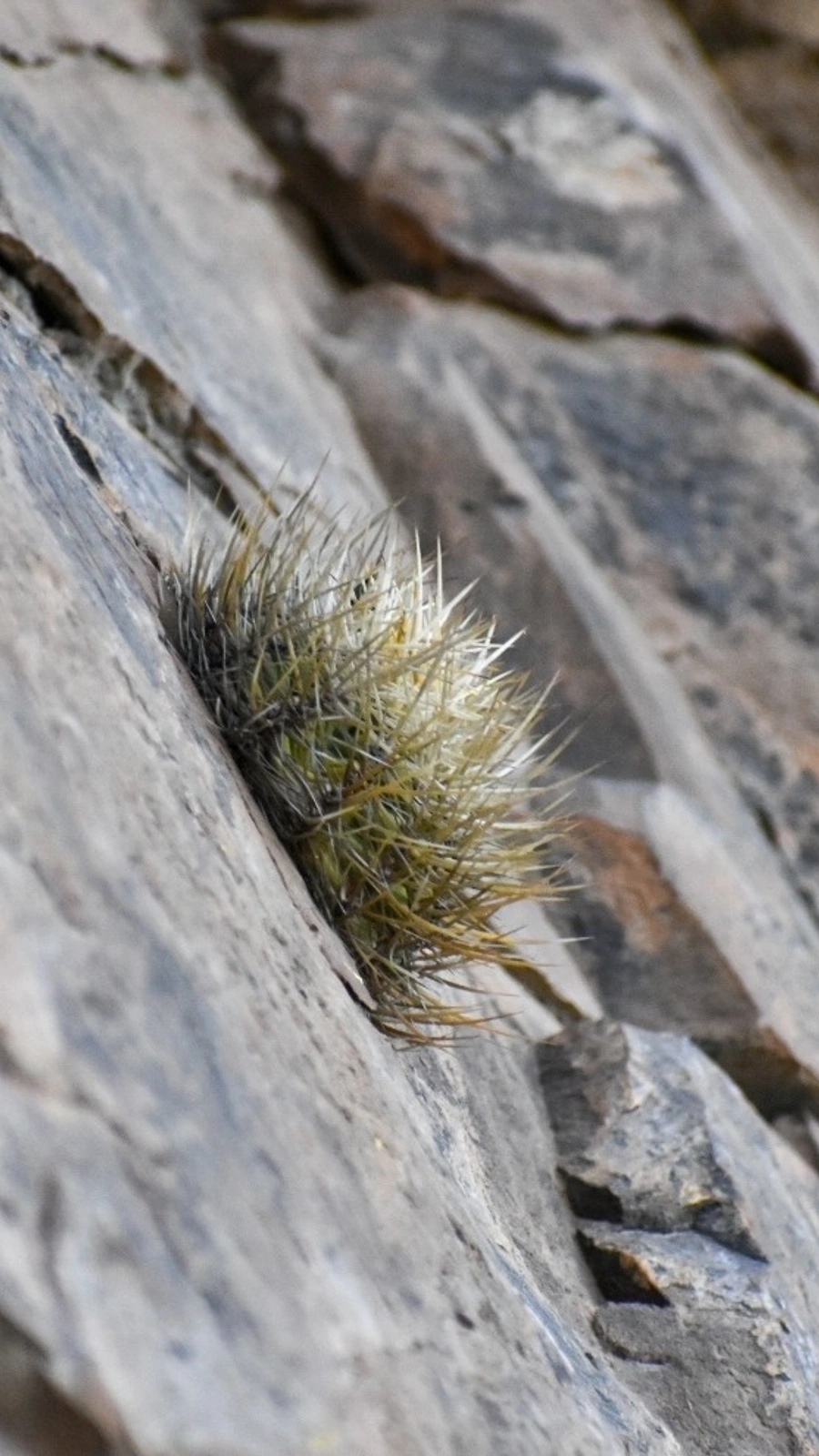 Reference image
Garaventa's Horrid Cactus
Eriosyce garaventae is a rare and highly prized globose cactus species belonging to the family Cactaceae, native to the high-altitude regions of central Chile 1. Adapted beautifully to extreme mountainous microclimates, this succulent subshrub is defined by its robust spination and slow-growing nature.
The species epithet honors the Chilean botanist Agustín Garaventa. It has been historically classified under several synonyms, including Horridocactus garaventae and Pyrrhocactus garaventae 2. The genus Eriosyce encompasses highly specialized cacti adapted to the arid Pacific slopes of South America.
This species is endemic to central Chile, specifically restricted to the coastal mountain ranges of the Valparaíso region, such as Cerro La Campana 1. It thrives in gravelly, rocky outcrops and steep cliffs at elevations of 1,200 to 2,000 meters within the dry matorral shrubland.
The stem is solitary, initially globose, and gradually becomes short-cylindrical with age. It displays a grayish-green epidermis divided into well-defined, notched ribs. The areoles bear thick, upward-curving, sharp spines ranging in color from gray to dark brown. Funnelform flowers in shades of pale yellow, cream, or greenish-yellow emerge from the crown during summer.
This high-altitude cactus requires full sun exposure and exceptional air circulation to thrive. A purely mineral-based potting medium is critical to prevent moisture retention. Watering should follow a strict dry-out cycle, and a cold, completely dry winter dormancy is necessary to trigger spring blooms.
The most frequent issue is root rot induced by overwatering or using soil mixtures with high organic content 1. Inadequate winter cooling also prevents flower bud initiation and leads to weak, etiolated stem growth.
Requires at least 6 hours of direct sunlight daily to maintain its compact shape and promote strong spine color.
Water only when the substrate is fully dry. Cease all watering from late autumn to early spring.
Use an 80% mineral mix consisting of pumice, perlite, lava rock, and coarse sand with minimal organic matter.
Equipped with very sharp, stiff spines. Keep out of reach of children and pets. Non-toxic.
Moderately demanding. Sensitive to wet conditions; success depends on strict watering control and cold winter resting.
Natively distributed on steep, rocky slopes and high mountain ridges in central Chile, where it survives on minimal rainfall and condensation from coastal fog.
