
Light
Bright Indirect Light
Prefers bright, filtered sunlight; protect from intense midday summer sun to prevent scorching.
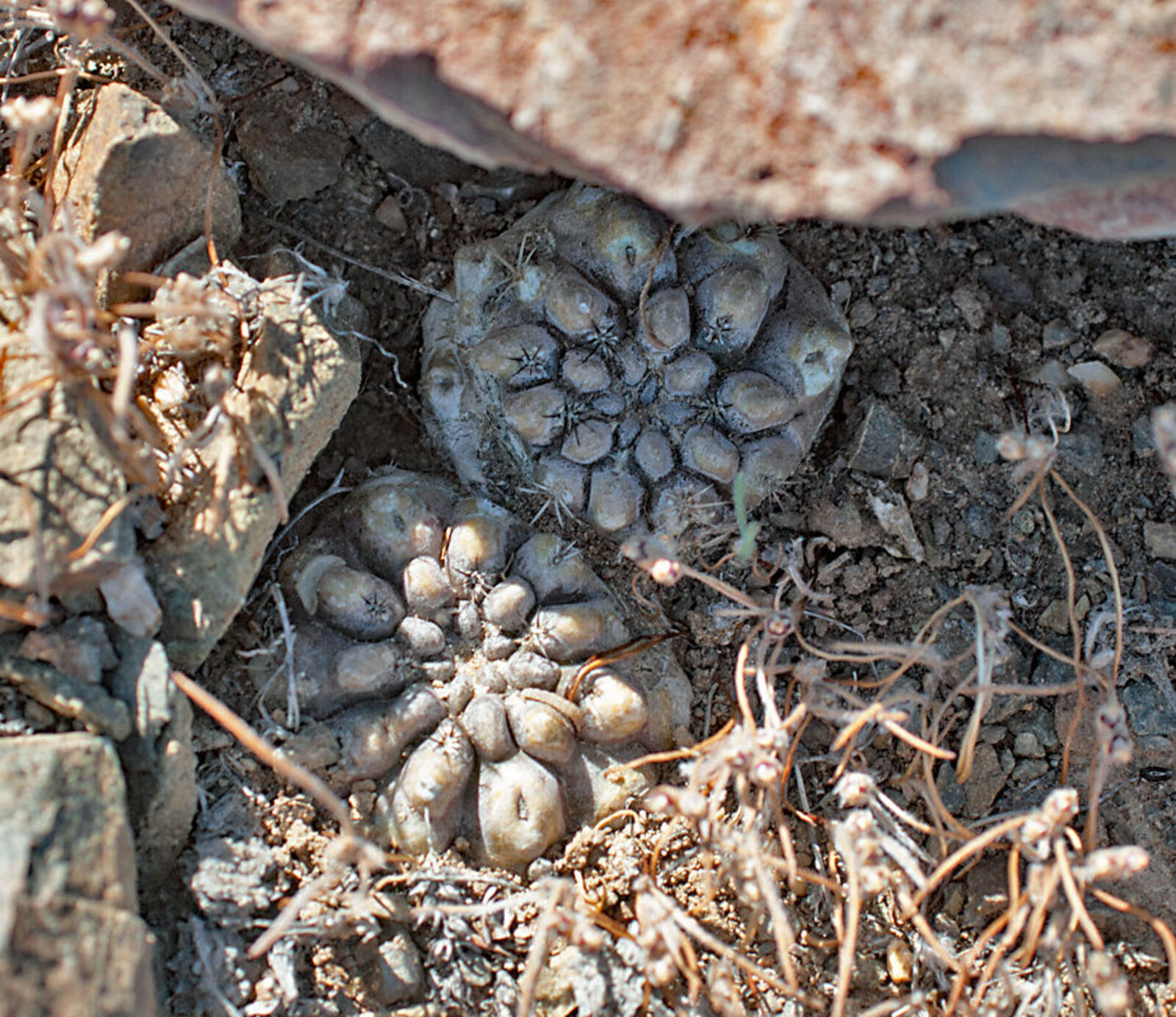 Reference image
Eriosyce glabrescens is a highly specialized cactus species native to the hyper-arid coastal regions of Chile. Characterized by its solitary, globose body and a thick, tuberous taproot, this slow-growing succulent subshrub is prized among collectors for its neat, almost spineless mature appearance.
Belonging to the family Cactaceae, the genus Eriosyce is known for high morphological variability 1. The specific epithet glabrescens derives from Latin, meaning 'becoming hairless' or 'smoothish', referring to the epidermis which loses its sparse spination and felt as it matures 2.
This species is native to Southern South America, specifically the coastal desert of northern Chile (Antofagasta and Atacama). It thrives in hyper-arid desert or dry shrubland biomes where rainfall is extremely low, relying heavily on heavy coastal fogs known locally as 'camanchaca' for moisture 1.
The stem is globose to shortly cylindrical, with a dark green to grayish-brown epidermis. Ribs are distinct but low. Flowers emerge from the woolly apex, displaying shades of pale yellow, cream, or soft pink. The thick taproot acts as an efficient water reservoir during prolonged dry spells.
In cultivation, Eriosyce glabrescens demands excellent drainage. A highly mineral substrate with minimal organic material is essential 2. It requires strong indirect light or filtered sun. Watering should be sparse in summer and completely suspended during the cool winter dormancy.
Overwatering and the use of heavy, moisture-retentive soils are the most common causes of plant loss, leading to rapid taproot rot. Insufficient light results in etiolation, causing the natural globose form to stretch and weaken.
Prefers bright, filtered sunlight; protect from intense midday summer sun to prevent scorching.
Allow the soil to dry out completely between waterings; keep bone-dry throughout winter.
Requires an exceptionally gritty, mineral-based soil mix with minimal organic matter.
Non-toxic to pets and humans, making it a safe choice for indoor collections.
Moderate care level due to its extreme sensitivity to overwatering and root rot.
Inhabits the coastal dunes and rocky cliffs of the Atacama Desert in northern Chile, thriving under extreme aridity and absorbing moisture mainly from ocean mists.
