
Light
Bright Indirect Light
Prefers bright, filtered sunlight; protect from scorching midday summer rays.
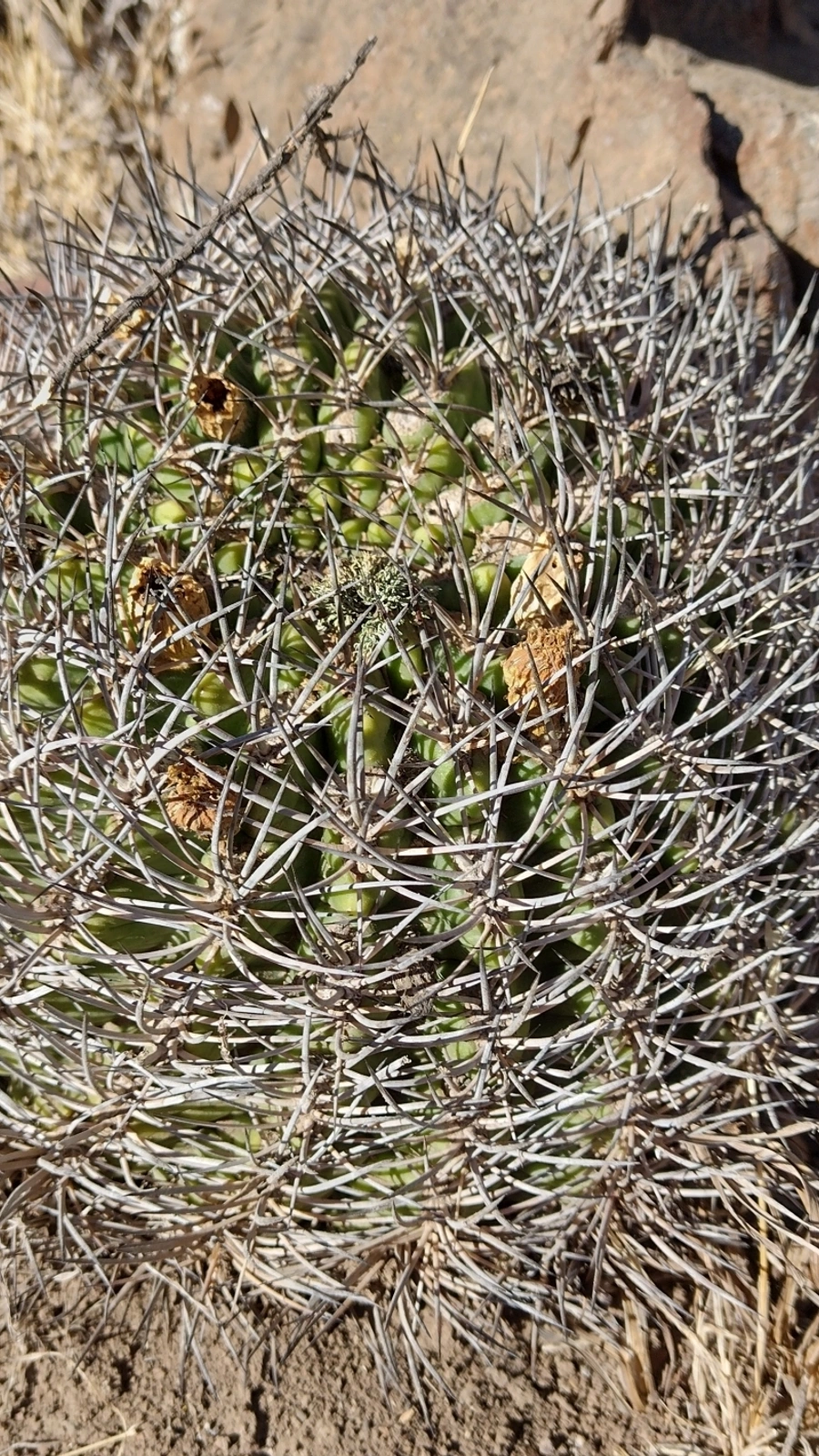 Reference image
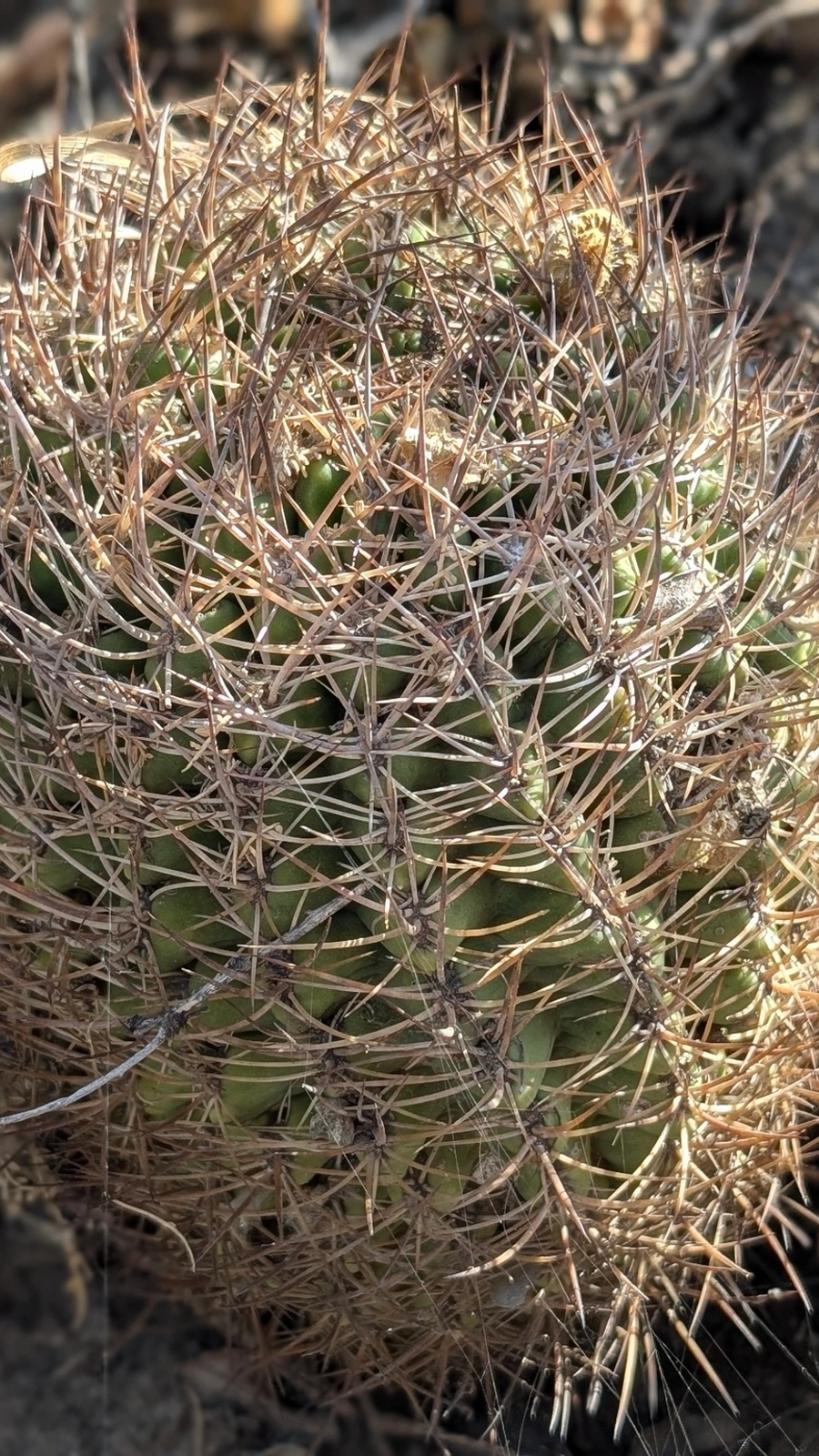 Reference image
Large-flowered Eriosyce
Eriosyce grandiflora is a slow-growing, globose to cylindrical succulent subshrub belonging to the Cactaceae family, highly prized by collectors for its large and colorful diurnal flowers 1. It is well-adapted to survive severe drought conditions due to its specialized tuberous root system and dense spination.
Classified under the genus Eriosyce, this species has historically been grouped under Neoporteria and Pyrrhocactus 2. The specific epithet 'grandiflora' derives from Latin, meaning 'large-flowered', pointing directly to the species' notably large floral displays compared to other members of its genus.
Native to the subtropical arid regions of Southern South America, particularly along the rocky slopes and foothills of Chile 1. It thrives in high-altitude environments characterized by thin, mineral-rich, extremely well-draining soils and low annual precipitation.
The body is single, globose when young, and slowly elongates with age. It features distinct ribs covered with woolly areoles bearing rigid, dark to grayish spines. The magnificent funnel-shaped flowers appear at the apex during late spring and summer, presenting shades of yellow, copper, or deep red 2.
In cultivation, it requires bright, indirect light or filtered sun. It is highly susceptible to root rot; therefore, the substrate must be completely dry before re-watering. During the winter dormancy period, watering should be suspended almost entirely.
The most prevalent error is utilizing heavy compost with poor drainage, which leads to root loss. Sudden exposure to intense summer sun without acclimation can also cause permanent scarring and sunburn on the epidermis.
Prefers bright, filtered sunlight; protect from scorching midday summer rays.
Water only when the medium is 100% dry; keep completely dry in winter.
Requires extremely porous mineral substrate with high pumice and sand content.
Equipped with sharp, stiff spines. Keep out of reach of children and curious pets.
Moderate care level; requires strict discipline regarding watering cycles.
Native to the arid mountainous slopes of Chile in South America, growing in rocky crevices with minimal organic soil under subtropical desert conditions.
