
Light
Bright Indirect Light
Requires bright direct sunlight to maintain its dense, strong spine development.
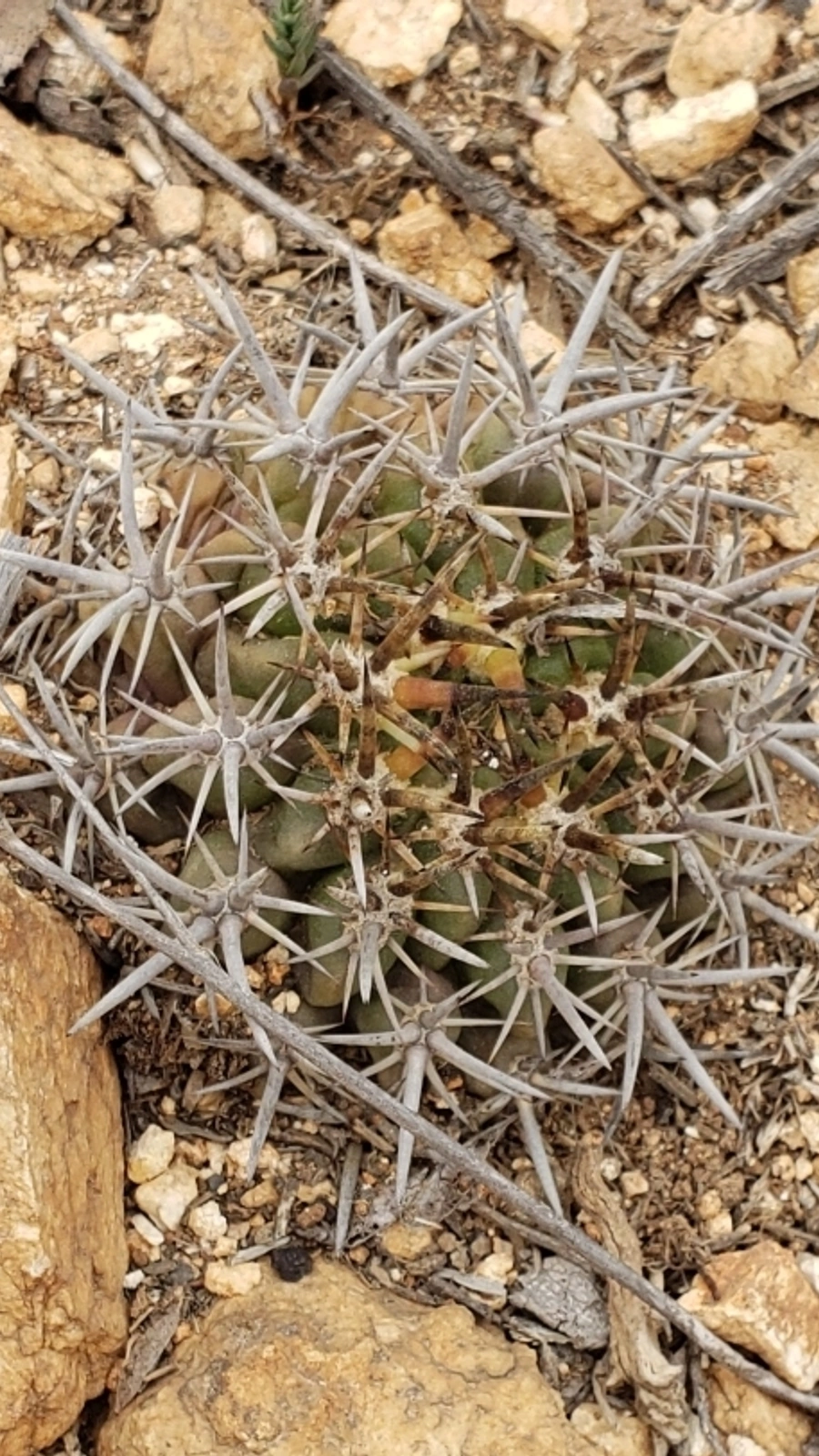 Reference image
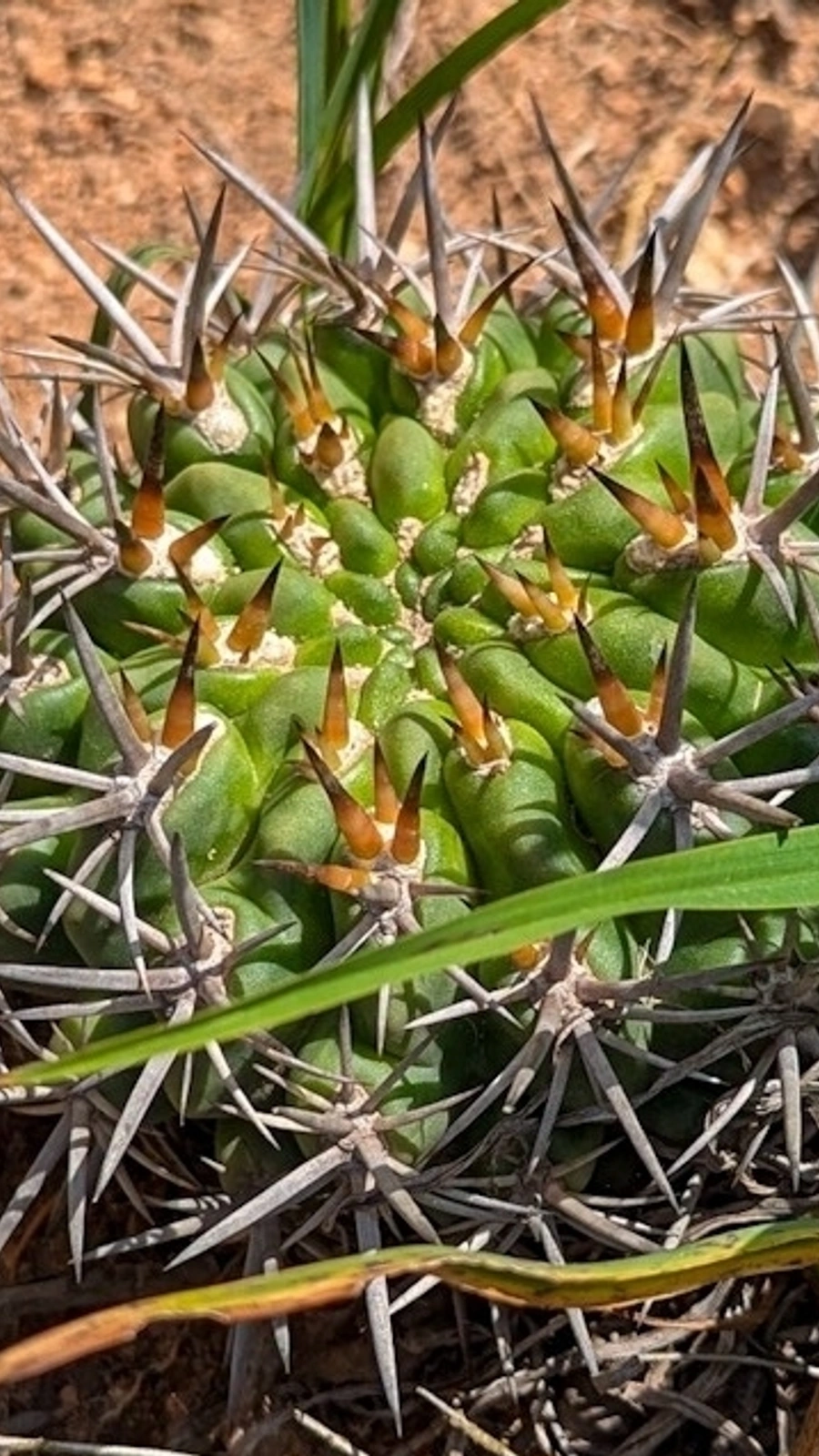 Reference image
Horrid Eriosyce
Eriosyce horrida is a highly ornamental and densely spiny cactus species native to the arid regions of Chile, belonging to the Cactaceae family. It is well-known for its globose shape and stiff, dark, formidable spines, adapted to survive in harsh subtropical environments.
Situated in the subfamily Cactoideae within the Cactaceae family, the genus name Eriosyce derives from Greek meaning 'wooly fruit'. The specific epithet 'horrida' refers to its dense, terrifying spine coverage 1. It was historically classified under synonyms such as Pyrrhocactus horrida and Neoporteria horrida 2.
This species is native to Chile, stretching across the coastal hills of regions like Coquimbo and Valparaíso and ascending onto dry Andean slopes 1. It thrives in stony, nutrient-poor, mineral-rich soils subject to coastal fogs and low rainfall.
The stem is globose, eventually becoming slightly cylindrical with age. Its epidermis ranges from dark green to grayish-green. The prominent, sharp ribs bear dense clusters of stout, curved, grayish-black to dark brown spines. Flowers emerge from the wooly apex, showcasing yellow, cream, or pinkish hues.
Eriosyce horrida requires an exceptionally well-draining, mineral-based substrate consisting largely of pumice and grit. Water sparingly during spring and summer, ensuring the medium dries out completely between waterings. Winter requires a cold, completely dry dormancy to encourage future blooms.
Overwatering and poorly draining soil are the leading causes of root rot and plant loss 2. Lack of adequate sunlight leads to etiolation, wherein the plant stretches and produces weak, sparse spines.
Requires bright direct sunlight to maintain its dense, strong spine development.
Allow the potting mix to dry out 100% before watering. Stop watering entirely in winter.
Highly porous, mineral-heavy substrate with pumice, lava rock, and coarse sand.
Armed with very sharp, stiff spines. Keep away from pets and curious children.
Moderate difficulty due to strict watering needs and rot susceptibility.
Naturally distributed along the coastal mountains and dry rocky hillsides of central Chile, adapted to survive on gravelly slopes with minimal water.
