
Light
Full Sun
Requires full sun, minimum 6 hours of direct sunlight daily.
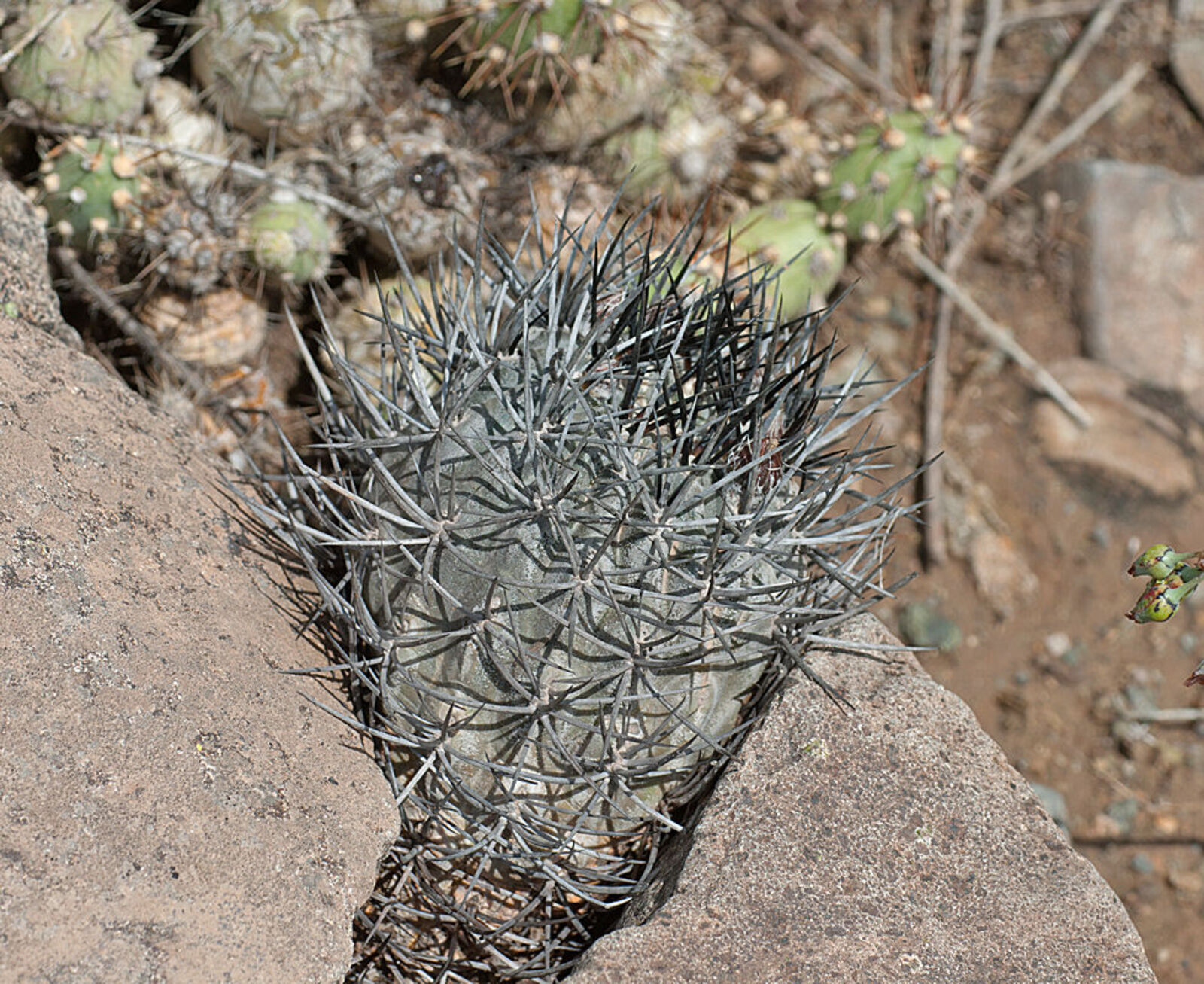 Reference image
Jussieu's Desert Cactus
Eriosyce jussieui is a remarkable succulent subshrub in the family Cactaceae, endemic to the coastal desert environments of Chile 1. It is highly appreciated by enthusiasts for its dark-pigmented epidermis and fierce spination.
Originally described under different genera including Pyrrhocactus and Neoporteria, molecular studies placed this species within the recircumscribed genus Eriosyce 2. The specific epithet honors the French botanist Bernard de Jussieu.
This species is native to the Coquimbo and Valparaíso regions of Chile. It inhabits hyper-arid coastal terraces where it relies on the moisture supplied by nocturnal coastal fogs, locally known as 'camanchaca'.
It features a globose to short-cylindrical stem, often turning dark grey-green or deep purple under intense sunlight. The ribs are prominent and bearing woolly areoles with strong, dark, curved spines. The flowers are funnelform, appearing at the apex in shades of pale yellow, pink, or reddish-brown.
Cultivation requires mimicking its arid habitat. High light levels, superb ventilation, and an almost entirely mineral substrate are mandatory. Water thoroughly only when the soil is completely dry, and maintain strict dry winter dormancy.
Overwatering and high organic soil components are the primary causes of root rot 1. Lack of adequate direct sunlight causes irreversible etiolation, weak spines, and a failure to flower.
Requires full sun, minimum 6 hours of direct sunlight daily.
Allow soil to dry out completely. Keep bone dry in winter.
Highly porous, grit-rich, and fast-draining mineral soil.
Non-toxic to pets, but the sharp spines pose a physical hazard.
Moderate care; highly susceptible to rot if overwatered.
Native to the rocky coastal terraces and hillsides of north-central Chile, where it survives on coastal fog condensation.
