
Light
Direct Sun
Thrives in full sun or very bright, direct light. Requires at least 6 hours of direct sunlight daily.
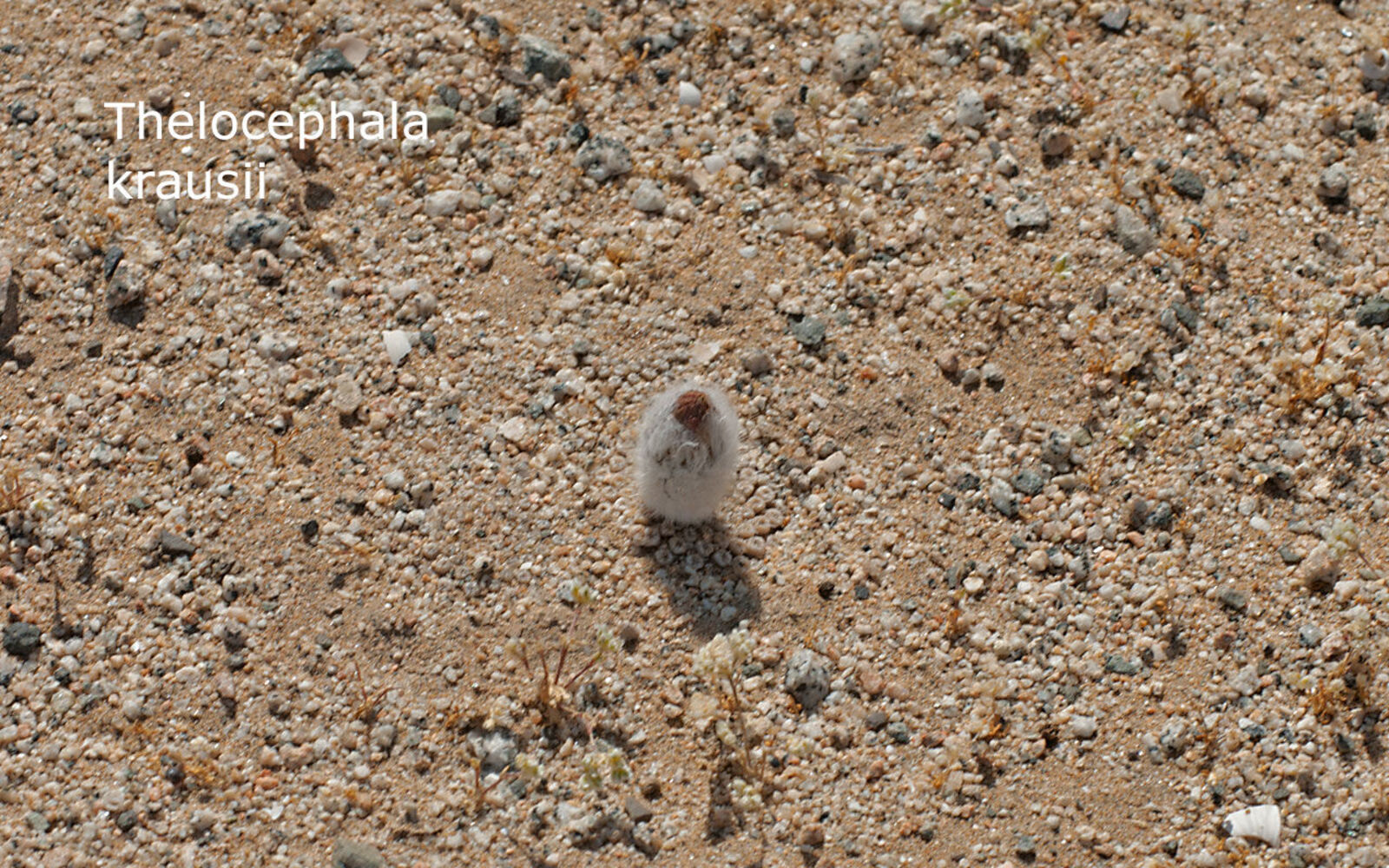 Reference image
Kraus's Chileorebutia (Eriosyce krausii)
Eriosyce krausii is an extremely rare, miniature geophytic cactus belonging to the family Cactaceae, endemic to the hyper-arid regions of Chile 1. Highly prized by specialist succulent collectors, this slow-growing species is characterized by its large taproot, which acts as an underground water reservoir during prolonged droughts.
Originally described under the genus Chileorebutia as Chileorebutia krausii, taxonomic revisions placed it under the broad genus Eriosyce 2. It is also known in trade and collection circles by its synonym Thelocephala krausii. The species epithet honors the botanical contributions of Chilean researchers.
This species has an extremely localized distribution in the Atacama Region of Chile, particularly near Huasco and coastal hillsides 1. It survives in some of the driest places on Earth, where rainfall is virtually non-existent. Instead, the plants rely heavily on the moisture from dense coastal fogs, locally known as "camanchaca," which roll over the rocky, mineral-rich desert soils.
The stem is solitary, flattened-globose, usually reaching only 2 to 4 cm in diameter, and ranges from grayish-green to brownish-purple. It features small, closely appressed spines arising from tubercular ribs. The funnel-shaped flowers, which emerge from the woolly crown of the plant, are pale yellow, cream, or greenish-yellow in color 2.
In cultivation, mimicking its harsh natural habitat is critical. Eriosyce krausii requires a strictly mineral-based substrate consisting of pumice, lava rock, and coarse sand. It must be positioned in a location that receives full sun and exceptional ventilation. Watering should be sparse and limited only to the active growing season.
The most frequent cause of failure is using standard organic potting soils and overwatering. High organic matter retains moisture for too long, causing the taproot to rot instantly. Lack of fresh airflow and low light levels will also quickly deteriorate the health of this desert specialist.
Thrives in full sun or very bright, direct light. Requires at least 6 hours of direct sunlight daily.
Water very sparingly in spring and summer. Keep completely dry in winter to prevent root rot.
Requires an inorganic, highly porous mix. Use 70-80% pumice, gravel, and coarse sand.
Non-toxic to pets, but has small, slightly sharp spines. Handle with care.
Best suited for experienced growers due to its extreme sensitivity to overwatering.
Native to the coastal hillsides of the Atacama Desert in northern Chile. It grows in gravelly, stony mineral soils where it absorbs humidity from the frequent coastal fog, compensating for the lack of actual rainfall.
