
Light
Full Sun
Requires full, direct sun to maintain its natural shape and spine density.
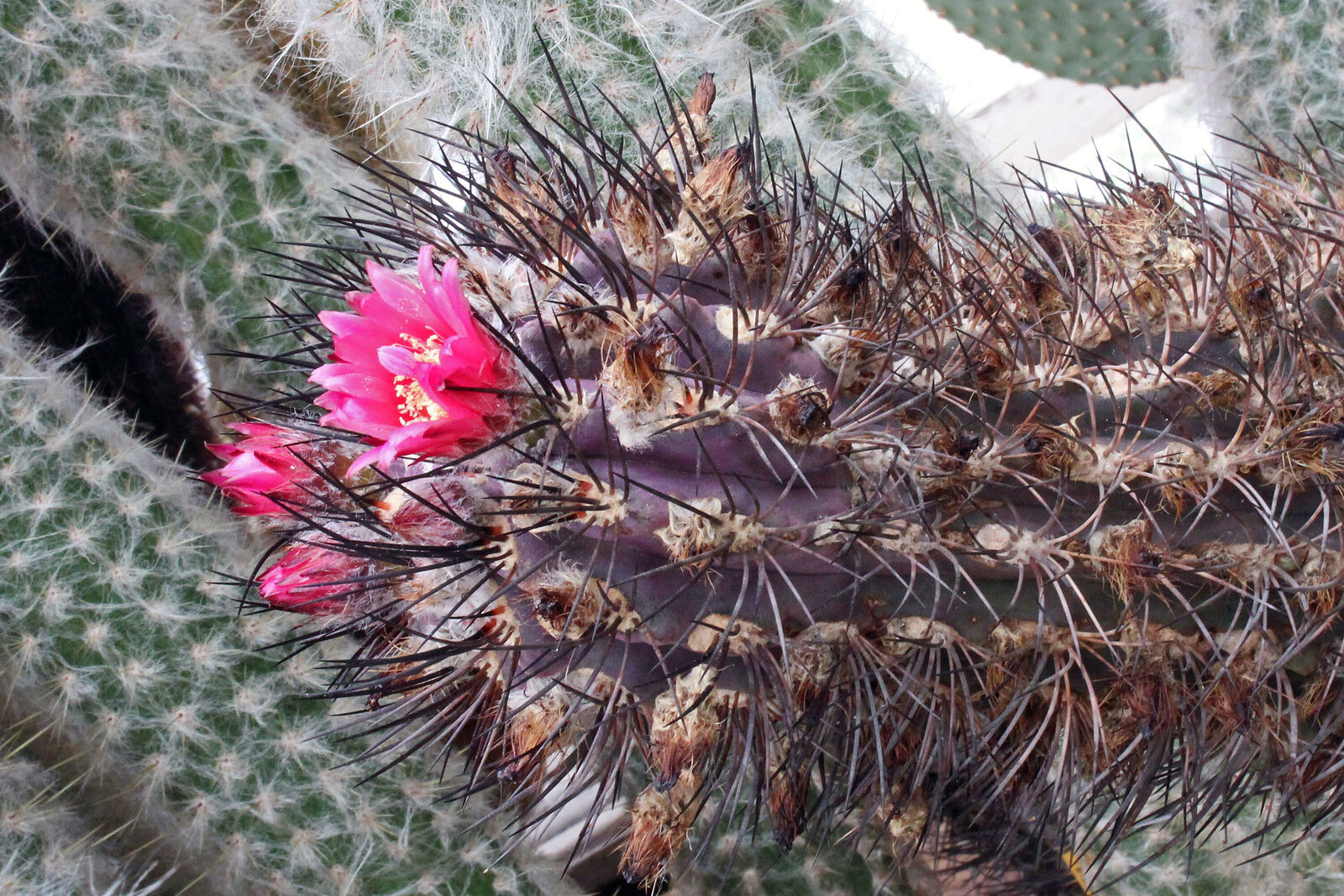 Reference image
Eriosyce kunzei is a highly robust, densely spined globose cactus belonging to the family Cactaceae. Famously adapted to survive the harsh arid conditions of South American deserts, this succulent subshrub is highly prized by cactus enthusiasts for its fierce spine coverage and beautiful pastel-toned flowers 1.
Originally described under the genus Echinocactus as Echinocactus kunzei, it was later moved to the expanded genus Eriosyce following modern taxonomic evaluations 2. It is also known under synonyms such as Pyrrhocactus kunzei and Neoporteria kunzei. The specific epithet honors the German botanist Gustav Kunze.
This species is endemic to the arid regions of northern and central Chile, spanning across provinces such as Coquimbo and Atacama. It thrives in desert and dry shrubland biomes, inhabiting rocky, sun-baked slopes from low coastal elevations to higher mountain elevations. In its natural habitat, it relies on coastal fogs known locally as "camanchaca" to supplement its moisture needs 13.
The body of Eriosyce kunzei is globose to shortly cylindrical, with a gray-green to dark green epidermis. It features 12 to 20 well-defined ribs. Areoles carry dense, formidable spines that can be straight or curved, ranging from horn-colored to dark gray. The apex of the mature stem is covered in dense whitish-yellow wool, from which funnel-shaped pale yellow, cream, or light pinkish flowers emerge 2.
In cultivation, Eriosyce kunzei requires a position that receives full sun and a highly mineral, well-draining soil mix. Water should be applied only during the active growing season (spring and summer) and only when the potting medium has dried out completely. During the winter, the plant must be kept completely dry and cool to prevent rot and encourage spring blooming 3.
The most frequent mistakes are overwatering and using heavy, organic-rich soil mixes, which lead to rapid root rot. Insufficient sunlight will cause etiolation, causing the cactus to stretch unnaturally and lose its dense spine color.
Requires full, direct sun to maintain its natural shape and spine density.
Water thoroughly when soil is dry in summer; keep completely dry in winter.
Requires highly porous, grit-rich, and mineral-heavy cactus soil.
Equipped with very sharp, strong spines. Handle with gloves. Non-toxic.
Moderate difficulty. Requires strict control over watering and soil drainage.
Native to the rocky slopes and arid coastal hills of northern and central Chile. These regions feature desert climates where moisture is often provided by heavy morning sea mists rolling in from the Pacific Ocean.
