
Light
Bright Indirect Light
Requires full sun or bright indirect light to preserve its natural form and spine color.
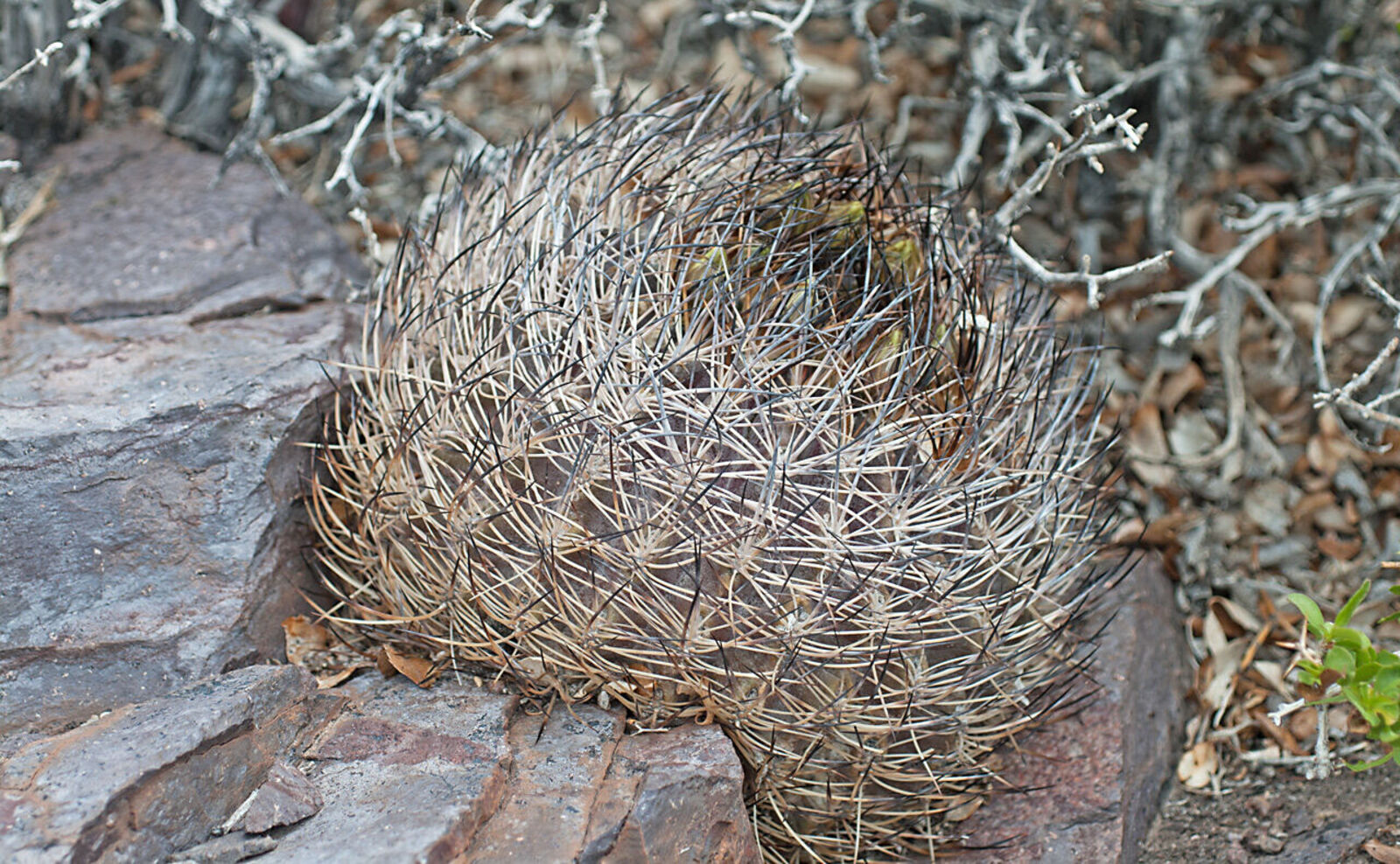 Reference image
Limari Balloon Cactus
Eriosyce limariensis is a distinctive, slow-growing globose cactus native to Chile, renowned for its dense spine coverage and solitary growth form. Highly adapted to hyper-arid conditions, this species is coveted by succulent enthusiasts for its geometrical structure and vibrant apical blooms 1.
Belonging to the genus Eriosyce within the family Cactaceae, its specific epithet 'limariensis' directly references the Limarí Province where it was discovered. It is often referred to under its synonym Pyrrhocactus limariensis in older botanical literature 2.
This species is endemic to the Coquimbo region of Chile, specifically within the Limarí river basin. It thrives in desert or dry shrublands, growing on rocky outcrops, steep gravelly slopes, and mineral-rich soils exposed to intense solar radiation and minimal rainfall 3.
The plant presents a solitary, globular to short-cylindrical stem of greyish-green to dark green color. Ribs are well-defined, bearing prominent woolly areoles from which heavy, rigid, slightly curved blackish-brown spines emerge. The funnelform flowers arise from the plant's crown, displaying warm shades of yellow, copper, or dull red.
In cultivation, Eriosyce limariensis requires a very mineral-based, porous substrate to ensure rapid drainage. It demands maximum light exposure to maintain its compact shape and robust spination. Watering must be sparse during the active spring and summer growth phases, and completely withheld in winter.
The most frequent error is waterlogged soil due to organic-rich composts, which inevitably leads to root rot. Insufficient light results in etiolation, causing the stems to stretch unnaturally.
Requires full sun or bright indirect light to preserve its natural form and spine color.
Let the soil dry out entirely between waterings. No water in winter.
Highly porous, grit-heavy soil mix with minimal organic components.
Non-toxic to pets, but has sharp spines that require careful handling.
Moderate. Requires strict discipline with watering, especially in winter.
Native to the stony, dry hillsides of the Limarí Valley in the Coquimbo region of northern-central Chile, thriving in arid desert microclimates.
