
Light
Full Sun
Requires full, direct sunlight to maintain compact growth and robust spine development.
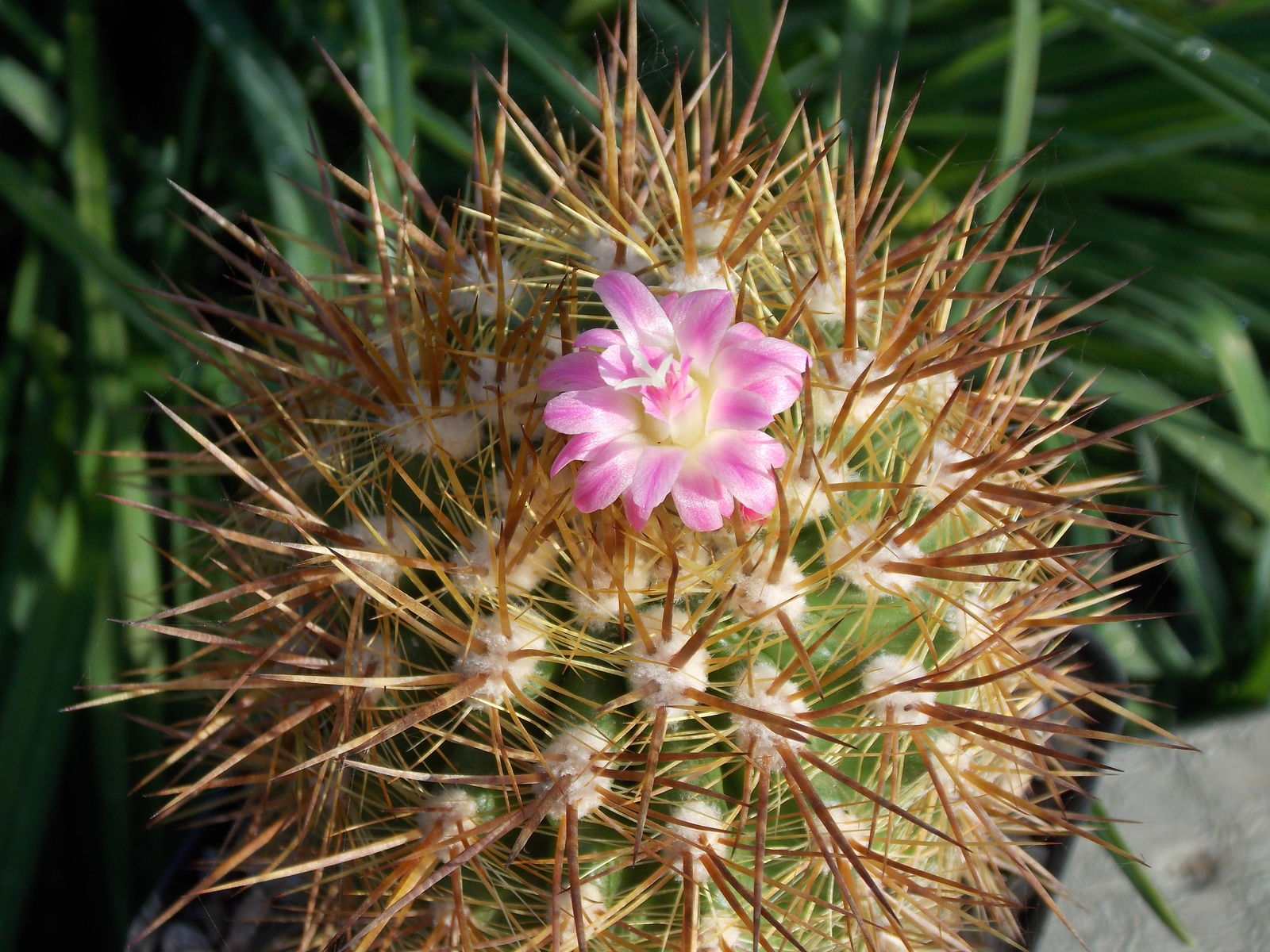 Reference image
Coastal Eriosyce
Eriosyce litoralis is a slow-growing, highly ornamental cactus species endemic to the arid coastal regions of Chile 1. Renowned among succulent enthusiasts for its dense spine coverage and vibrant funnel-shaped flowers, this plant is well-adapted to survive in extremely harsh, coastal desert environments.
Belonging to the family Cactaceae and the diverse genus Eriosyce, it was historically classified under Pyrrhocactus litoralis. Extensive morphological and genetic revisions placed it in its current genus. The specific epithet "litoralis" directly references its natural coastal seaside habitat.
This species is restricted to a narrow coastal strip in north-central Chile, primarily within the Coquimbo and Valparaíso regions. It thrives on rocky cliffs and steep gravelly slopes, where it relies heavily on the dense ocean fog, locally known as "camanchaca", for regular moisture 2.
The stem is spherical to short-cylindrical, dark green to grayish-green, with 15 to 20 pronounced ribs. It features heavy, rigid, upcurved radial and central spines that vary from dark brown to ash-grey. Its beautiful yellow, orange, or reddish funnel-form flowers emerge from the woolly apex in late spring.
In cultivation, it requires a very airy, sun-drenched position and exceptionally free-draining substrate. Watering must be done cautiously, allowing the soil to dry out completely. During winter dormancy, keeping the plant totally dry allows it to withstand temperatures down to -2°C without damage.
The most frequent failures involve overwatering, which rapidly leads to root rot, and insufficient light, causing the cactus to stretch and lose its characteristic compact form and dense spination.
Requires full, direct sunlight to maintain compact growth and robust spine development.
Allow soil to dry out 100% between waterings. Suspend watering completely in winter.
Needs a very porous, mineral-heavy substrate with minimal organic matter.
Non-toxic, but features sharp, stiff spines that demand careful handling.
Moderate; success depends on avoiding excess moisture and providing strong light.
Native to the rocky cliffs and maritime slopes of north-central Chile, where it survives in highly arid conditions, relying on heavy coastal fogs for moisture.
