
Light
Direct Sun
Needs direct, bright sunlight to retain its beautiful smoky blue-grey color.
 Reference image
 Reference image
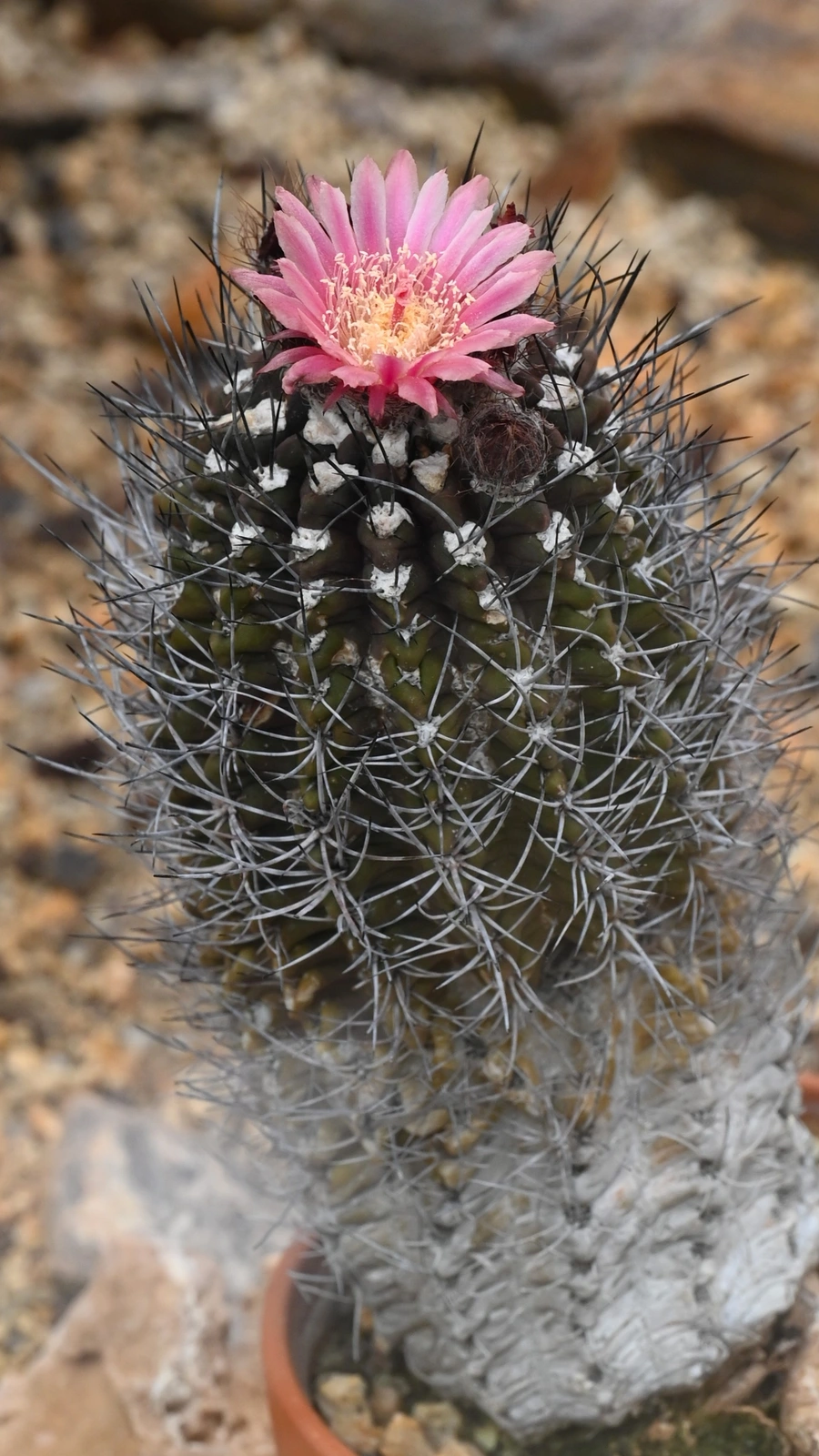
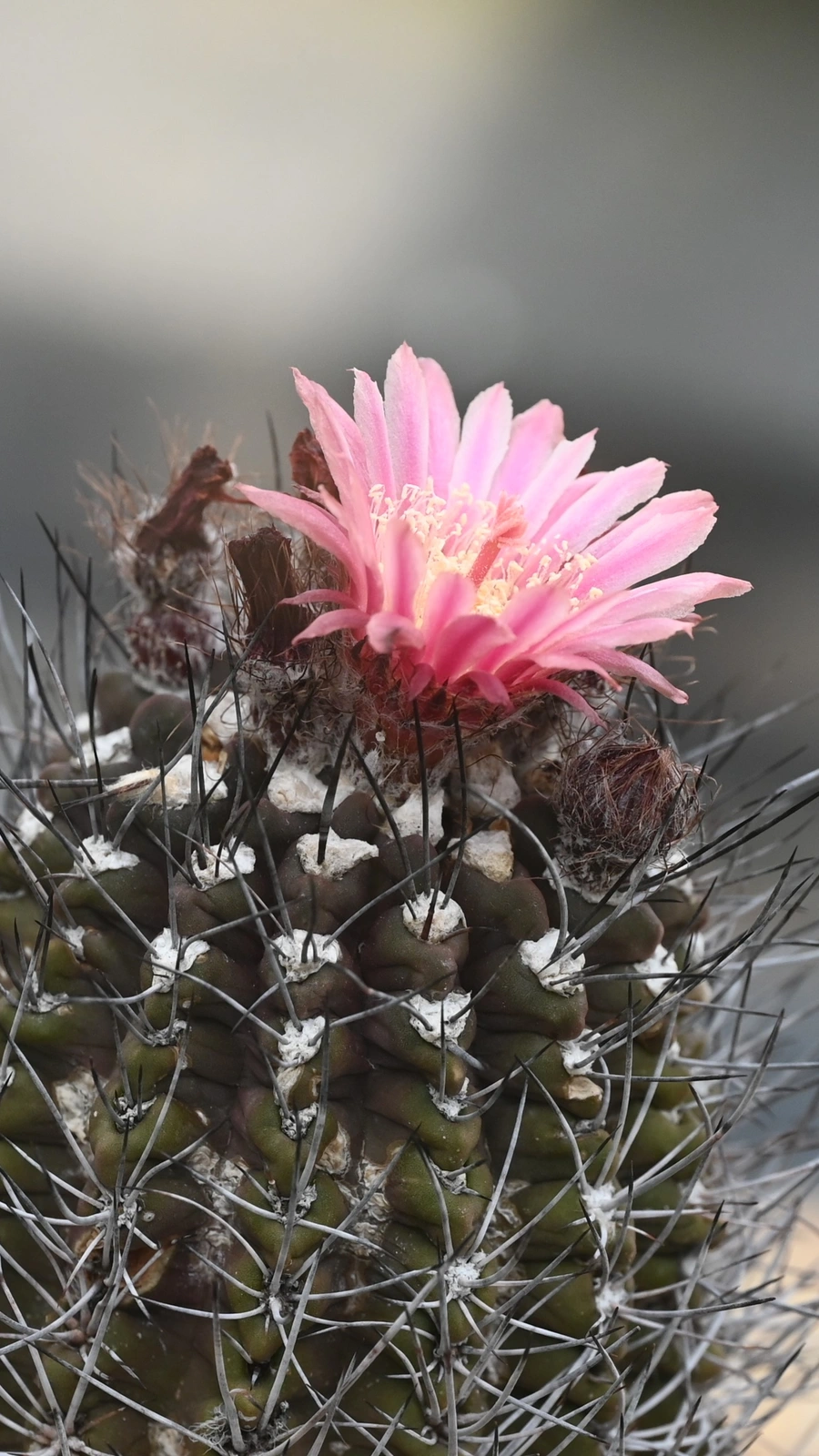
Few-ribbed Eriosyce
Eriosyce paucicostata is a slow-growing, highly ornamental succulent subshrub belonging to the family Cactaceae 1. Highly prized by cactus enthusiasts, it is easily distinguished by its smoky, bluish-grey stem and rigid, dark spines.
Originally described under the genus Pyrrhocactus as Pyrrhocactus paucicostatus, it has been integrated into the diverse genus Eriosyce 1. The specific epithet "paucicostata" derives from Latin, meaning "few-ribbed," referencing the species' prominent and sparsely distributed ribs.
This species is native to the arid coastal deserts of northern Chile, particularly within the Antofagasta and Atacama regions 2. It thrives on extremely dry, rocky slopes and coastal hills where it absorbs essential moisture from the Pacific coastal fog known locally as "Camanchaca."
The stem is globular to shortly cylindrical, with a matte, bluish-green to chalky grey-blue epidermis. It typically bears 8 to 12 distinct, deep ribs. The areoles bear thick, curved spines that are pitch-black or dark brown when young, weathering to a chalky grey. Bell-shaped flowers in shades of cream, pale yellow, or soft pink appear at the crown during late spring and summer.
Eriosyce paucicostata demands an outstandingly porous, mineral-rich substrate. Full sun exposure is critical to maintain its characteristic bluish epidermis and dense spine formation. Water thoroughly only when the soil is completely dry, and keep the plant entirely dry during its winter dormancy to prevent root damage.
The most frequent pitfall is overwatering combined with rich, organic soils that retain moisture. Lack of proper ventilation and inadequate sunlight will cause etiolation and render the plant highly susceptible to fungal rot.
Needs direct, bright sunlight to retain its beautiful smoky blue-grey color.
Water only when the substrate is fully bone-dry; suspend watering completely in winter.
Use a purely mineral mix containing pumice, lava rock, and coarse sand.
Non-toxic to pets, but the sharp, rigid spines pose a physical hazard.
Moderately easy for those who can strictly manage watering and ensure bright light.
Found on the arid rocky slopes of the Atacama Desert in northern Chile, adapting to survive primarily on coastal fog condensation.
