
Light
Full Sun
Requires full sun or very bright indirect light for optimal color and growth.
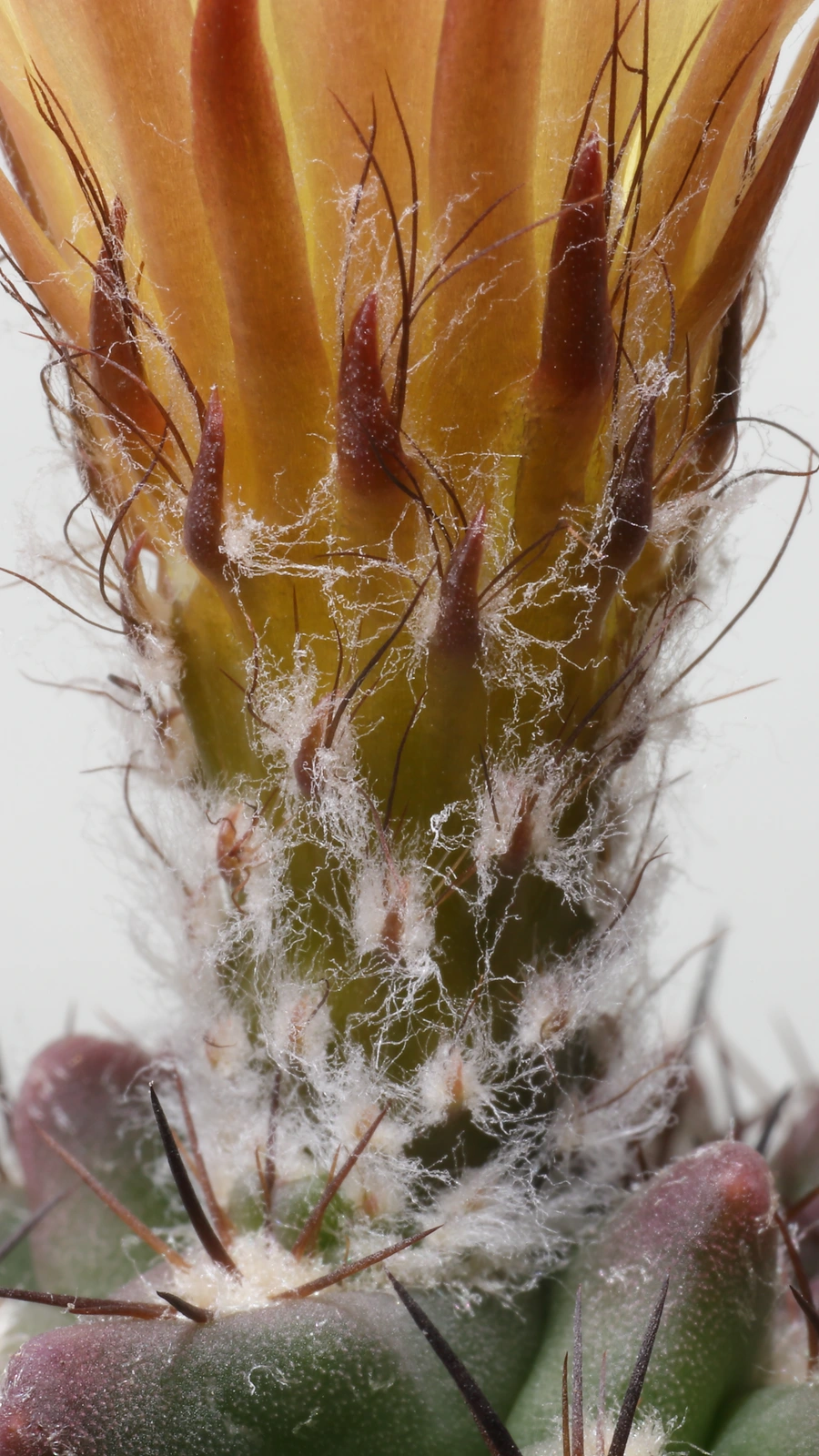 Reference image
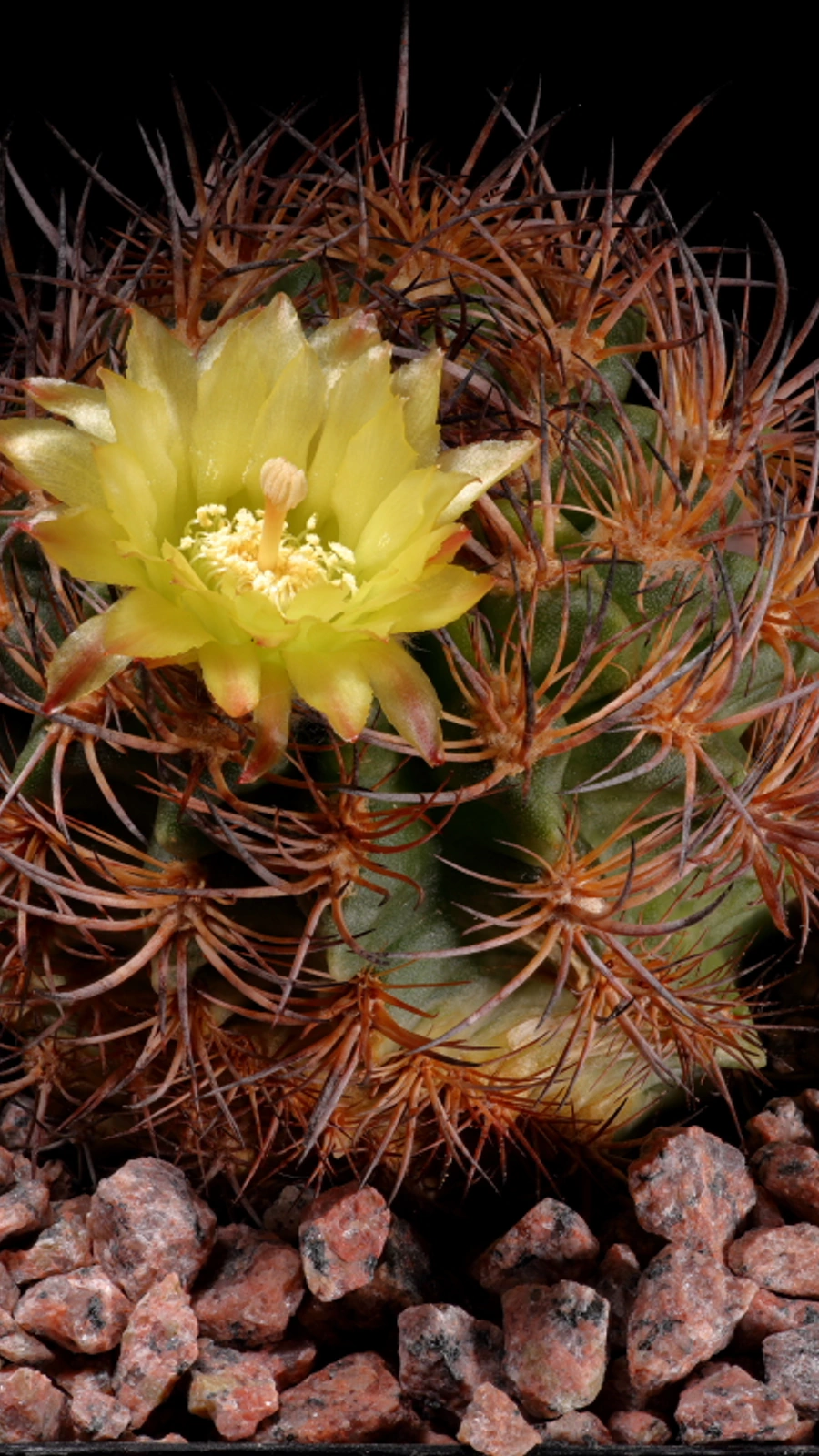 Reference image
Eriosyce recondita is a miniature, slow-growing succulent subshrub in the family Cactaceae, native to the hyper-arid coastal cliffs of northern Chile. Highly prized by succulent enthusiasts, this species is well-known for its flattened globose stem, dark skin coloration, and delicate seasonal flowers 1.
Originally described under the genus Pyrrhocactus by Friedrich Ritter, the species was later classified under Eriosyce. The specific epithet "recondita" comes from the Latin word for hidden or concealed, referencing the plant's natural adaptation to shrink and retreat below the soil surface during extreme dry spells 2.
This species is endemic to a narrow coastal band in northern Chile, particularly around the Antofagasta region. It thrives on rocky slopes in desert environments where rainfall is virtually non-existent, surviving primarily on moisture collected from the dense coastal fog known as Camanchaca 3.
The stem is solitary, flattened-globose, measuring 2-8 cm in diameter, and ranges in color from grayish-green to deep purple-brown. The ribs are well-defined and tubercled, bearing short, rigid, dark spines. Funnel-shaped flowers emerge from the woolly apex, displaying shades of pale yellow, cream, or soft pink.
In cultivation, Eriosyce recondita demands maximum light levels to maintain its compact shape and dark coloration. Watering must follow a strict soak-and-dry cycle, ensuring the substrate dries out completely. During the winter dormancy, the plant should be kept entirely dry and cool to prevent rot and encourage spring blooms 4.
The most prevalent issue is root rot, caused by heavy, organic soils or overwatering during winter. Lacking sufficient ventilation and direct sunlight will cause etiolation, stretching the natural globose form and weakening the specimen's immune system.
Requires full sun or very bright indirect light for optimal color and growth.
Strict soak-and-dry method. Keep completely dry in winter.
Highly mineral substrate (pumice, perlite, gravel) with very little organic matter.
Non-toxic, but sharp spines require careful handling and placement out of reach.
Moderate difficulty due to susceptibility to rot if overwatered.
Endemic to the coastal hills of the Antofagasta region in northern Chile. It grows in hyper-arid conditions where the primary source of hydration is the dense coastal fog rolling in from the Pacific Ocean.
