
Light
Bright Indirect Light
Enjoys bright, indirect light or morning sun; shield from harsh, scorching midday summer sun.
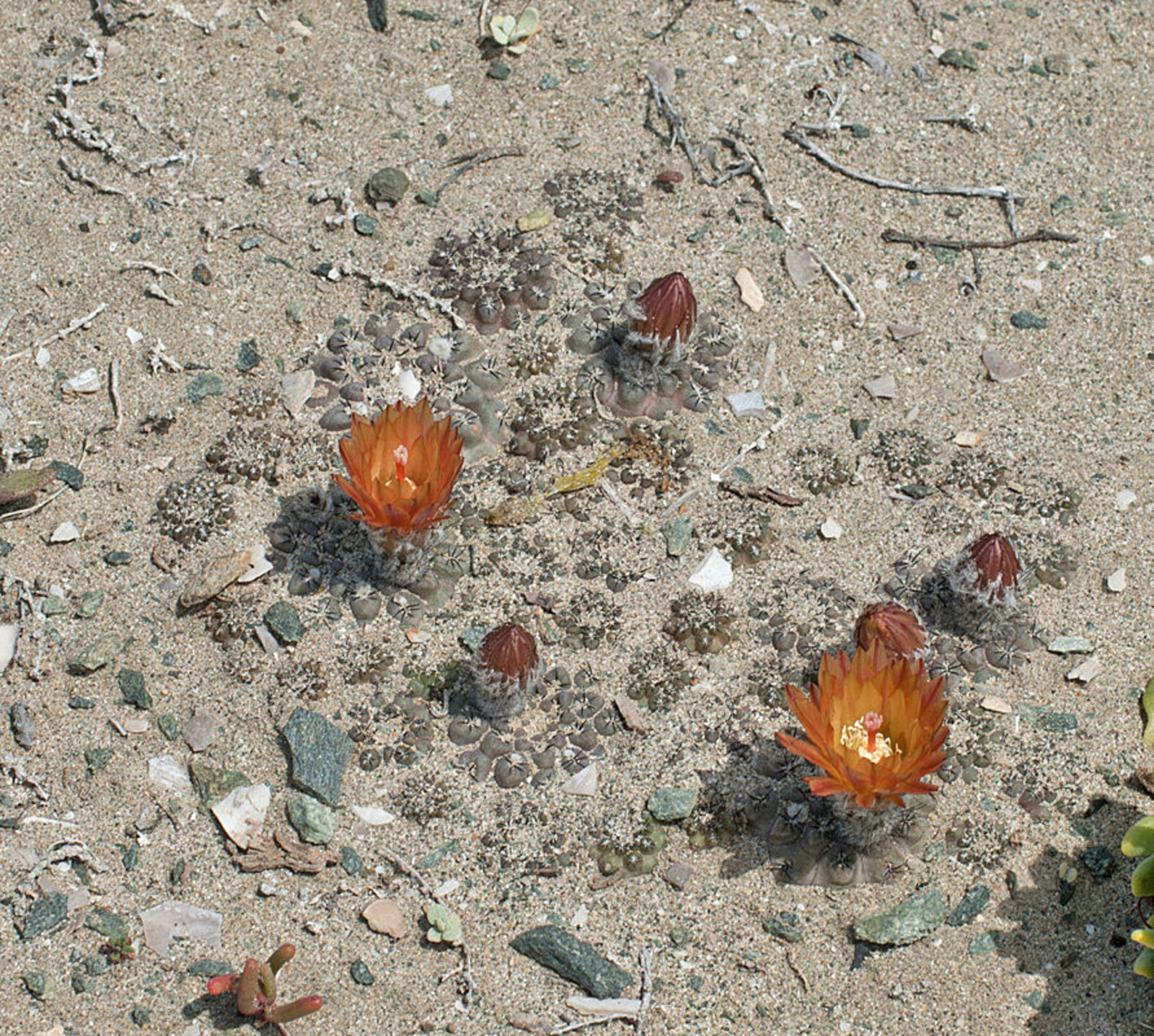 Reference image
Eriosyce riparia is a rare and highly sought-after cactus species belonging to the family Cactaceae, native to the semi-arid coastal valleys of Chile 1. Characterized by its succulent subshrub habit, this solitary cactus is perfectly adapted to survive extreme droughts thanks to its water-storing stem and protective spination.
Classified within the diverse genus Eriosyce, this species showcases interesting morphological variations 2. The specific epithet 'riparia' refers to its natural habitat near riverbanks or seasonal watercourses. Historical synonyms include Pyrrhocactus riparia and Neoporteria riparia.
This species is restricted to the coastal desert and dry scrubland biomes of Chile, specifically within the Coquimbo (CLCCO) and Valparaíso (CLCVA) regions 1. It thrives on rocky slopes, cliffs, and dry alluvial valleys where it enjoys excellent drainage and maximum sun exposure.
The stem is globose to shortly cylindrical, with a dull grayish-green epidermis. Ribs are well-defined and carry dense areoles armed with stiff, dark gray to blackish spines. In late spring and summer, it produces beautiful funnel-shaped flowers at the apex, ranging in color from pale yellow to light pinkish-cream 2.
In cultivation, it requires a highly porous, mineral-based potting medium. It can tolerate near-freezing temperatures if kept completely dry during its winter dormancy. Watering should be thorough but infrequent during the active growing season, accompanied by excellent air circulation.
The most prevalent issue is root rot caused by overwatering or using dense, peat-heavy soils. Insufficient light will lead to etiolation, causing the natural globose shape to stretch and weaken.
Enjoys bright, indirect light or morning sun; shield from harsh, scorching midday summer sun.
Water only when the substrate is completely dry. Keep dry in winter.
Requires a highly mineral substrate with high amounts of pumice, lava rock, and coarse sand.
Equipped with sharp, rigid spines. Non-toxic, but should be handled with thick gloves.
Moderate. Requires strict adherence to drying cycles to avoid root rot.
Native to the coastal areas of Chile, specifically Coquimbo and Valparaíso, where it inhabits dry rocky crevices and steep canyon walls near seasonal riverbeds.
