
Light
Full Sun
Requires at least 6 hours of direct sunlight daily. Insufficient light causes weak, stretched growth.
 Reference image
 Reference image
Spectacular Eriosyce
Eriosyce spectabilis is an extremely rare and critically endangered succulent subshrub belonging to the family Cactaceae. This highly specialized cactus species is renowned for its compact growth form and exceptional resilience to the hyper-arid conditions of its native desert habitats 1.
Classified under the genus Eriosyce in the subfamily Cactoideae, the species name 'spectabilis' is derived from Latin, translating to 'spectacular' or 'remarkable'. This name directly highlights the plant's impressive spine armature and striking floral display 2.
This species is endemic to southern South America, specifically restricted to the hyper-arid deserts and dry shrublands of Chile. It thrives in rocky crevices and gravelly soils with exceptional drainage, where annual precipitation is extremely low and diurnal temperature fluctuations are high 1.
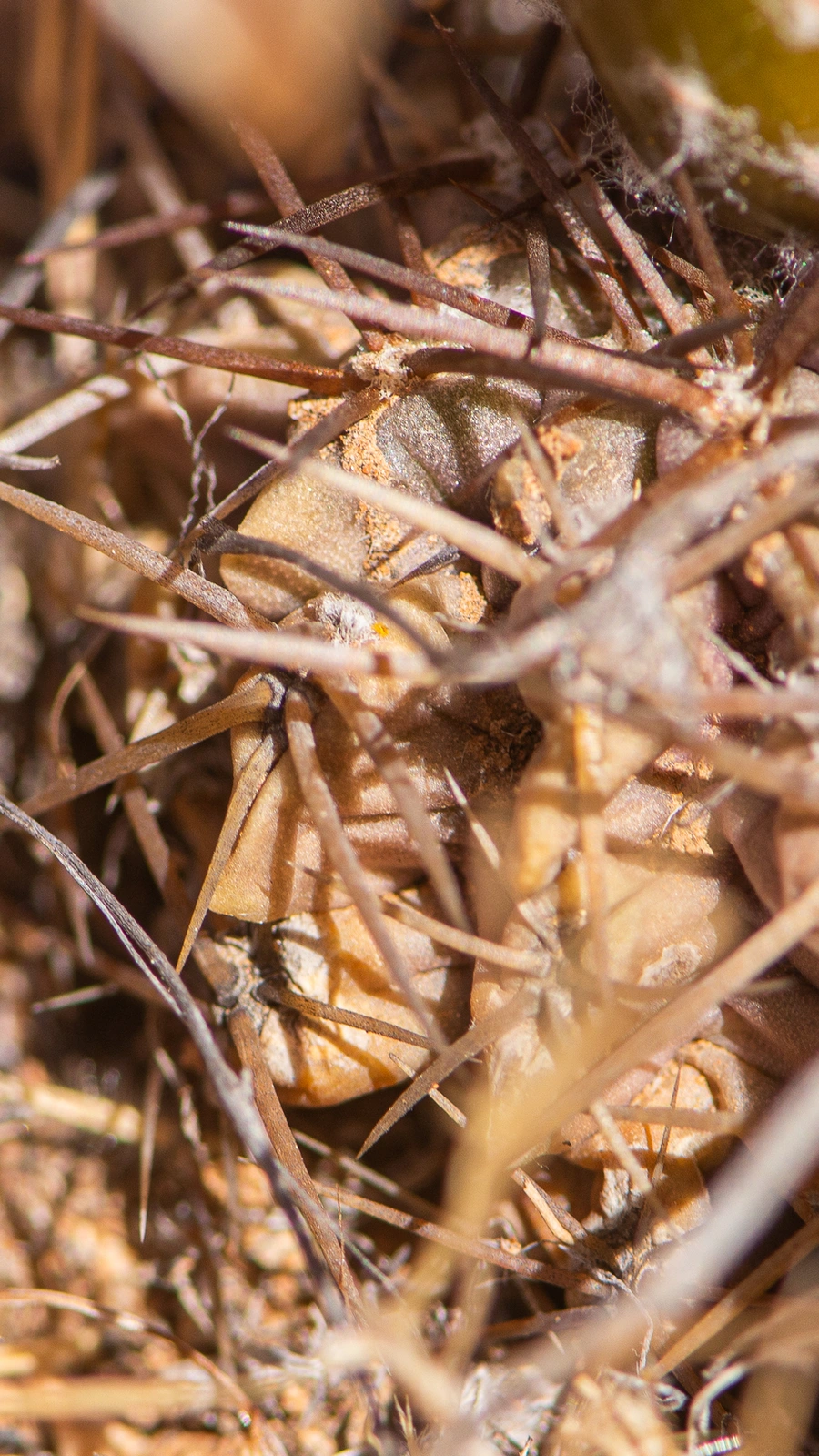
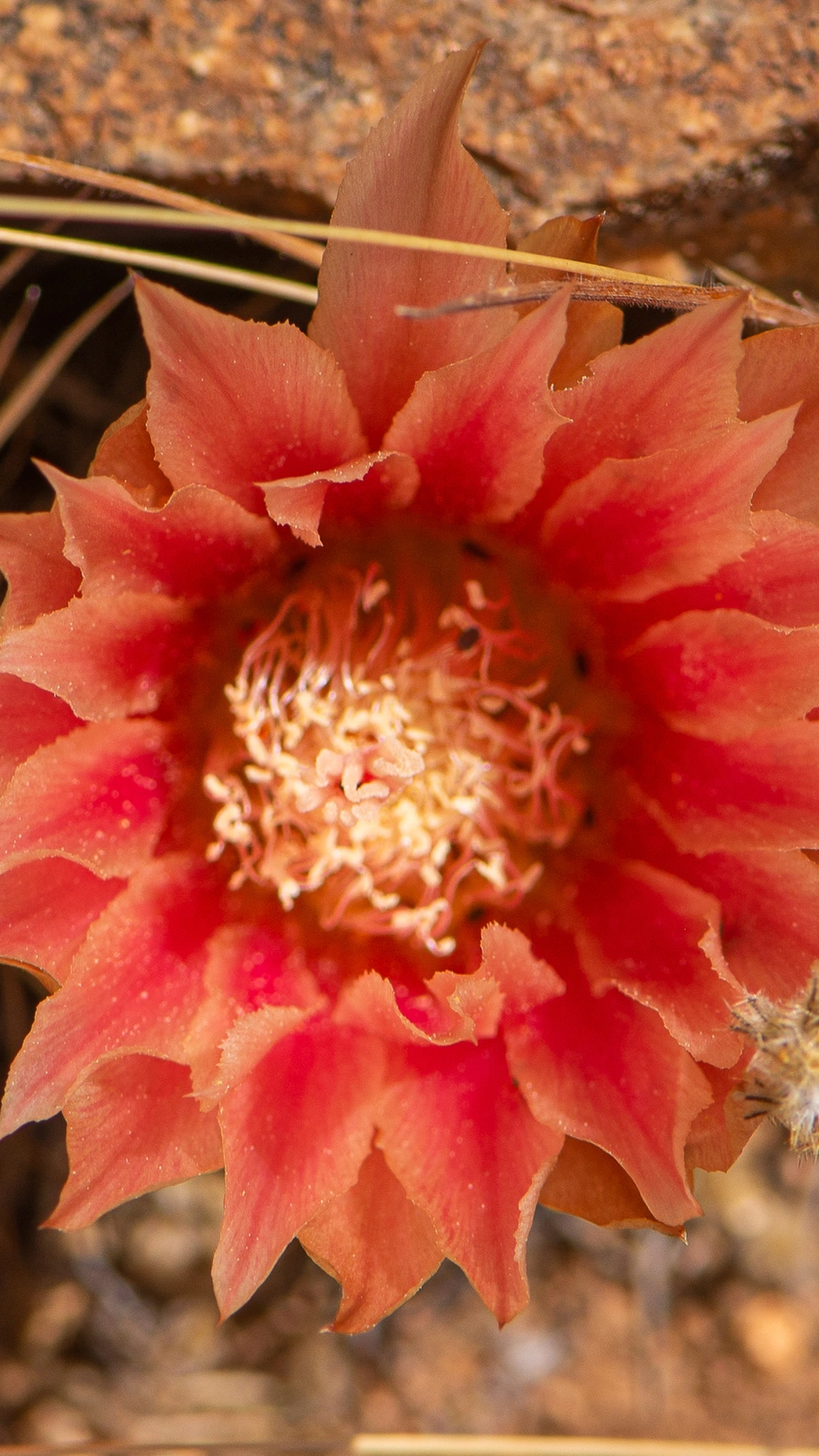
Eriosyce spectabilis is a slow-growing cactus with a solitary, globose to shortly cylindrical stem that displays deep green to purplish-bronze hues. The ribs are prominent, adorned with woolly areoles and formidable, sharp, often curved dark spines. The spectacular, funnel-shaped flowers emerge from the apical wool in shades of yellow, copper, or red 2.
In cultivation, this species requires specialized care. It demands maximum sunlight and excellent ventilation to mimic its windy desert home. Watering should be highly restricted and performed only during the active growing season when the substrate is completely dry. A strict dry winter rest is critical 1.
The most frequent cause of failure is overwatering and the use of water-retentive, organic soils, which inevitably leads to root rot. Insufficient winter light and poor air circulation will cause etiolation and make the plant highly susceptible to fungal infections.
Requires at least 6 hours of direct sunlight daily. Insufficient light causes weak, stretched growth.
Water only when the soil is dry to the bottom. Keep completely dry in winter.
Use an exclusively mineral-based mix containing high amounts of pumice, grit, and perlite.
Possesses sharp, rigid spines. Handle with thick protective gloves. Non-toxic to pets.
Recommended for advanced growers due to its extreme sensitivity to moisture and rot.
Native to the coastal desert slopes and rocky foothills of Chile, where it survives on minimal rainfall, relying occasionally on dense coastal fogs for moisture.
