
Light
Full Sun
Requires full sun or very bright direct sunlight to maintain healthy spine density.
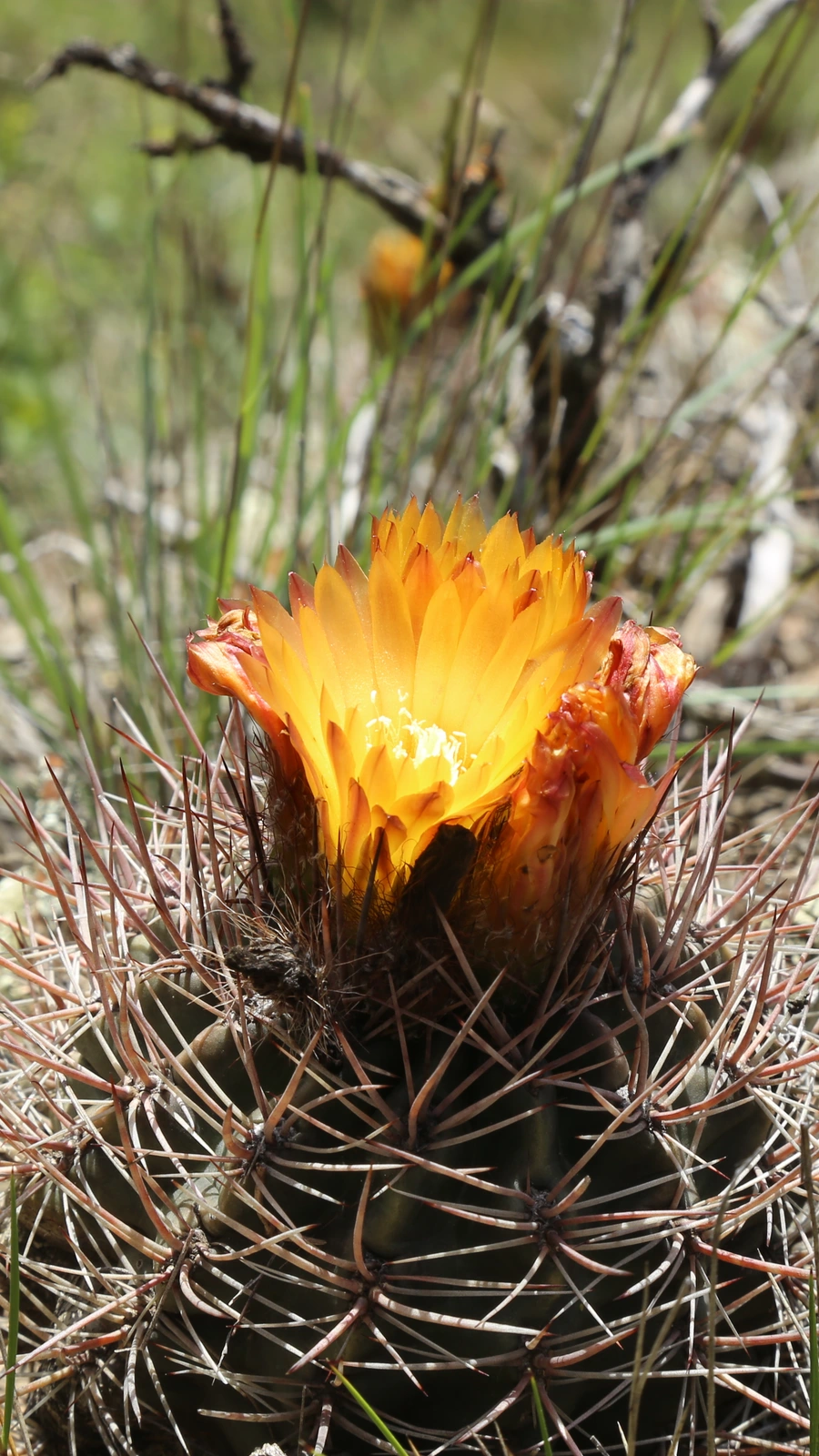 Reference image
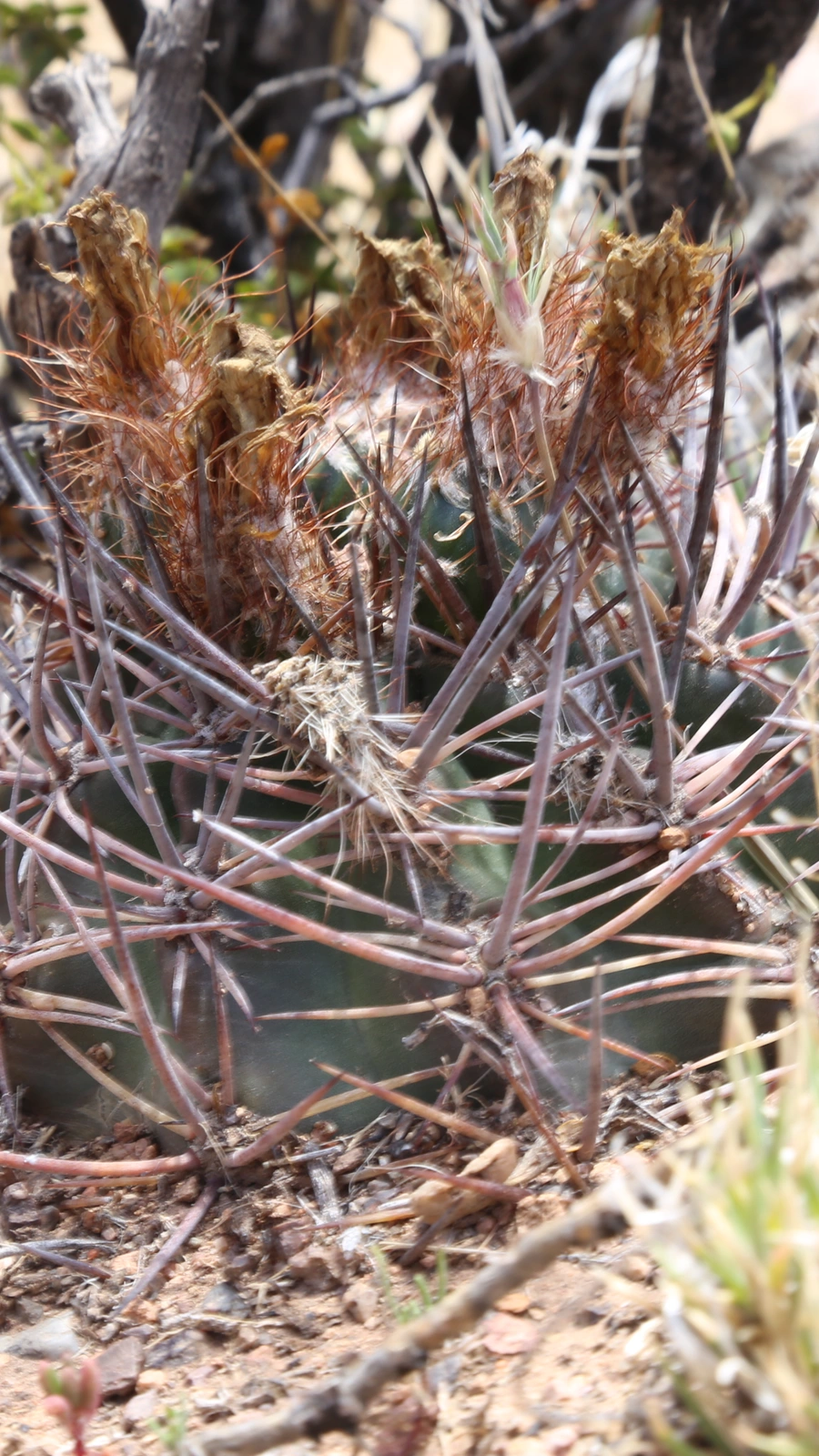 Reference image
Straus Cactus
Eriosyce strausiana is a slow-growing, solitary, succulent subshrub belonging to the family Cactaceae. Well-adapted to the extreme, arid conditions of its native environment, this cactus is highly prized among collectors for its dense, fierce spination and attractive, warm-toned flowers 1.
Originally described under different genera, it was integrated into the genus Eriosyce following modern taxonomic revisions. Its synonyms include Pyrrhocactus strausianus and Neoporteria strausiana 2. The generic name Eriosyce derives from Greek, meaning 'woolly fruit', referencing the characteristically hairy flower tubes and seed pods.
This species is native to southern South America, specifically the western and central provinces of Argentina, including Mendoza, San Juan, and Neuquén 1. It thrives in desert and dry shrubland biomes, typically growing on rocky hillsides, gravel plains, and highly drained slopes at moderate to high altitudes, where it endures harsh thermal amplitudes.
The stem is globose to shortly cylindrical, grey-green to dark olive green, with pronounced, notched ribs. The prominent areoles bear thick, upward-curved, needle-like spines that range from greyish-brown to black, forming a protective cage. The funnelform flowers emerge near the apex, displaying shades of copper, dull yellow, or brownish-red 1.
In cultivation, it requires an extremely porous, mineral-rich substrate with excellent drainage. Water thoroughly during the spring and summer active growth phase only when the soil has completely dried out. In winter, keep the plant entirely dry and provide a cool resting period (5-10 °C) to stimulate subsequent spring flowering 2.
The most frequent mistake is using heavy, organic-rich garden soil combined with frequent watering, which inevitably causes root rot. Keeping the cactus in a warm room during winter also prevents the formation of flower buds.
Requires full sun or very bright direct sunlight to maintain healthy spine density.
Allow soil to dry out completely. Keep virtually dry in winter.
Mineral-rich, highly porous cactus soil mixed with plenty of pumice and gravel.
Features sharp, sturdy spines. Non-toxic, but should be handled with thick gloves.
Moderate; highly sensitive to overwatering, otherwise quite resilient.
Native to the arid, gravelly slopes and rain-shadow valleys of western Argentina, adapting perfectly to high thermal variations and rocky soils.
