
Light
Direct Sun
Requires full sun or very bright indirect light; at least 6 hours of direct sunlight is optimal.
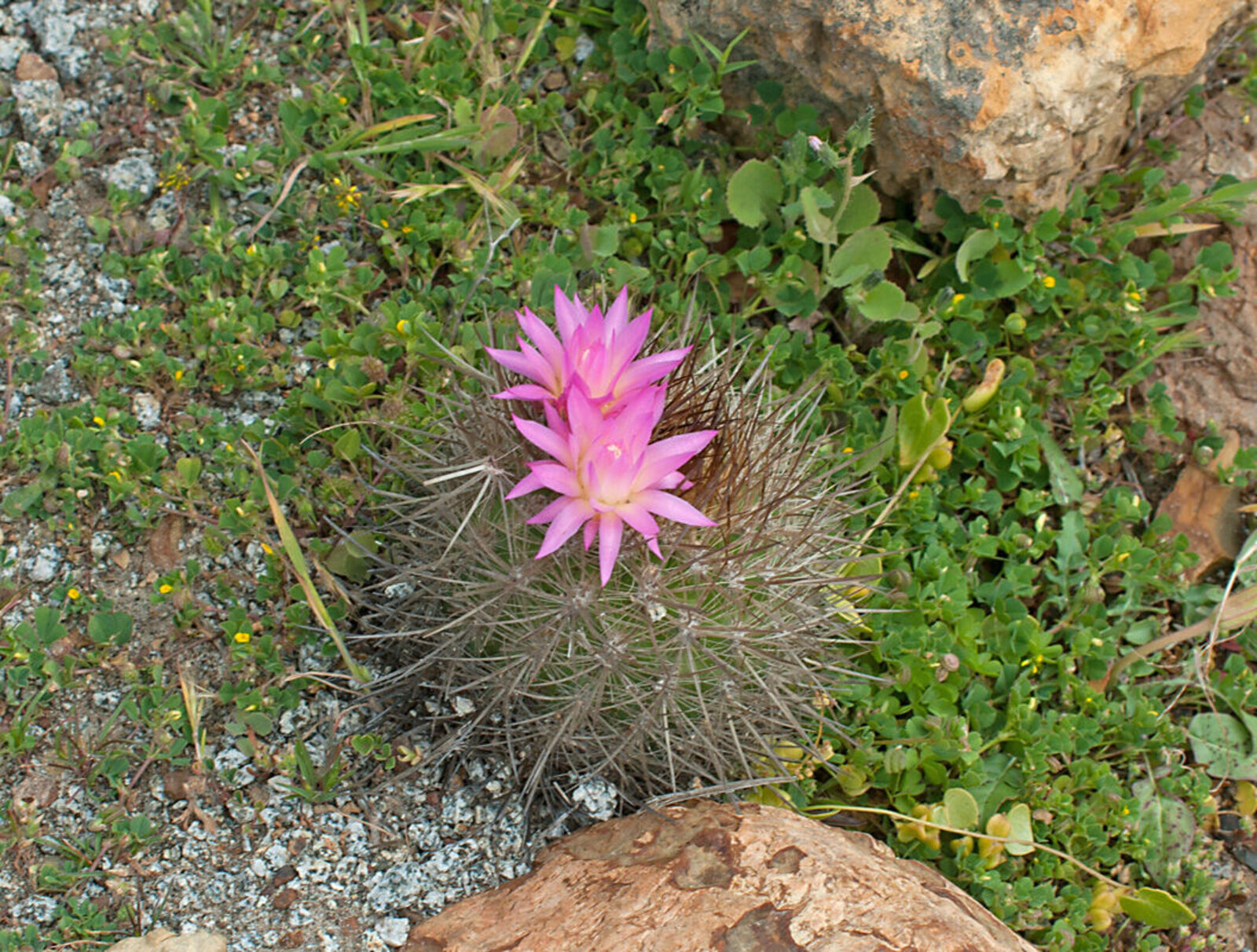 Reference image
Eriosyce subgibbosa is a highly resilient and decorative cactus species native to the coastal cliffs of Chile. Known for its globose to cylindrical stem covered in dense spines, it is highly prized among succulent enthusiasts for its bright magenta-pink flowers that bloom from late winter to early spring 1.
First described as Echinocactus subgibbosa by Haworth in 1837, the species was later transferred to the genus Eriosyce by Fred Kattermann during his landmark 1994 revision of the genus 2. It is widely known in older literature under the synonym Neoporteria subgibbosa. The specific epithet subgibbosa refers to the slightly humped or chin-like tubercles below the areoles.
This species is endemic to Chile, spanning a wide latitudinal range from the Coquimbo region down to Biobío 1. It thrives on rocky coastal cliffs, sandy hillsides, and dry matorral shrublands. In its native habitat, it relies heavily on the dense coastal fog, known locally as 'camanchaca', for moisture.
The stem is initially globose, eventually becoming cylindrical and reaching up to 1 meter in height with age. It features 16 to 22 pronounced ribs. Areoles carry numerous stiff, needle-like spines ranging in color from golden-yellow to dark brown or black. The funnel-shaped flowers, 3-5 cm long, emerge near the apex in vibrant shades of pink and magenta.
It requires full sun and exceptionally free-draining soil. Water thoroughly during the active summer growing season only when the substrate is completely dry, and suspend watering entirely in winter 2. Exposure to cool, dry winter conditions (5-10°C) encourages prolific spring blooming.
Overwatering and using heavy, clay-based soils are the primary causes of root rot. Lack of adequate direct sunlight leads to etiolation (stretching) and prevents flowering.
Requires full sun or very bright indirect light; at least 6 hours of direct sunlight is optimal.
Water deeply but infrequently in summer. Keep dry in winter to prevent root rot.
Use a very porous mix consisting mostly of pumice, gravel, and sand with minimal organic matter.
Non-toxic, but the sharp, rigid spines can cause physical injury. Handle with care.
Easy to grow, making it ideal for beginners who can resist the urge to overwater.
Native to the coastal regions of Chile, growing on rocky outcrops and steep cliffs. It is adapted to thrive in Mediterranean-style subtropical climates with dry summers and cool, foggy winters.
