
Light
Filtered Sun
Prefers bright, filtered sunlight or partial shade.
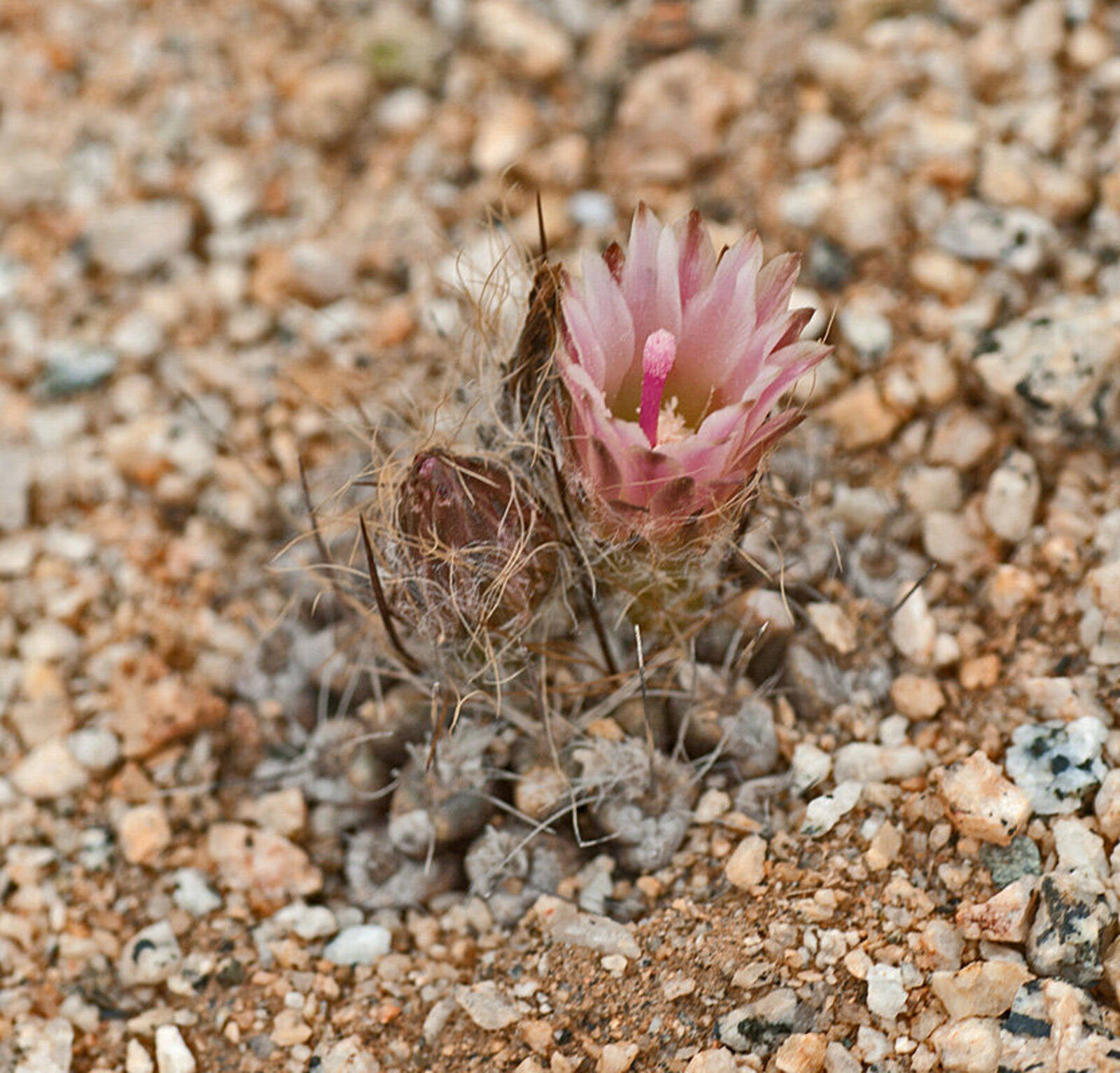 Reference image
Taltal Cactus
Eriosyce taltalensis is a slow-growing, highly resilient cactus belonging to the family Cactaceae. Appreciated for its striking spine configuration and vibrant funnel-shaped blossoms, it is a prized species among succulent enthusiasts.
This species has a complex taxonomic history, formerly classified under genera such as Neoporteria and Pyrrhocactus. Modern phylogenetic analyses have placed it firmly within the genus Eriosyce 1. The specific epithet taltalensis references the coastal town of Taltal in Chile.
It is endemic to the extremely arid coastal deserts of northern Chile, particularly in the Antofagasta and Atacama regions 2. In this hyper-arid environment, rainfall is exceptionally rare. The species survives by absorbing moisture from 'Camanchaca', a dense coastal fog that sweeps over the rocky mountain slopes.
Initially globose, the stem becomes elongated and subcylindrical with age, displaying a greyish-green to dark purplish hue. It features pronounced ribs adorned with woolly areoles and stout, sharp, sometimes curved spines. During spring and summer, it produces beautiful flowers near the apex in shades of yellow, pink, or red.
Successful cultivation requires replication of its dry habitat. Use a highly porous mineral substrate rich in pumice and grit. Water thoroughly only when the soil is completely dry during the growing season. In winter, maintain absolute dryness and keep temperatures cool to induce winter dormancy.
Overwatering in poorly draining pots quickly triggers root rot. Insufficient sunlight leads to etiolation, where the stem stretches unnaturally. Lack of a cold winter rest often prevents the cactus from blooming.
Prefers bright, filtered sunlight or partial shade.
Allow the soil to dry out completely between waterings; suspend watering in winter.
Thrives in highly porous, grit-rich soil containing pumice, sand, and minimal organic matter.
Non-toxic, but the sharp spines pose a physical hazard to pets and children.
Requires careful watering and drainage management, suitable for moderate experience.
Native to the coastal deserts of the Atacama and Antofagasta regions in northern Chile, where it thrives on steep slopes and receives moisture from coastal fogs.
