
Light
Full Sun
Requires full sun or intense direct sunlight to maintain its compact shape and dark pigmentation.
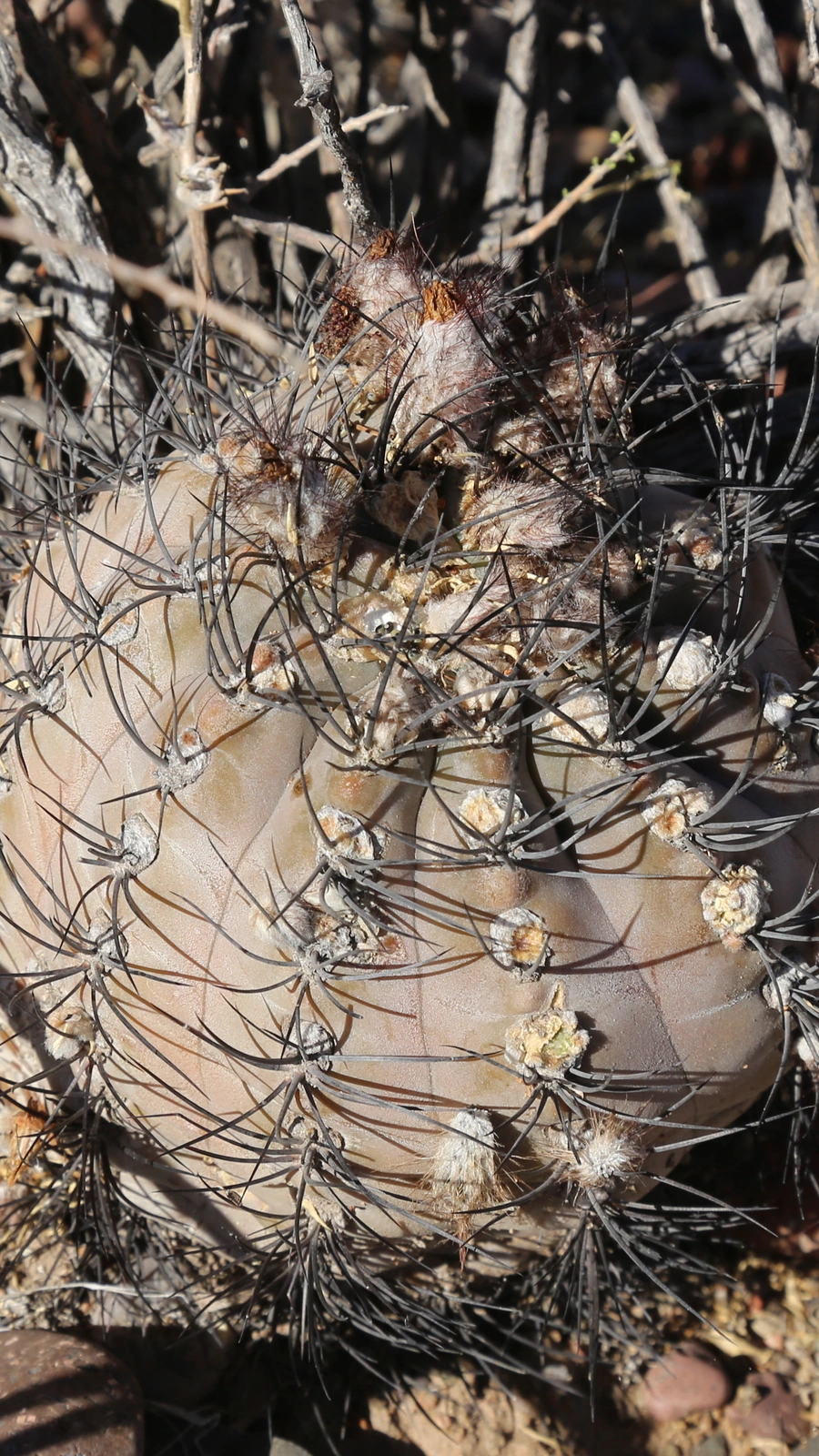 Reference image
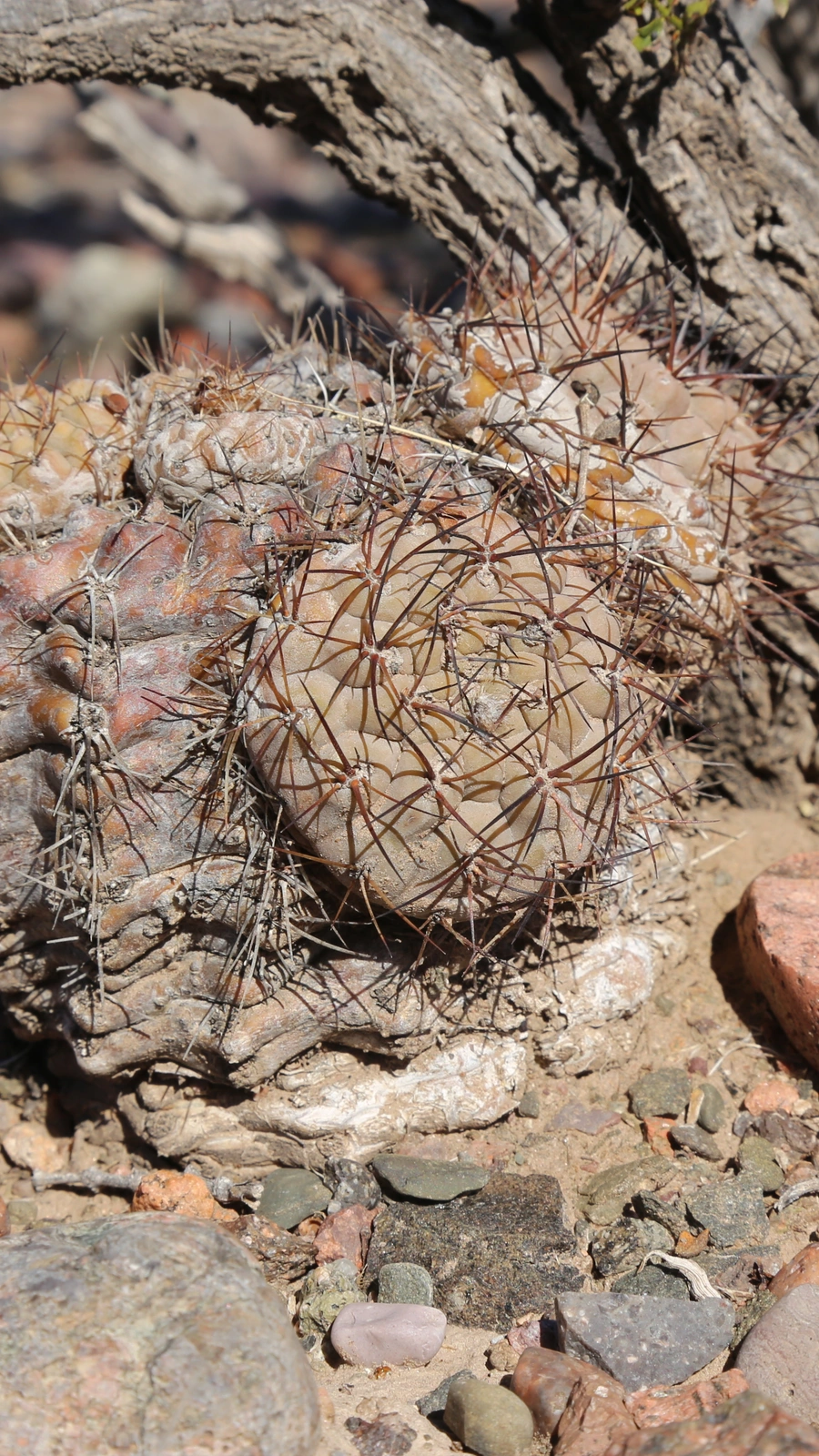 Reference image
Villicum Cactus
Eriosyce villicumensis is a unique, globose to slightly cylindrical succulent subshrub belonging to the Cactaceae family 1. Highly prized by collectors, it is distinguished by its dark, often brownish-black epidermis and rigid, curved spines. It is an extremely drought-tolerant species adapted to hyper-arid conditions.
Originally described under the genus Pyrrhocactus as Pyrrhocactus villicumensis, taxonomists now place this species within the diverse genus Eriosyce 1. The specific epithet "villicumensis" refers directly to its type locality in the Sierra de Villicum mountain range in Argentina.
This cactus is native to western Argentina, spanning regions such as San Juan, La Rioja, Mendoza, and adjacent areas 2. It thrives in arid deserts and dry shrublands, typically found on wind-swept rocky slopes and gravelly soils poor in organic material but rich in minerals.
The stem color ranges from grayish-green to a deep bronze or nearly black hue under intense sunlight. It features prominent ribs adorned with strong, upwardly curved, thick spines. In late spring and summer, it produces beautiful funnel-shaped flowers near the apex, typically colored in shades of yellow, copper, or bronze.
In cultivation, Eriosyce villicumensis requires maximum light exposure and excellent air circulation to retain its compact shape and dark coloration. Watering should follow the 'soak and dry' method, keeping the substrate completely dry during the cold winter dormancy 1.
The most frequent issue is root rot caused by organic-rich soils that retain moisture. Overwatering, especially during low temperatures, will quickly kill the root system. Lack of direct sunlight leads to etiolation and weak spine development.
Requires full sun or intense direct sunlight to maintain its compact shape and dark pigmentation.
Water thoroughly only when the soil is 100% dry. Maintain strict dryness during winter.
Gritty, mineral-based cactus mix containing pumice, perlite, and coarse sand with minimal peat.
Equipped with very sharp, stiff spines. Handle with thick gardening gloves. Non-toxic to pets.
Moderate. Demands careful watering discipline and dry winter conditions to prevent rot.
Occurs naturally on the dry, barren, rocky slopes of the Sierra de Villicum and surrounding arid mountains in western Argentina, where it endures extreme sun and minimal rainfall.
