
Light
Bright Indirect Light
Requires bright, indirect sunlight or filtered sun. Its white hairs protect it from intense solar radiation.
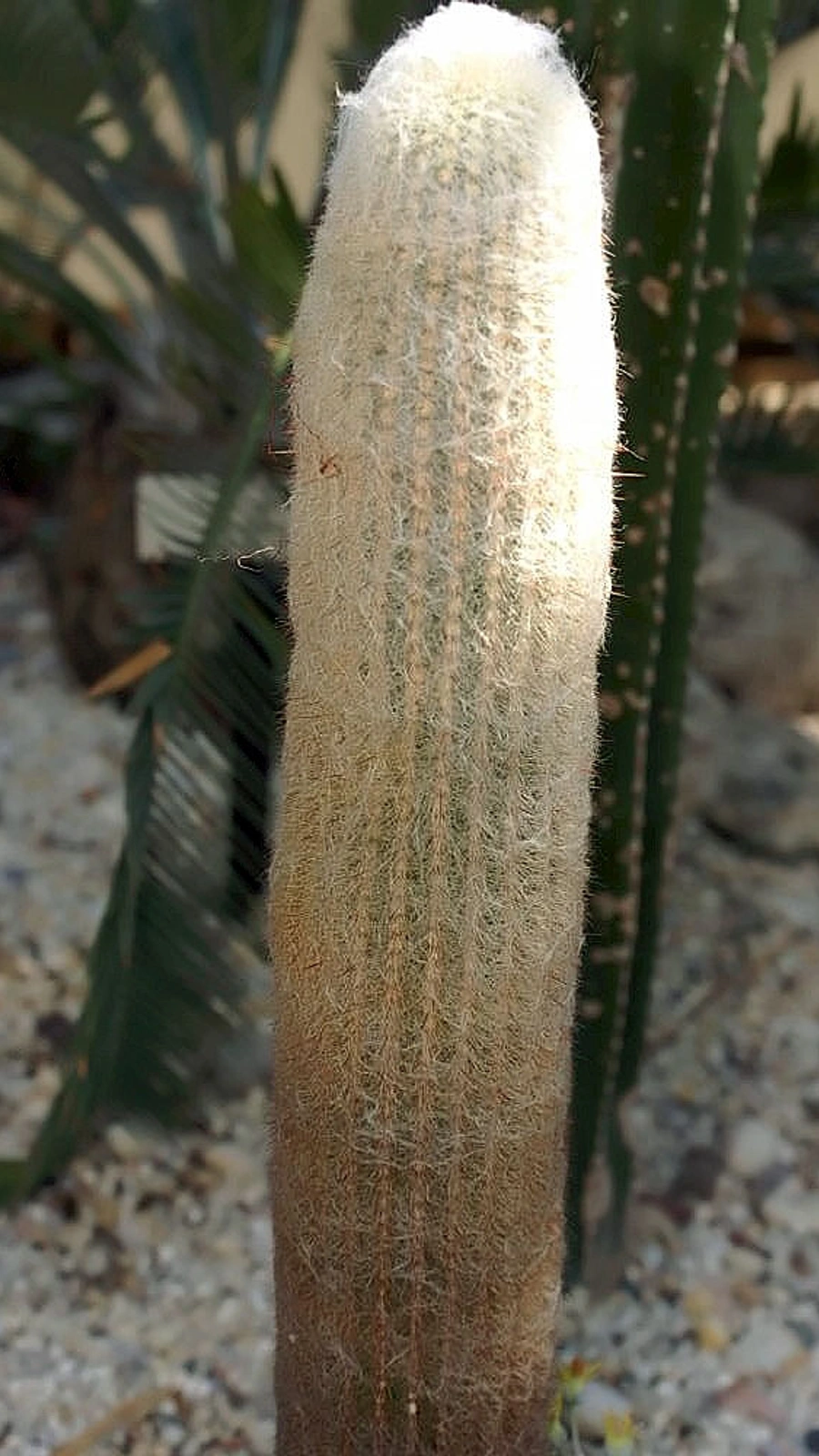 Reference image
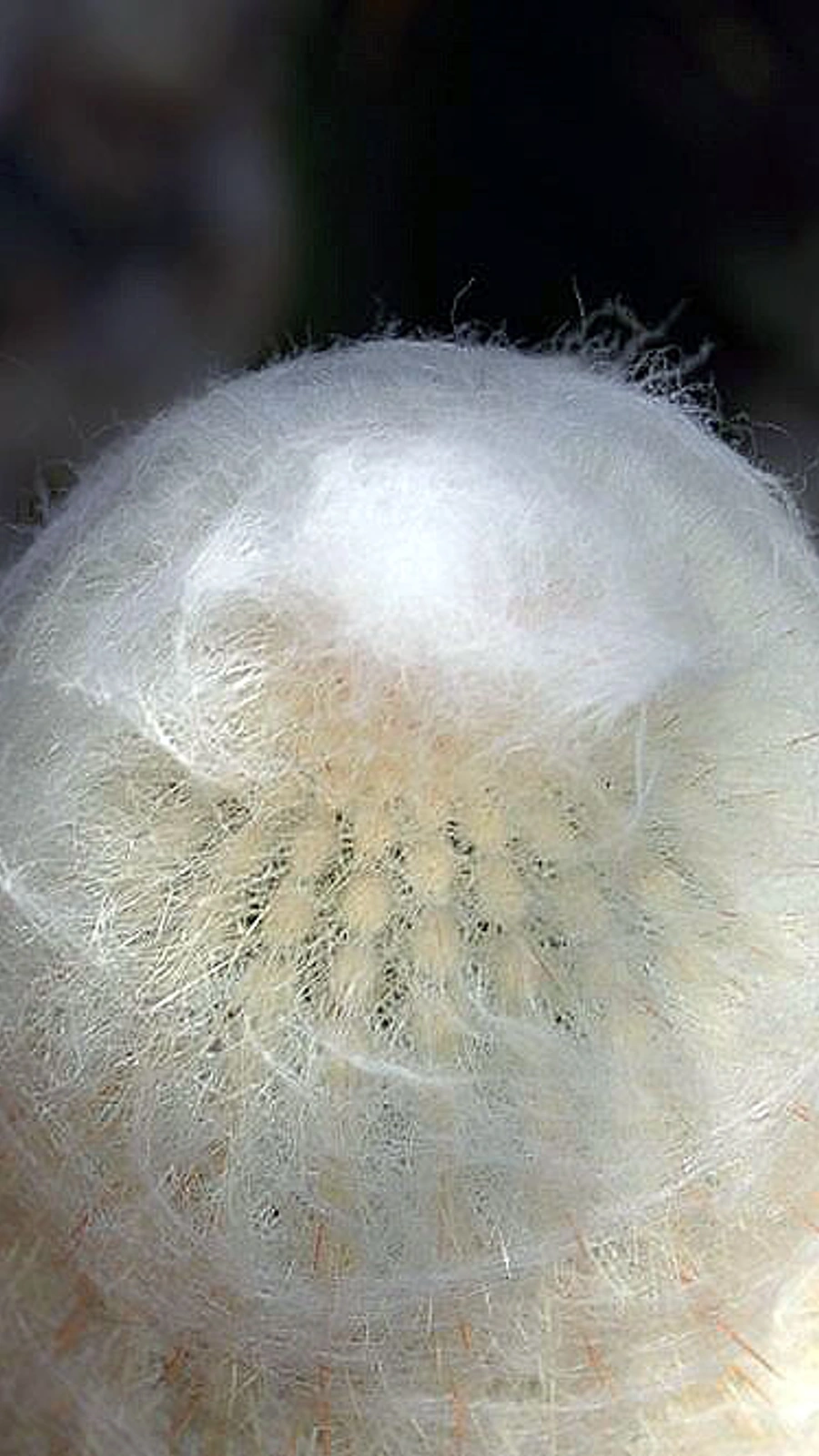 Reference image
Peruvian Old Man Cactus
Espostoa hylaea is a fascinating, columnar cactus species belonging to the family Cactaceae. Known for its dense covering of white, wool-like hairs, this plant is native to the dry tropical valleys of Peru. While it can grow into a multi-branched tree-like structure in the wild, it remains a slow-growing, highly ornamental indoor specimen under cultivation 1.
Classified under the genus Espostoa, which is famous for producing a specialized flowering zone called a cephalium, the species epithet 'hylaea' refers to its association with dry forest valleys. It has also been classified under the synonym Thrixanthocereus hylaeus. Its prominent woolly exterior acts as a natural sunscreen 2.
This species is endemic to Peru in western South America. It thrives in seasonally dry tropical biomes, particularly along the dry canyons of the Marañón River basin. Found at elevations between 500 and 1000 meters, it clings to steep, gravelly, and rocky slopes where drainage is exceptionally rapid 1.
Espostoa hylaea forms a succulent shrub or small tree. The cylindrical stems are pale green but are heavily shrouded in fine, silky white hairs arising from the areoles. Sharp, yellowish-brown needle-like spines protrude through this woolly coat. Mature specimens develop a lateral cephalium adorned with wool and bristles, from which nocturnal pinkish-white flowers emerge.
For successful cultivation, use a very porous potting soil composed primarily of pumice and coarse grit. Position the cactus in a bright spot receiving plenty of filtered sunlight. Water thoroughly only when the soil has completely dried out. In winter, entering a dormancy phase, watering should be suspended entirely.
The most critical mistake is overwatering, which rapidly induces root and stem rot. Spraying water directly onto the white woolly hairs should also be strictly avoided, as trapped moisture leads to permanent discolored staining and devastating fungal infections 2.
Requires bright, indirect sunlight or filtered sun. Its white hairs protect it from intense solar radiation.
Allow the potting substrate to dry out entirely between waterings. Water minimally during the winter dormancy.
Requires an extremely gritty, free-draining cactus mix rich in pumice, coarse sand, and perlite.
Though it looks soft and fluffy, sharp, rigid spines are hidden beneath the wool. Keep away from pets and children.
Moderate. It is easy to care for if overwatering and poor drainage are strictly avoided.
Naturally distributed in the dry canyon landscapes and seasonally dry tropical river valleys of Peru, thriving on rocky, steep slopes.
