
Light
Filtered Sun
Thrives in bright, filtered light or partial shade.
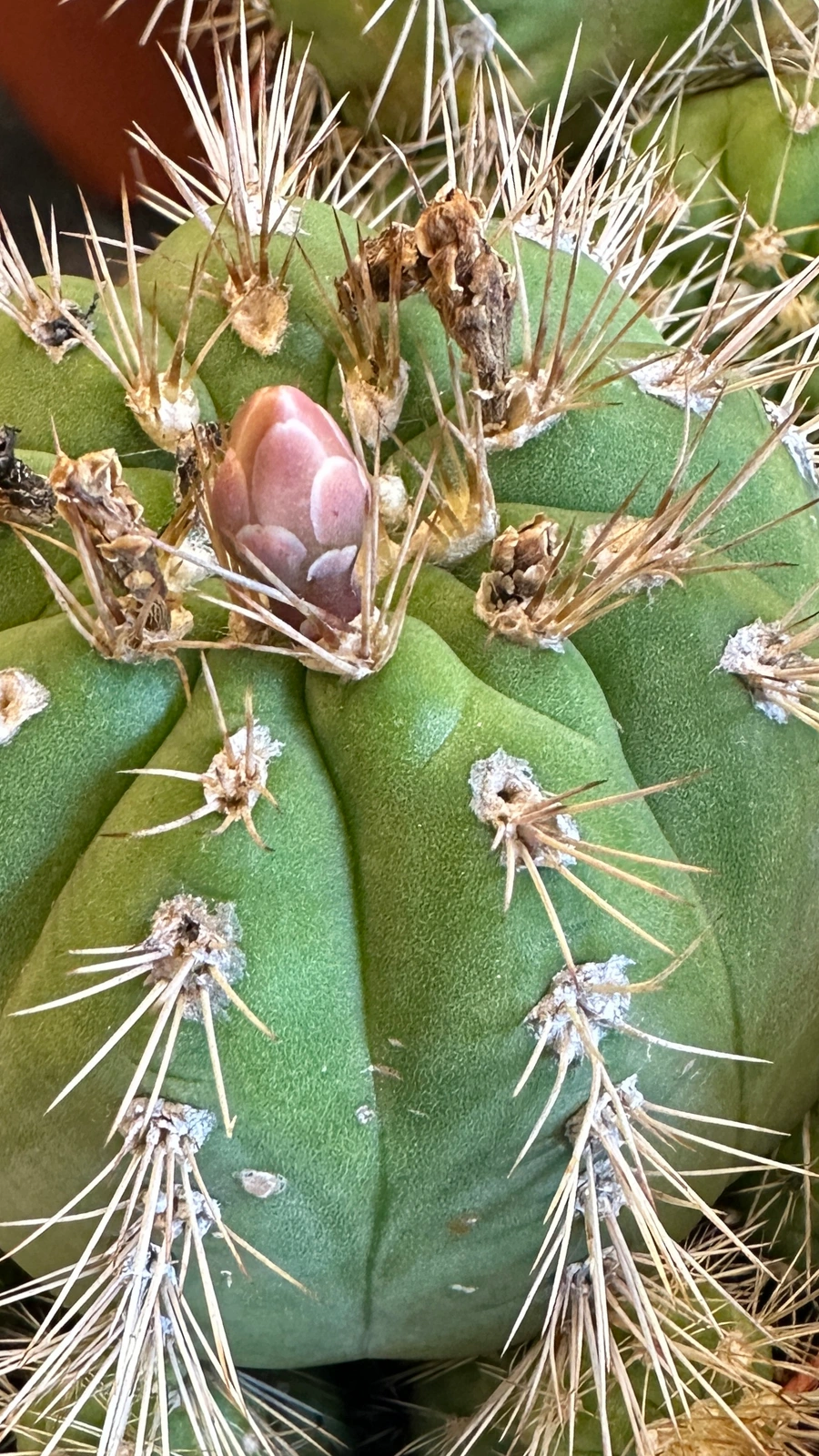 Reference image
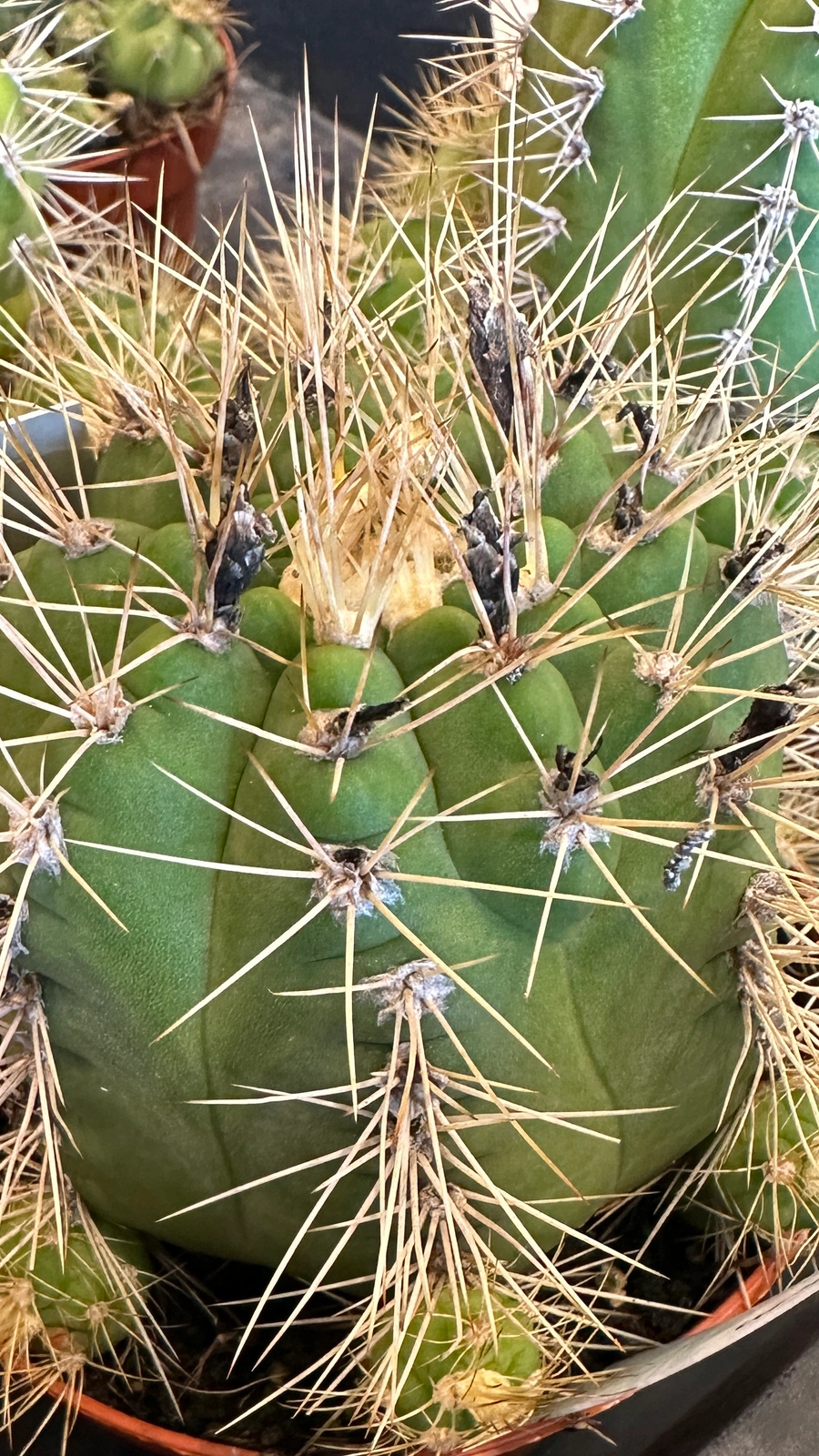 Reference image
Chaco Chin Cactus
Gymnocalycium chacoense is a highly sought-after, solitary to slowly offsetting globose cactus in the family Cactaceae. It is appreciated by succulent enthusiasts for its distinctive ribs and elegant spination.
The genus name Gymnocalycium derives from the Greek words gymnos (naked) and kalyx (bud), referencing the hairless and spineless flower buds characteristic of the genus 1. The specific epithet chacoense refers to the Gran Chaco region where this species is native.
This species is endemic to Bolivia, localized in dry deciduous forests and rocky sandstone outcrops, particularly around the Cerro Chochis area 2. It thrives in rock crevices filled with mineral-rich, highly porous debris, enduring long periods of drought.
The stem is globose to short cylindrical, matte dark green to greyish-green, with well-defined ribs divided into distinct tubercules (chins). Spines are yellowish-brown to grey, slightly curved, and pressed against the stem. The flowers are funnel-shaped, pristine white to pale pink, emerging from the crown in late spring to summer.
In cultivation, Gymnocalycium chacoense prefers bright, filtered light rather than harsh, direct afternoon sun, which can scorch its epidermis. Water thoroughly only when the substrate has dried completely. During winter, initiate a dry dormancy period at cool temperatures around 5-10 °C to promote healthy spring blooming.
The most frequent mistakes include using heavy, peat-rich soils that retain moisture, and watering during the winter rest. These practices invariably lead to root rot. Insufficient ventilation in warm environments can also invite persistent mealybug infestations.
Thrives in bright, filtered light or partial shade.
Allow soil to dry out completely between waterings; keep dry in winter.
Highly porous mineral soil with excellent drainage (pumice/gravel).
Has sharp spines; non-toxic to cats and dogs.
Easy to care for if overwatering is strictly avoided.
Native to the Western South American region, specifically endemic to the dry sandstone hills and rocky scrublands of Bolivia's Gran Chaco province.
