
Light
Bright Indirect Light
Prefers bright, indirect sunlight. Protect from intense, direct midday summer sun.
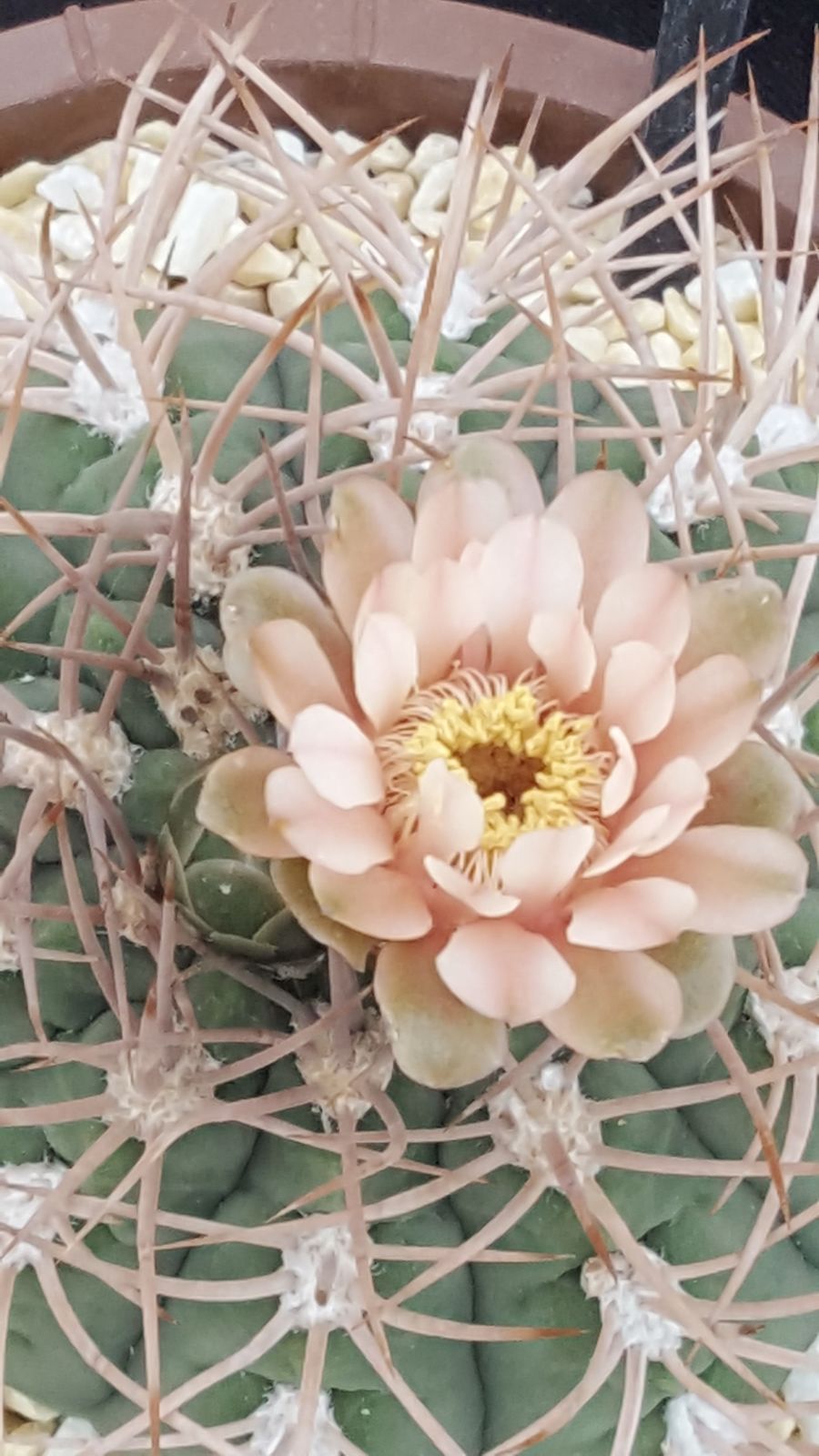 Reference image
Hossei Chin Cactus
Gymnocalycium hossei is an attractive, globose, and heavily spined succulent subshrub in the family Cactaceae. Known for its robust, dark spines and beautiful funnel-shaped flowers, it is a highly sought-after species among succulent enthusiasts.
The genus name Gymnocalycium derives from the Greek for "naked calyx," referring to the smooth, spineless flower buds that distinguish this genus 1. The specific epithet hossei commemorates the German botanist and plant collector Carl Curt Hosseus, who active in South America.
This species is native to northwestern Argentina, specifically in provinces such as La Rioja, Catamarca, and San Juan 2. It thrives at elevations of 500 to 1500 meters, growing in rocky crevices and gravelly soils under the sparse cover of xerophytic shrubs.
The stem is solitary, flattened-globose, up to 15 cm in diameter, and ranges in color from olive green to brownish or greyish-green. It features 9 to 12 ribs divided into prominent tubercles. Its spines are sturdy, curved backward toward the stem, and initially dark brown before turning greyish-white. Flowers are borne at the crown, displaying white to pale pinkish petals with dark throats.
It requires bright, indirect sunlight or filtered sun. Direct mid-day summer sun can cause sunburn. Implement a soak-and-dry watering regimen, ensuring the substrate dries out completely between waterings. In winter, maintain dry conditions to induce dormancy and prevent rot.
Overwatering is the single most common cause of failure, quickly leading to root rot. Additionally, using heavy clay soils or placing the cactus in low-light environments causes etiolation and weak tissue growth.
Prefers bright, indirect sunlight. Protect from intense, direct midday summer sun.
Water thoroughly only when the soil is completely dry. Keep nearly dry during winter.
Use a highly mineral, gritty substrate with plenty of pumice, gravel, and minimal organic matter.
Non-toxic, but the sharp, curved spines can cause mechanical injury. Keep out of reach of pets.
Very easy to grow for beginners as long as overwatering is strictly avoided.
Indigenous to northwestern Argentina, where it inhabits dry, rocky slopes and gravelly plains, often growing beneath sparse desert shrubs for shade.
