Species

Gymnocalycium hossei

Gymnocalycium hossei

Gymnocalycium hossei

Gymnocalycium hossei (F.Haage) A.Berger is treated as an accepted taxon in Plants of the World Online.1

The current source-backed classification places it in Cactaceae within Gymnocalycium.12

Its recorded native range/source remark is AGWSJ, AGWSL, SOUTHERNAMERICA, AGWJU, AGWME, SOUTHERNSOUTHAMERICA, AGW, AGWSA, AGWSE, AGWLR, AGWCA, AGWTU; NW. Argentina.1

POWO records the plant context as succulent subshrub, subtropical.1

This is a source-populated draft intended for later Kaktus Doktoru editorial rewriting; care advice and morphology should be reviewed before publication.

References

  1. Plants of the World Online. "Gymnocalycium hossei (F.Haage) A.Berger". Royal Botanic Gardens, Kew. Accessed: 2026-06-10. https://powo.science.kew.org/taxon/urn:lsid:ipni.org:names:115398-2
  2. GBIF Secretariat. "Gymnocalycium hossei". GBIF Backbone Taxonomy. Accessed: 2026-06-10. https://www.gbif.org/species/10719858

Plants In This Group

Gymnocalycium hossei

Gymnocalycium hossei

Gymnocalycium hossei

Gymnocalycium hossei is an attractive, globose, and heavily spined succulent subshrub in the family Cactaceae. Known for its robust, dark spines and beautiful funnel-shaped flowers, it is a highly sought-after species among succulent enthusiasts.

Taxonomy and Naming

The genus name Gymnocalycium derives from the Greek for "naked calyx," referring to the smooth, spineless flower buds that distinguish this genus 1. The specific epithet hossei commemorates the German botanist and plant collector Carl Curt Hosseus, who active in South America.

Distribution and Habitat

This species is native to northwestern Argentina, specifically in provinces such as La Rioja, Catamarca, and San Juan 2. It thrives at elevations of 500 to 1500 meters, growing in rocky crevices and gravelly soils under the sparse cover of xerophytic shrubs.

Appearance

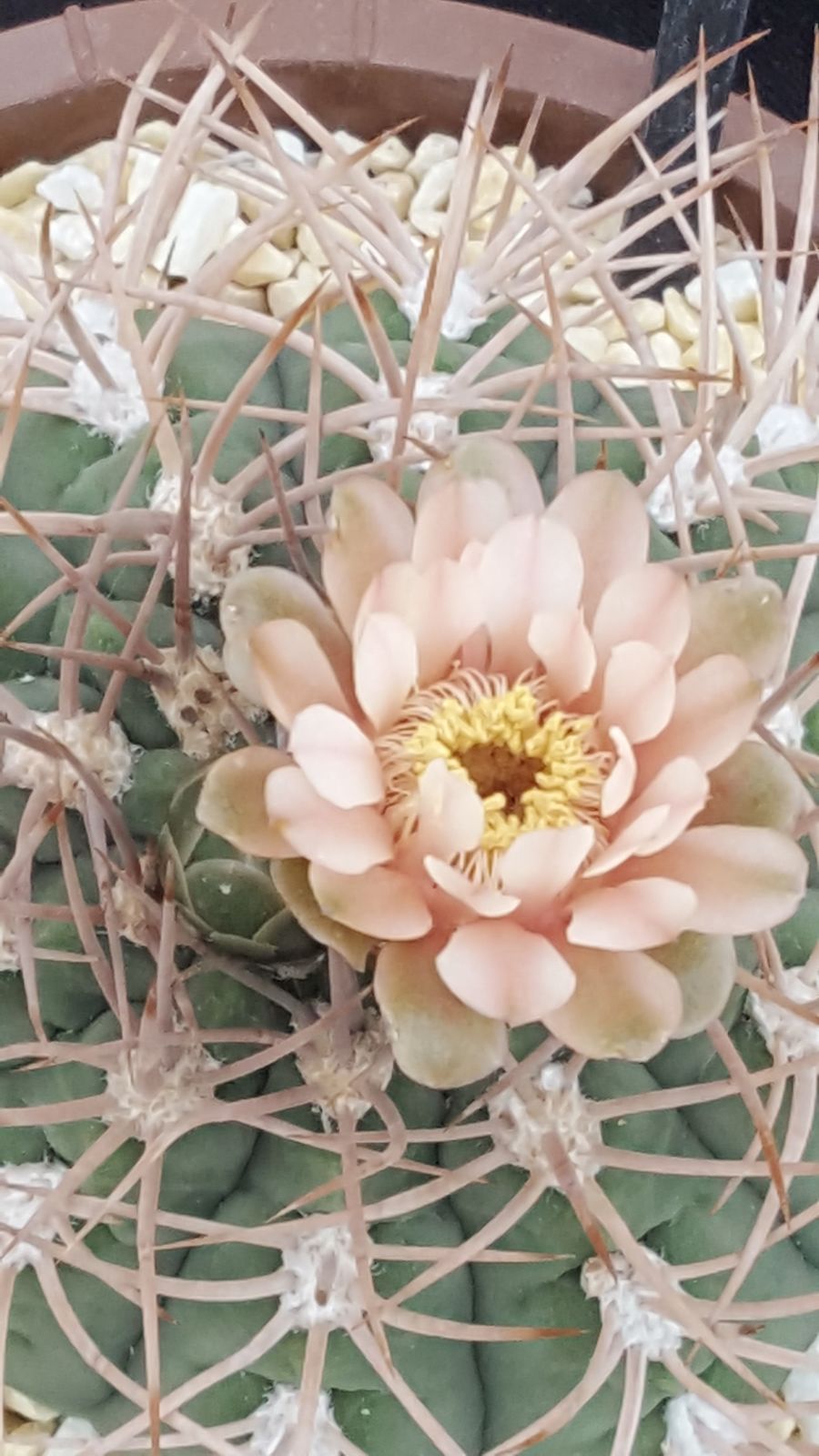
The stem is solitary, flattened-globose, up to 15 cm in diameter, and ranges in color from olive green to brownish or greyish-green. It features 9 to 12 ribs divided into prominent tubercles. Its spines are sturdy, curved backward toward the stem, and initially dark brown before turning greyish-white. Flowers are borne at the crown, displaying white to pale pinkish petals with dark throats.

Cultivation and Care

It requires bright, indirect sunlight or filtered sun. Direct mid-day summer sun can cause sunburn. Implement a soak-and-dry watering regimen, ensuring the substrate dries out completely between waterings. In winter, maintain dry conditions to induce dormancy and prevent rot.

Common Cultivation Mistakes

Overwatering is the single most common cause of failure, quickly leading to root rot. Additionally, using heavy clay soils or placing the cactus in low-light environments causes etiolation and weak tissue growth.

References

  1. Hunt, D. (2006). The New Cactus Lexicon. DH Books.
  2. Anderson, E. F. (2001). The Cactus Family. Timber Press.

Frequently Asked Questions

What is Gymnocalycium hossei?
Gymnocalycium hossei is a species-level taxonomy entry identified by the scientific name Gymnocalycium hossei.
Which rank is Gymnocalycium hossei?
Gymnocalycium hossei is shown as a species in our botanical dictionary.
Which groups sit below Gymnocalycium hossei?
No lower taxonomy landing pages are currently shown for Gymnocalycium hossei.
Are there plants related to Gymnocalycium hossei?
Yes. Related dictionary entries include Gymnocalycium hossei.
Is this taxonomy page a care guide?
No. This page explains scientific classification; light, watering, and safety guidance belongs on individual plant pages.
Is Gymnocalycium hossei a product category?
No. This is a scientific taxonomy record. Product categories are organized separately around customer search intent.
Why is the Latin name shown?
The Latin scientific name reduces ambiguity between common names across languages and regions.
Where can I see the parent ranks?
The taxonomy card shows the parent ranks of Gymnocalycium hossei inside the scientific hierarchy.
Can this page change over time?
Yes. Taxonomy and dictionary content can be updated as botanical data, greenhouse observations, and collection records improve.
Why is this different from a plant detail page?
This page explains a classification node. Individual plant pages contain care notes, collection links, and practical growing information.