
Light
Full Sun
Requires full sun, ideally 6 to 8 hours of direct sunlight daily for healthy growth.
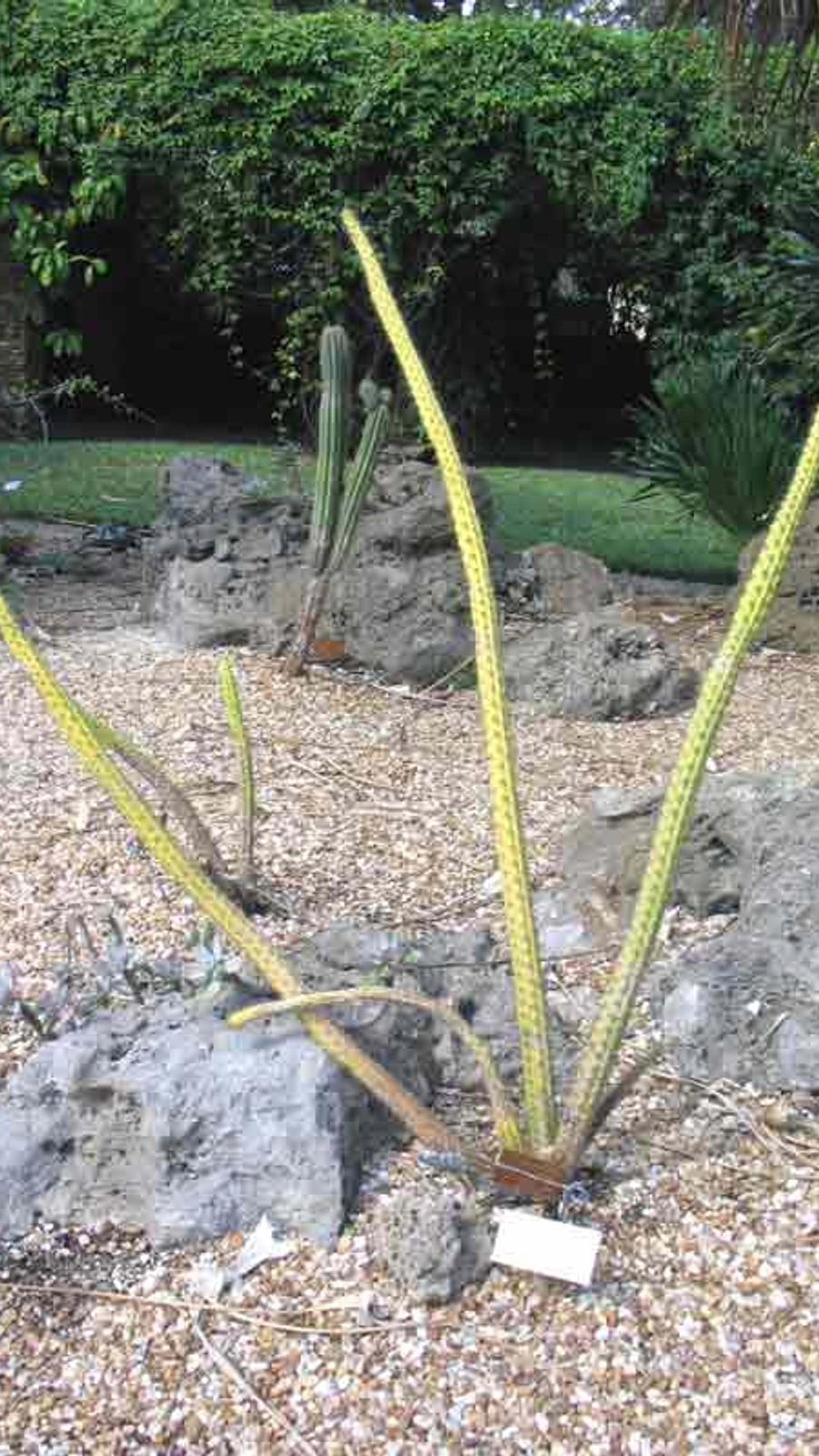 Reference image
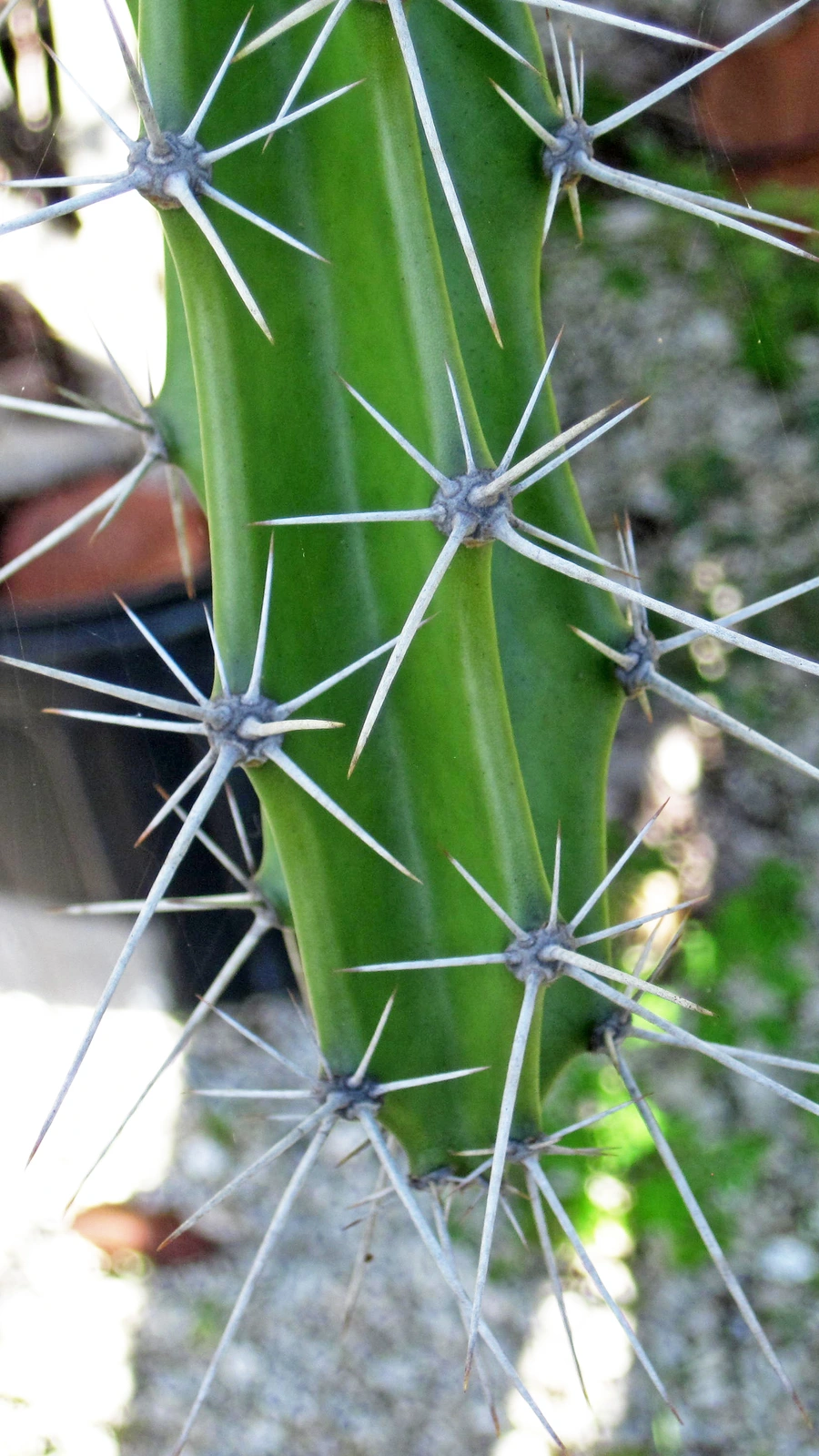 Reference image
Aboriginal Prickly Apple
Harrisia aboriginum, commonly known as the Aboriginal prickly apple, is an endangered, column-forming cactus species native to the coastal regions of Florida 1. Characterized by its nocturnal white blooms, sprawling growth habit, and bright yellow globose fruits, this subtropical succulent shrub is heavily associated with the historic coastal shell mounds of the region.
Belonging to the Cactaceae family, Harrisia aboriginum was first formally described by American botanist John Kunkel Small. The specific epithet 'aboriginum' pays tribute to the indigenous peoples of Florida (such as the Calusa), as this cactus is frequently found growing directly on prehistoric kitchen middens and shell mounds 2.
This species is narrowly endemic to the southwestern coast of Florida 1. It thrives in maritime hammocks, coastal strands, and shell mounds where the soil is highly alkaline, sandy, and rich in calcium carbonate from oyster shells. It has evolved a high tolerance to coastal winds and occasional salt spray.
Harrisia aboriginum features slender, cylindrical, erect or sprawling stems that can reach up to 6 meters in height. Stems are divided into 9 to 11 shallow ribs. Each areole bears 7 to 9 needle-like, grayish spines. Its nocturnal flowers are funnelform, white, scent-producing, and reach up to 15 cm in length 2. Following pollination, it produces smooth, spherical, edible yellow fruits.
In cultivation, this cactus requires excellent drainage and a potting mix enriched with limestone or crushed seashells to maintain an alkaline pH. Full sun is vital for robust growth and fruit production. Watering should be thorough but infrequent during summer, and kept to a bare minimum in winter.
The most prevalent issue is root rot due to heavy, acidic soils with poor drainage. Insufficient sunlight will cause etiolation, causing the stems to grow weak, pale, and unable to support their own weight.
Requires full sun, ideally 6 to 8 hours of direct sunlight daily for healthy growth.
Water weekly during the hot summer months, allowing the soil to dry fully between waterings.
Prefers an alkaline, gritty, sandy soil mix containing crushed seashells or limestone.
Spines are sharp and can cause injury. Keep out of reach of pets and children. The ripe fruit is non-toxic.
Moderate difficulty. Highly sensitive to overwatering and frost, but resilient under full sun.
Endemic to the southwestern coastal barrier islands of Florida, growing in sandy maritime hammocks and prehistoric shell middens high in calcium.
