
Light
Bright Indirect Light
Bright filtered light or morning sun; protect from harsh, direct midday sunlight.
 Reference image
 Reference image
Fragrant Prickly Apple Cactus
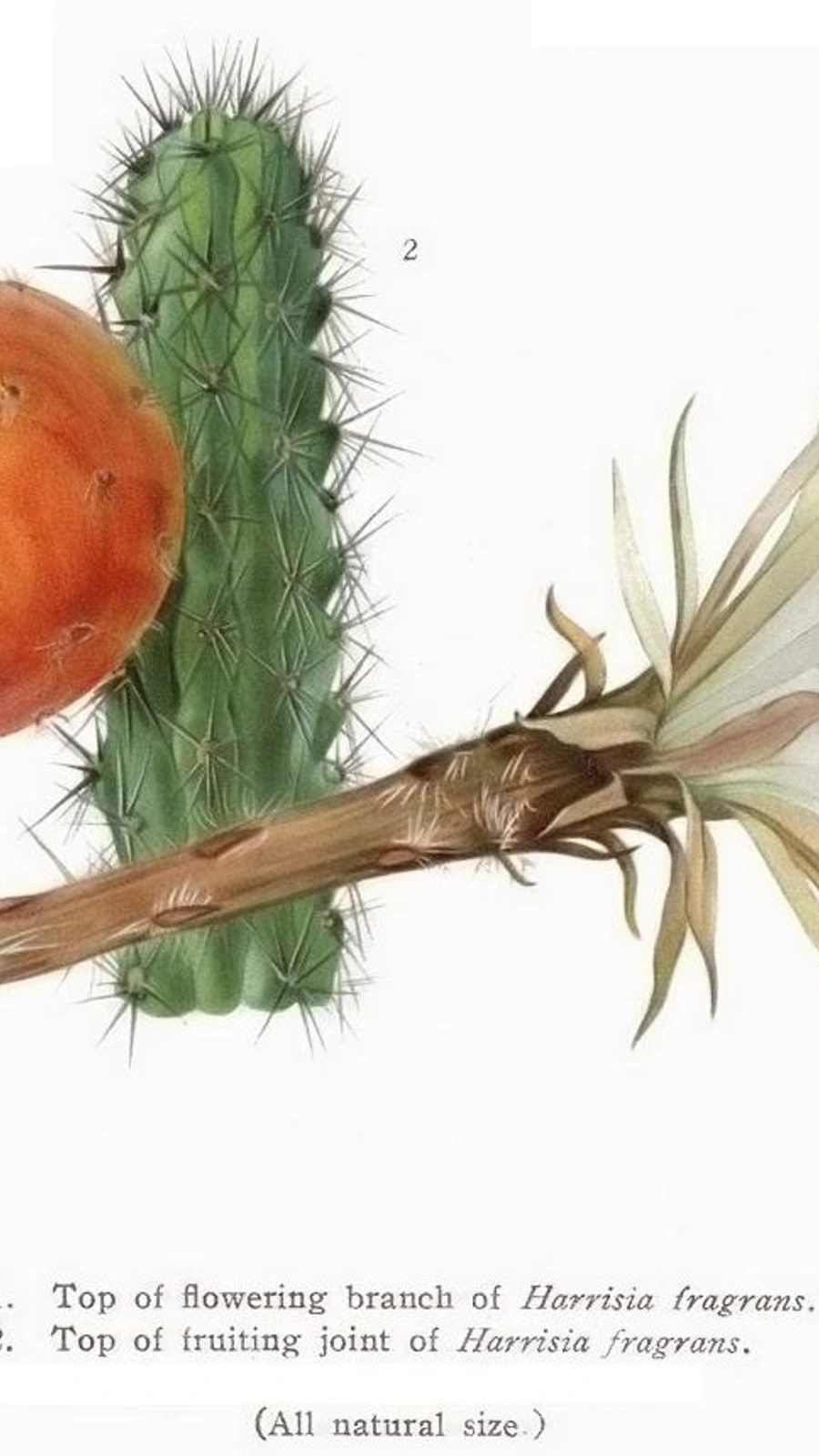
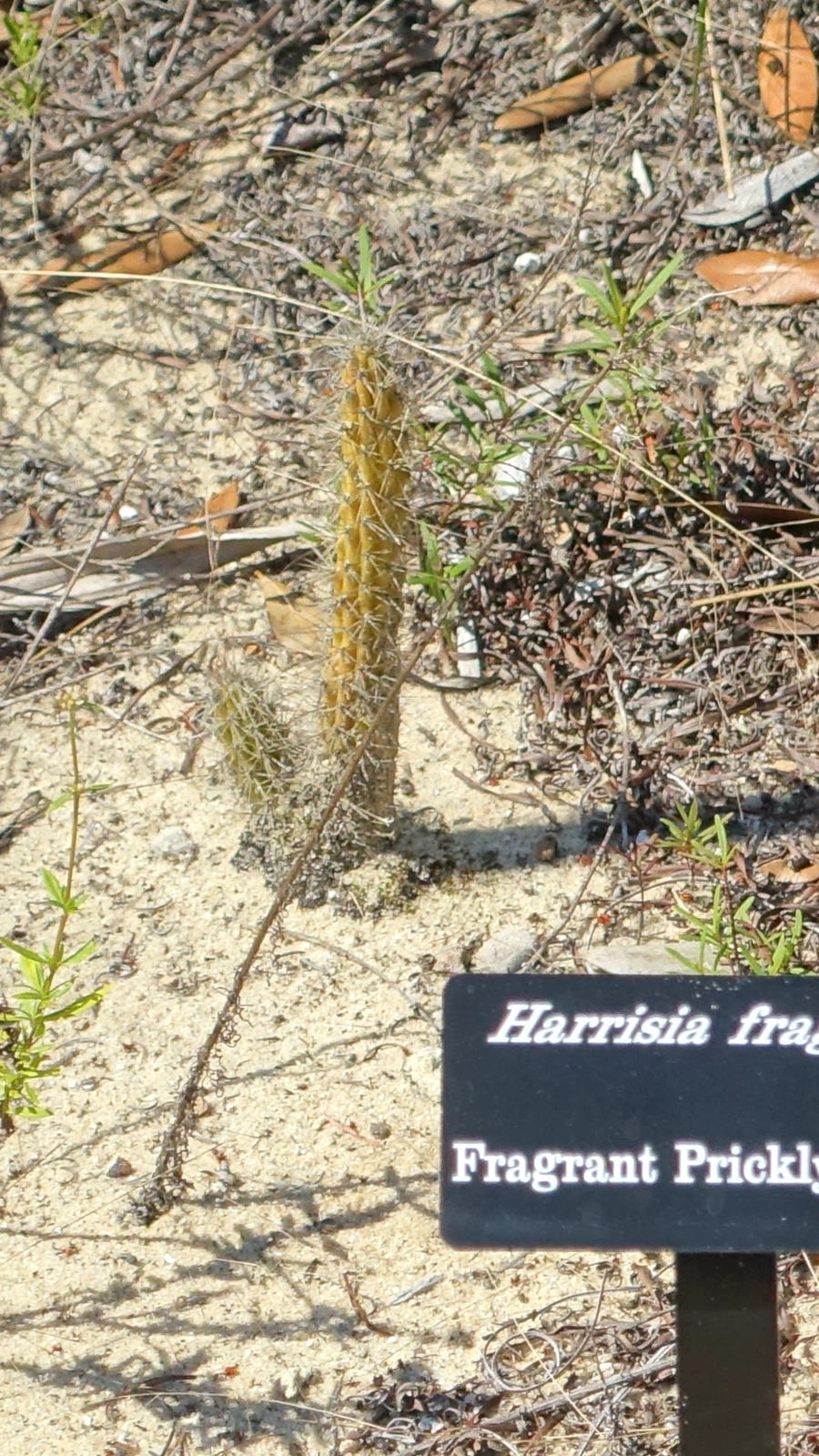
Harrisia fragrans, commonly known as the fragrant prickly apple cactus, is a rare, sprawling, and endangered succulent species in the family Cactaceae 1. Named for its incredibly sweet nocturnal blooms, this plant is highly prized by collectors for its horticultural value and conservation status.
The species was first formally described in 1920 by American botanists Nathaniel Lord Britton and Joseph Nelson Rose. The genus name honors William Harris, a distinguished Irish botanist who contributed extensively to Jamaican botany. The specific epithet "fragrans" directly references the intense, pleasant perfume emitted by its nocturnal flowers 2.
This species is critically endemic to a very narrow strip along the eastern coast of Florida, United States, primarily within St. Lucie, Indian River, and Brevard counties 1. It thrives in coastal scrubs, dunes, and maritime hammocks under the light shade of larger canopy trees. Due to severe habitat destruction, beach development, and competition with invasive weeds, its wild populations have drastically declined, making it federally protected under the US Endangered Species Act.
Harrisia fragrans exhibits a multi-branched, scrambling habit, reaching heights up to 3 to 5 meters. Its slender, 9- to 12-ribbed stems are grey-green and equipped with yellow to brownish spines at each areole. In late spring, large, funnelform white to pale pink flowers (12 to 20 cm long) open at night to attract moth pollinators. Following successful pollination, the plant produces attractive, globose, bright orange-red fleshy fruits which resemble small apples.
In cultivation, Harrisia fragrans requires a porous, well-draining substrate with an alkaline pH, mimicking its native limestone-rich sandy soils. Unlike desert cacti, it prefers filtered bright light rather than intense, baking all-day sun. Regular watering is tolerated during the warm growing season as long as the soil dries completely between sessions.
The most frequent mistake is overwatering during winter dormancy or placing it in poorly draining clay soils, which quickly causes root rot 1. Additionally, exposure to sub-freezing temperatures can damage the soft, succulent stem tips.
Bright filtered light or morning sun; protect from harsh, direct midday sunlight.
Allow the potting mix to dry completely between waterings. Reduce significantly in winter.
Highly porous, alkaline sandy cactus mix enriched with gravel and crushed limestone.
Equipped with sharp, thin spines. Keep away from curious pets and small children.
Moderate care required; sensitive to excessive winter wetness and acidic soils.
Native strictly to the coastal dunes and subtropical maritime hammocks of eastern Florida. It grows in sandy soils enriched with sea shell fragments, utilizing neighboring coastal shrubs and trees for physical support as it scrambles upward.
