
Light
Bright Indirect Light
Prefers bright, indirect light or filtered sun; tolerates some direct morning sun.
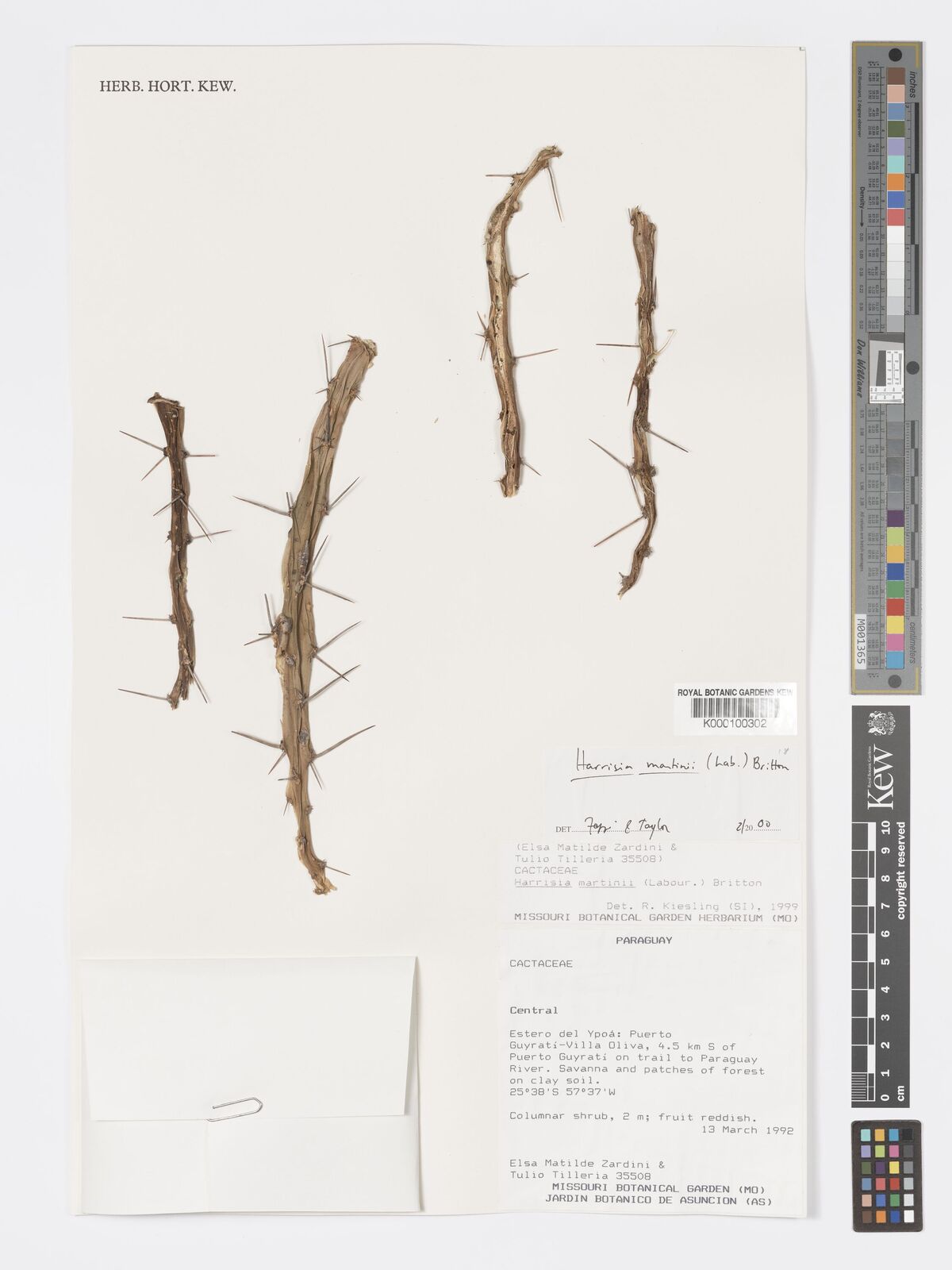 Reference image
Martin's Midnight Cactus
Harrisia martinii is a scrambling, climbing, or semi-prostrate succulent subshrub belonging to the cactus family (Cactaceae). Known for its spectacular, large white flowers that bloom at night, it is highly valued as an ornamental specimen in dry gardens and glasshouses 1.
The genus name Harrisia honors William Harris, a distinguished Irish botanist who worked in Jamaica. The specific epithet martinii honors J. Martin. Common synonyms include Cereus martinii and Echinocactus martinii 2. It is frequently referred to as the moonlight cactus or Martin's rope cactus.
Native to southern South America, specifically Argentina, Paraguay, and Brazil, this species thrives in dry subtropical forests and shrublands 1. It has also introduced and naturalized in Queensland (Australia), South Africa, and parts of the Pacific, where it is sometimes classified as an invasive weed due to its aggressive growth 3.
The stems are slender, cylindrical, green to grayish-green, and can grow up to 2-3 meters long, climbing on adjacent vegetation. Stems have 4 to 5 ribs with needle-like central spines. The nocturnal, funnel-shaped white flowers are up to 20 cm long. Its globose, bright red fruits are covered with small spines.
In cultivation, Harrisia martinii requires bright indirect light or partial sun. It prefers a very porous, mineral-based substrate containing pumice, sand, and grit to prevent waterlogging. Water thoroughly during the summer when the soil dries completely, and keep almost dry in winter 2.
Overwatering is the primary cause of failure, quickly leading to root rot. Insufficient light results in weak, thin stems (etiolation) and prevents the plant from producing its iconic night blooms. Protecting the plant from hard frosts is crucial.
Prefers bright, indirect light or filtered sun; tolerates some direct morning sun.
Allow soil to dry out 100% between waterings. Reduce drastically in winter.
Coarse, well-draining mineral substrate containing plenty of pumice, perlite, and coarse sand.
Armed with sharp spines; keep out of reach of children and pets to avoid injury.
Easy to care for; very resilient and adapts well to indoor container growth.
Originally native to the subtropical dry forests of Argentina, Paraguay, and Brazil. It has adapted exceptionally well to dry, warm climates elsewhere, becoming naturalized in several other subtropical parts of the world.
