
Light
Filtered Sun
Avoid harsh, direct sunlight. Provide bright, filtered sun or dapple shade.
 Reference image
 Reference image
Herminia's Hatiora
Hatiora herminiae is a delicate epiphytic cactus species belonging to the family Cactaceae, native to the canopy of wet tropical forests 1. Unlike typical desert cacti, this rainforest dweller is adapted to the shade and moisture of forest ecosystems.
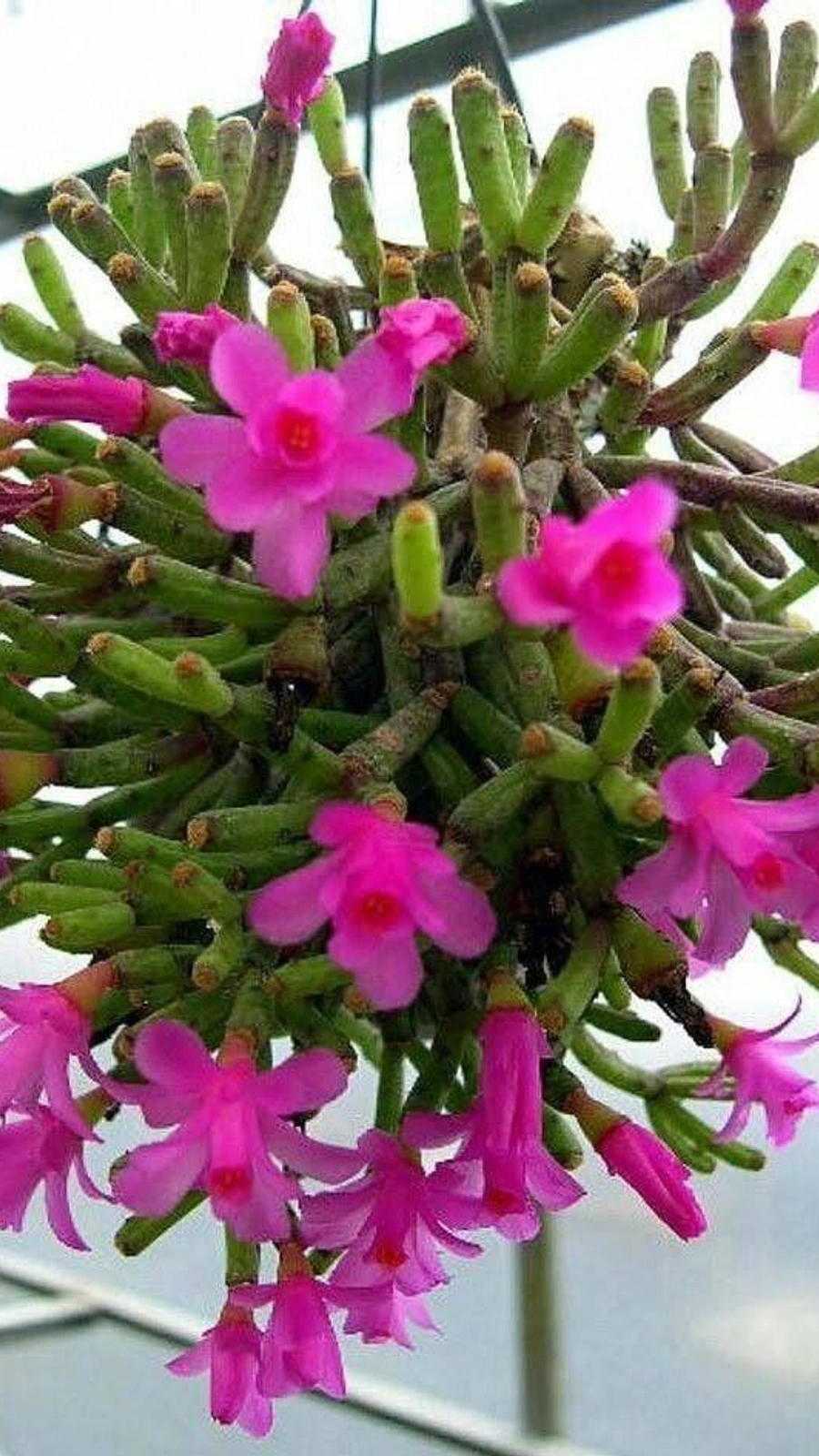
The species was named in honor of Herminia do Rego Barros. It belongs to the tribe Rhipsalideae, and due to its morphological traits, it has also been classified under the genus Rhipsalis by various taxonomists 2. It is characterized by its lovely magenta blossoms that emerge from the segment tips.
This species is endemic to the Atlantic Forest (Mata Atlântica) biome in southeastern Brazil, specifically within the states of São Paulo, Minas Gerais, Rio de Janeiro, and Espírito Santo 3. It is found at higher elevations (typically above 1500 meters) in humid, misty mountain ranges where it grows on tree trunks and branches. Due to habitat fragmentation and agriculture, it is classified as Endangered (EN) on the IUCN Red List.
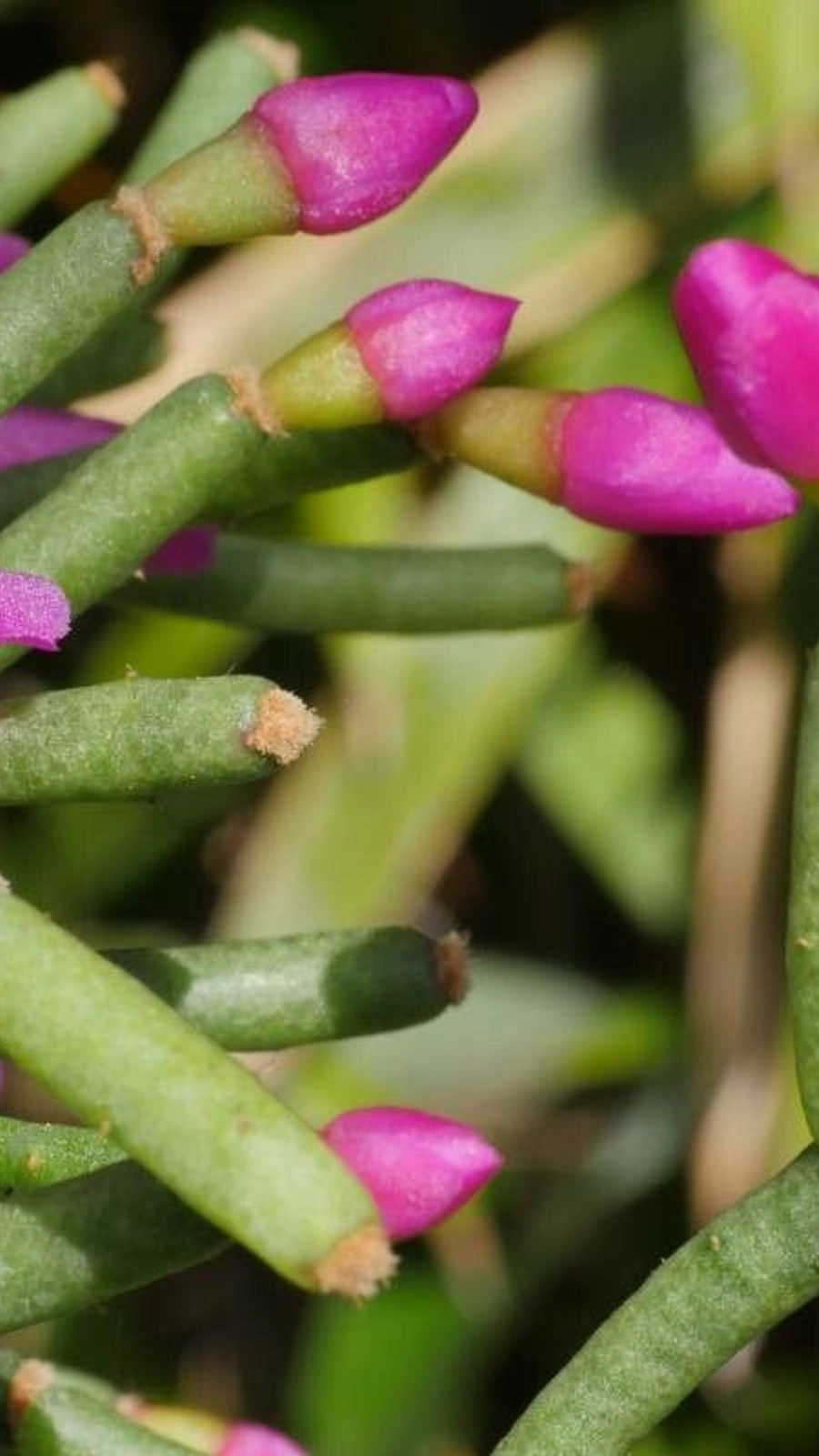
Hatiora herminiae displays slender, cylindrical, spineless stems that branch dichotomously. The segment joints are smooth, and the terminal areoles produce bright purple-pink to magenta flowers during late winter or early spring, adding vibrant color to the green canopy.
In cultivation, it requires bright, indirect light, avoiding direct afternoon sun. The potting medium must be highly porous and slightly acidic, kept evenly moist but never waterlogged. Elevated ambient humidity is key to its success 4.
Growing it in standard heavy garden soil or treating it as a drought-tolerant desert cactus are the most common failures. Overwatering in poorly draining pots leads to rapid root rot, while dry interior air can cause bud drop.
Avoid harsh, direct sunlight. Provide bright, filtered sun or dapple shade.
Water as soon as the topsoil layer begins to dry out. Reduce watering in winter but do not let it dry completely.
Use a loose, acidic epiphyte mix containing orchid bark, peat, and perlite.
Non-toxic to cats, dogs, and humans, making it a safe indoor choice.
Requires moderate care to maintain humidity levels and avoid overwatering.
Endemic to the wet, high-altitude montane rain forests of southeastern Brazil, where it grows as an epiphyte on trees under cool, misty, and humid conditions.
