
Light
Filtered Sun
Prefers bright, filtered sunlight or light partial shade.
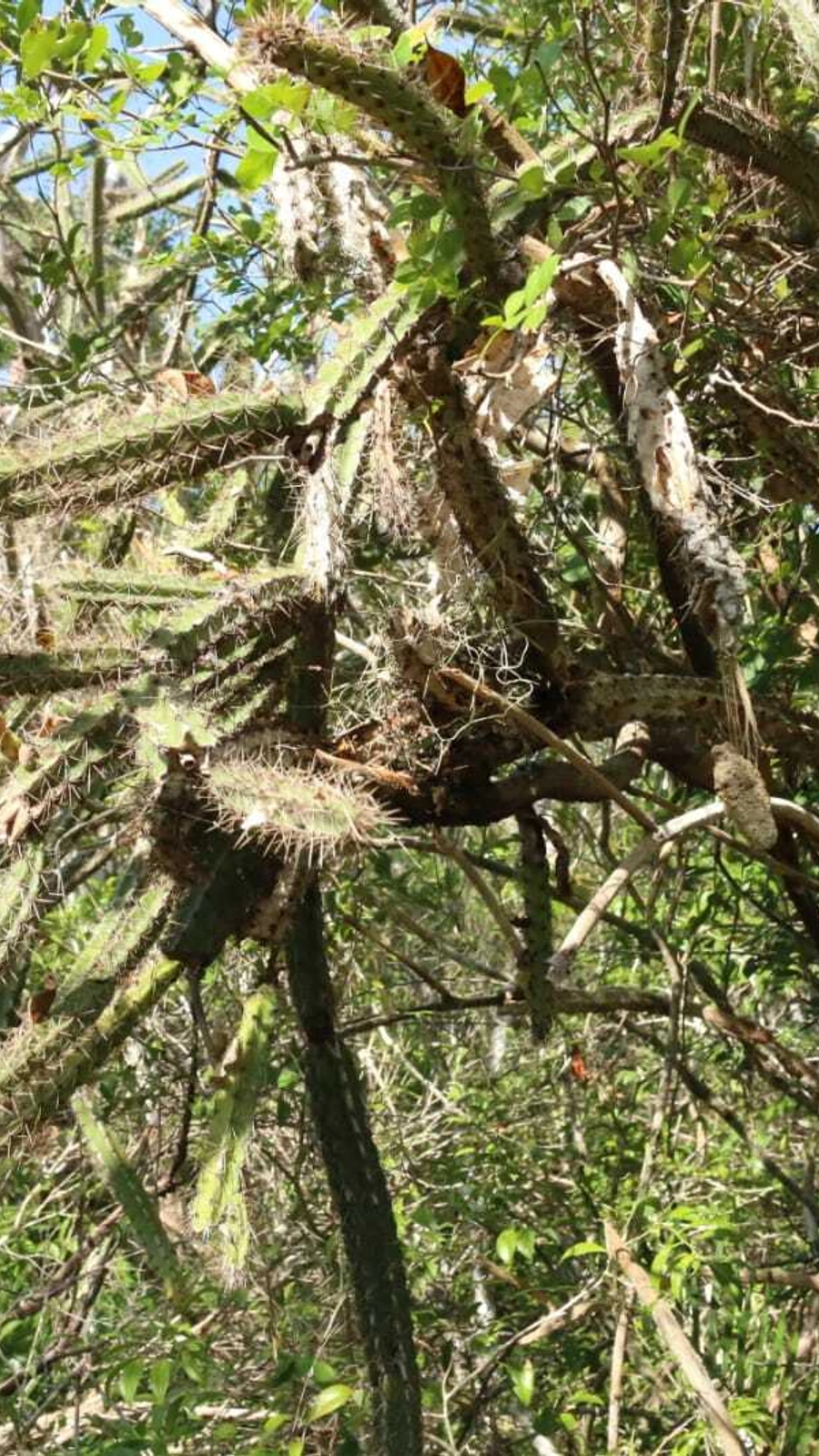 Reference image
Bayahibe Bush Cactus
Leptocereus bayahibensis is an extremely rare and critically endangered shrubby cactus species belonging to the family Cactaceae 1. Endemic to the Caribbean islands, it is highly adapted to dry coastal habitats and possesses significant conservation value.
The species is named after the Bayahibe region in the southeastern part of the Dominican Republic 2. The genus Leptocereus is characterized by slender-stemmed, often scrambling or shrubby cacti native to the Caribbean. It is distinct in its stem ribbing and spination.
Its natural distribution is strictly restricted to the seasonally dry tropical forests and limestone terraces of the Dominican Republic 1. It thrives in coastal conditions with high humidity and saline wind exposure.
It grows as a multi-branched, shrubby cactus with slender green to grayish-green ribbed stems. The ribs bear sharp, yellowish-brown spines. The nocturnal flowers are typically white or cream-colored, adapted to pollination by bats or moths.
In cultivation, it requires a highly porous potting medium mixed with limestone chippings. Unlike desert cacti, it prefers slightly higher atmospheric humidity but demands exceptional drainage and warm winter temperatures above 12°C.
Overwatering during the winter rest period is the most frequent cause of root rot 2. Insufficient light leads to etiolated, weak stems that easily lose their structure.
Prefers bright, filtered sunlight or light partial shade.
Water every 10 days in summer, reduce to once a month or less in winter.
Super-draining cactus mix amended with coarse sand and limestone gravel.
Sharp spines; place out of reach of pets and active children.
Moderate care; sensitive to cold temperatures and stagnant water.
Endemic to the southeastern coast of the Dominican Republic, specifically around the Bayahibe dry forest region.
