
Light
Filtered Sun
Enjoys bright, indirect or filtered sunlight. Protect from intense, direct midday summer sun.
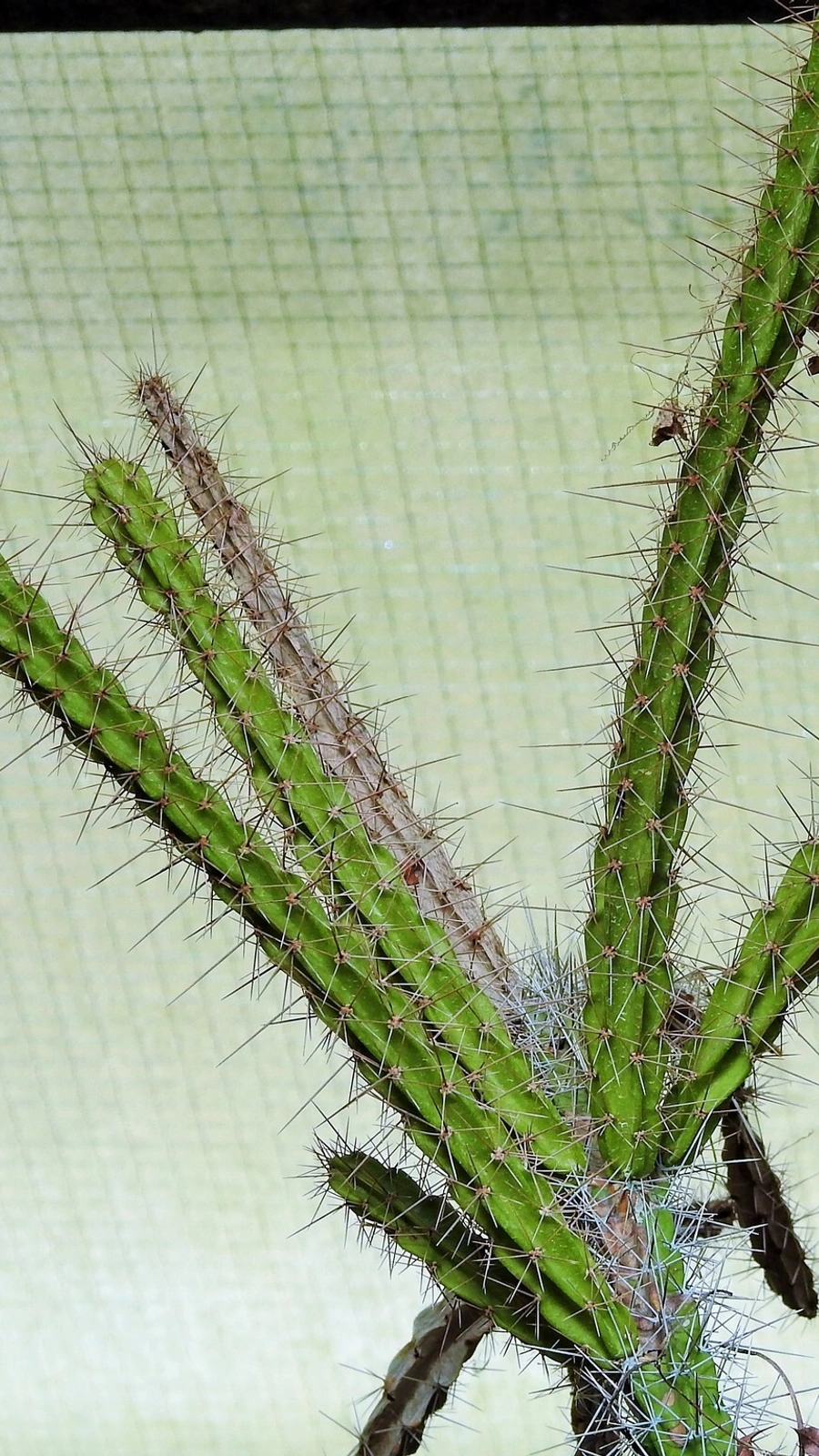 Reference image
Leon's Slender Cactus
Leptocereus leonii is a rare, critically endangered shrubby cactus species belonging to the Cactaceae family. Highly prized by specialized succulent collectors, this species is strictly protected due to severe habitat loss in its native range 1.
Belonging to the genus Leptocereus, which is characterized by slender, ribbed, and woody stems, this species was named in honor of Frère León, a distinguished botanist who made pioneering contributions to Cuban botany 2.
This cactus is endemic to the Caribbean, specifically found in the seasonally dry tropical forests and limestone cliffs (mogotes) of Cuba. It has evolved to thrive in nutrient-poor, highly alkaline rocky crevices under alternating wet and dry seasons 1.
It grows as an erect to sprawling, heavily branched shrub. The slender green stems feature distinct longitudinal ribs lined with small areoles bearing sharp spines. It produces nocturnal, tubular, greenish-white flowers followed by small fleshy fruits 2.
In cultivation, it requires a highly porous mineral substrate that mimics its natural limestone habitat. Unlike some desert cacti, it prefers bright filtered light rather than scorching direct midday sun. Water thoroughly only when the substrate is completely dry.
The most frequent mistake is overwatering during the cooler winter months or using heavy organic soil, which rapidly leads to root rot. Insufficient light causes the slender stems to stretch abnormally and lose their structural rigidity.
Enjoys bright, indirect or filtered sunlight. Protect from intense, direct midday summer sun.
Allow the potting mix to dry out completely between waterings. Keep almost dry in winter.
Use a highly grittier mineral substrate enriched with limestone gravel and coarse sand.
Non-toxic to pets, but possesses sharp spines that can cause physical injury. Keep out of reach.
Moderately easy for growers who can strictly control moisture and prevent waterlogging.
Endemic to the island of Cuba in the Caribbean, where it grows naturally on steep limestone cliffs, dry coastal thickets, and rocky hillsides.
