
Light
Full Sun
Prefers full, direct sunlight throughout the day to support robust growth.
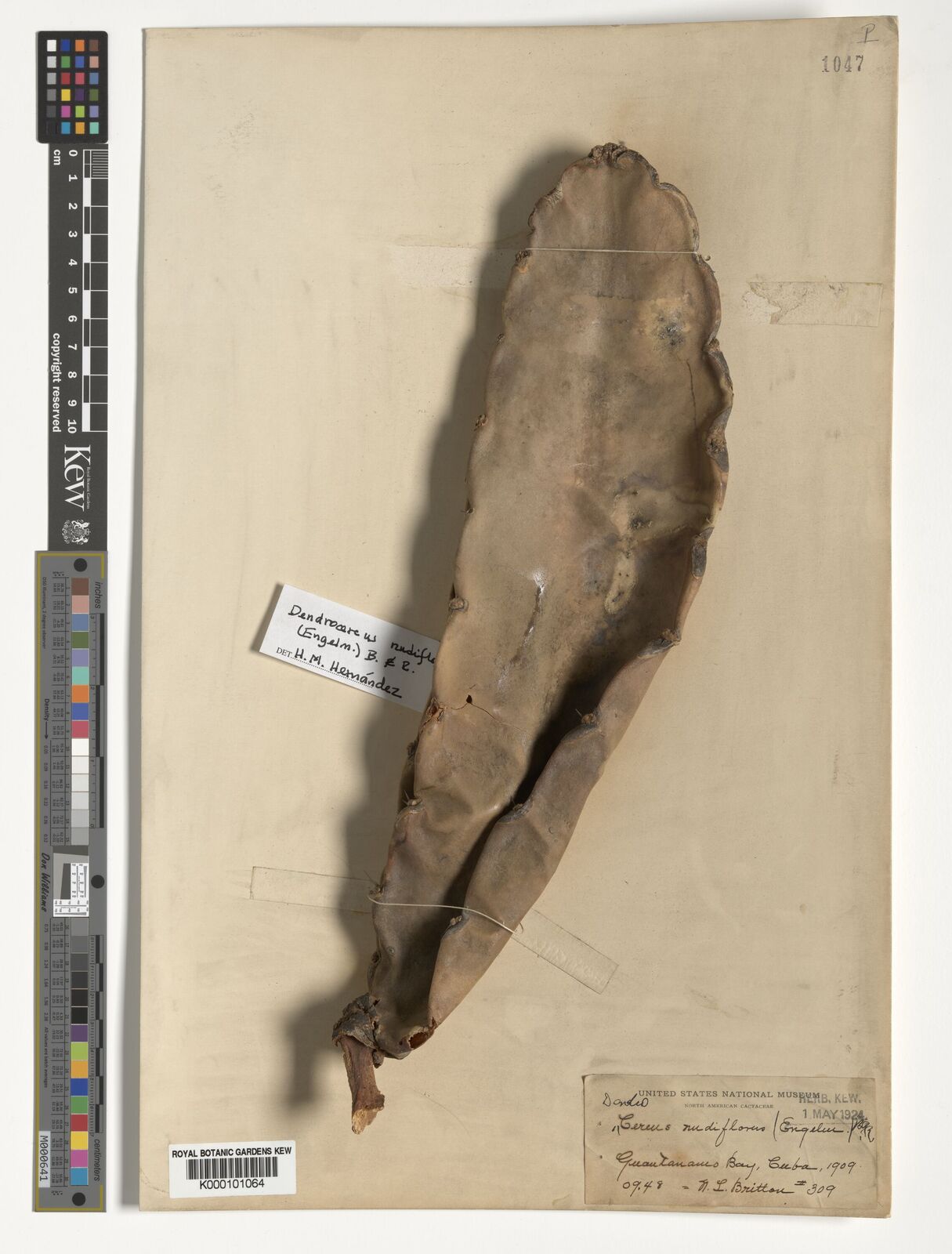 Reference image
Cuban Tree Cactus
Leptocereus nudiflorus is one of the most remarkable and monumental members of the Cactaceae family. Often growing in the form of a large succulent tree, this rare cactus plays an essential ecological role within the arid Caribbean forest ecosystems.
Originally described by Charles Wright in 1869, this species is frequently referred to under its synonym Cereus nudiflorus in historical literature 1. The genus name Leptocereus derives from the Greek "leptos" (meaning thin) and "cereus" (wax torch). The specific epithet nudiflorus translates to "naked flower" in Latin, highlighting the smooth, spineless flower tube 2.
This species is endemic to Cuba 1. It is primarily found within coastal dry scrublands, limestone cliffs, and seasonally dry tropical forests. It is beautifully adapted to high solar radiation and prolonged drought periods typical of these habitats.
In its natural habitat, Leptocereus nudiflorus develops as a giant arborescent cactus reaching heights of 7 to 10 meters, complete with a distinct woody trunk. The canopy is heavily branched. The segments of the branches usually feature 3 to 5 ribs armed with rigid greyish-yellow spines. Its greenish-white flowers open at night during summer and lack hairs or spines on the receptacle tube 2.
Cultivating this species requires patience. Full sun, excellent drainage through limestone-heavy mineral soils, and strict watering control are necessary for successful growth. It is highly frost-sensitive and requires temperatures above 10°C.
Overwatering and utilizing dense, organic soils are the primary causes of root rot. Additionally, exposing the plant to freezing temperatures or drafty, cold rooms during winter can quickly prove fatal 1.
Prefers full, direct sunlight throughout the day to support robust growth.
Let the soil dry out completely. Reduce watering to a bare minimum during winter.
Requires extremely well-draining, mineral-based soil containing grit and limestone.
Features sharp spines; handle with care and keep away from pets and children.
Moderate care level due to its slow-growing nature and strict watering requirements.
Endemic to the island of Cuba, where it occupies dry coastal thickets and steep limestone rocky outcrops in seasonally dry tropical zones.
