
Light
Full Sun
Requires full, direct sun. South-facing window or greenhouse conditions are ideal.
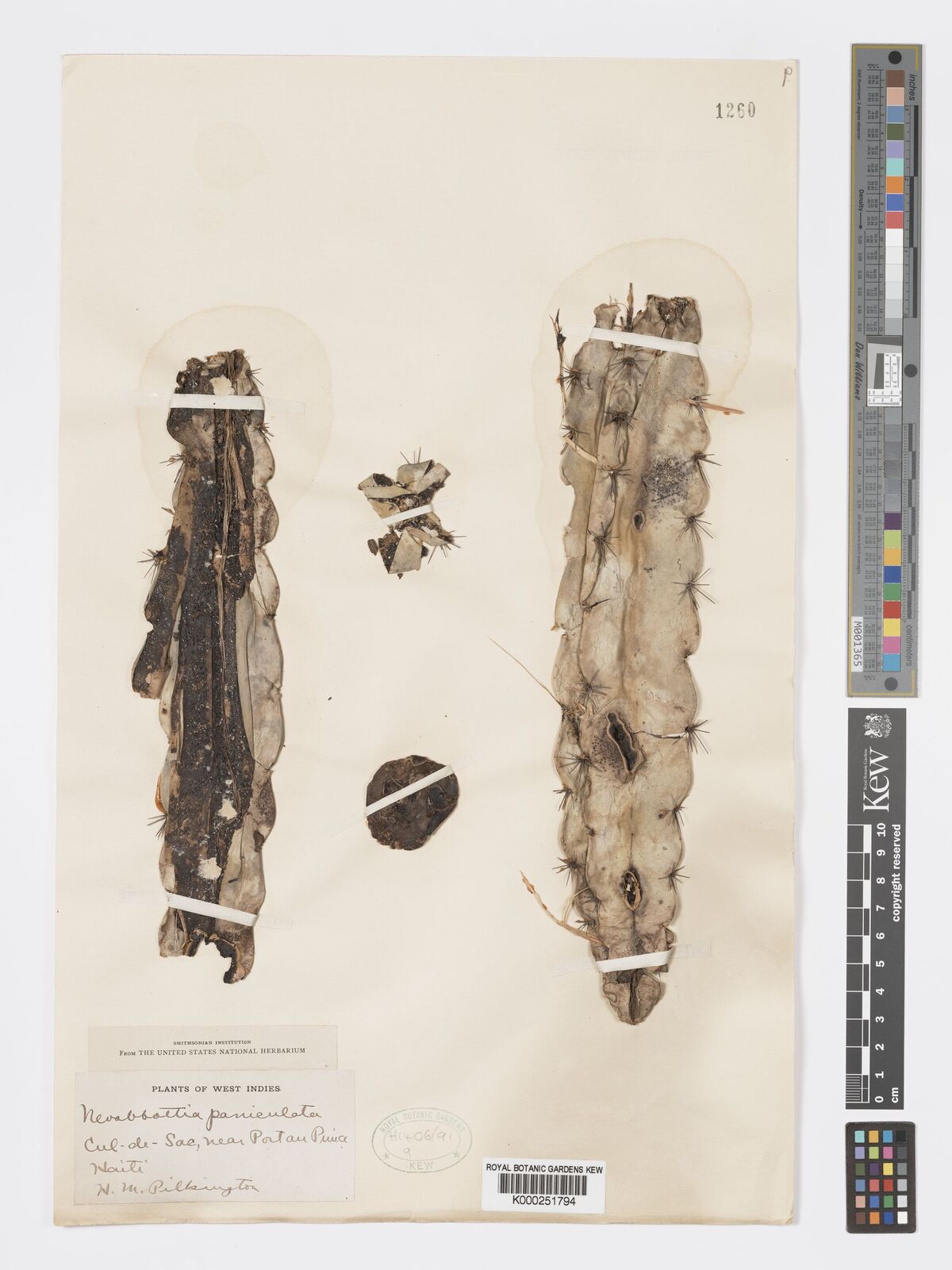 Reference image
Panicled Leptocereus
Leptocereus paniculatus is an endangered, arborescent succulent cactus species endemic to the seasonally dry tropical forests of the Caribbean 1. Characterized by its tree-like habit, it represents a unique evolutionary lineage within the West Indian cacti.
Belonging to the Cactaceae family, the genus Leptocereus comprises predominantly Caribbean species. The specific epithet paniculatus refers to its branching or panicle-like structure of flowers and fruits. Taxonomic classifications distinguish it by its strongly woody trunk and distinct rib pattern 2.
This species is native to Hispaniola (Haiti and the Dominican Republic) within the Caribbean region 1. It thrives in dry, rocky soils, limestone outcrops, and coastal scrub ecosystems that experience long dry seasons. It is adapted to high light intensity and low nutrient availability.
In its natural habitat, Leptocereus paniculatus can reach heights of 5 to 10 meters, developing a prominent trunk. The branches are segmented, bearing sharp spines along prominent ribs. The nocturnal flowers are greenish-white or cream-colored, adapted for pollination by bats and nocturnal insects, followed by spiny fruits 2.
In cultivation, this species requires a substrate that mimics its native limestone-rich, well-draining soils. It demands full sun exposure and warm temperatures year-round. Watering should be deep but infrequent, allowing the growing medium to dry out completely between sessions. It has no frost tolerance.
The most common mistake is overwatering, which quickly leads to root rot. Keeping the plant in poorly ventilated spaces or heavy clay soils will also cause systemic fungal infections and decline.
Requires full, direct sun. South-facing window or greenhouse conditions are ideal.
Let the soil dry out completely. Water deeply in summer, keep dry in winter.
Highly porous cactus mix enriched with pumice, limestone gravel, and coarse sand.
Equipped with sharp spines. Keep away from pets and children; handle with thick gloves.
Moderate. Demands strict watering discipline and warm temperatures to thrive.
Naturally occurs in the dry, coastal forest thickets and rocky limestone slopes of Hispaniola, adapted to dry tropical weather.
