
Light
Bright Indirect Light
Prefers generous amounts of bright, indirect sunlight; protect from intense midday sun.
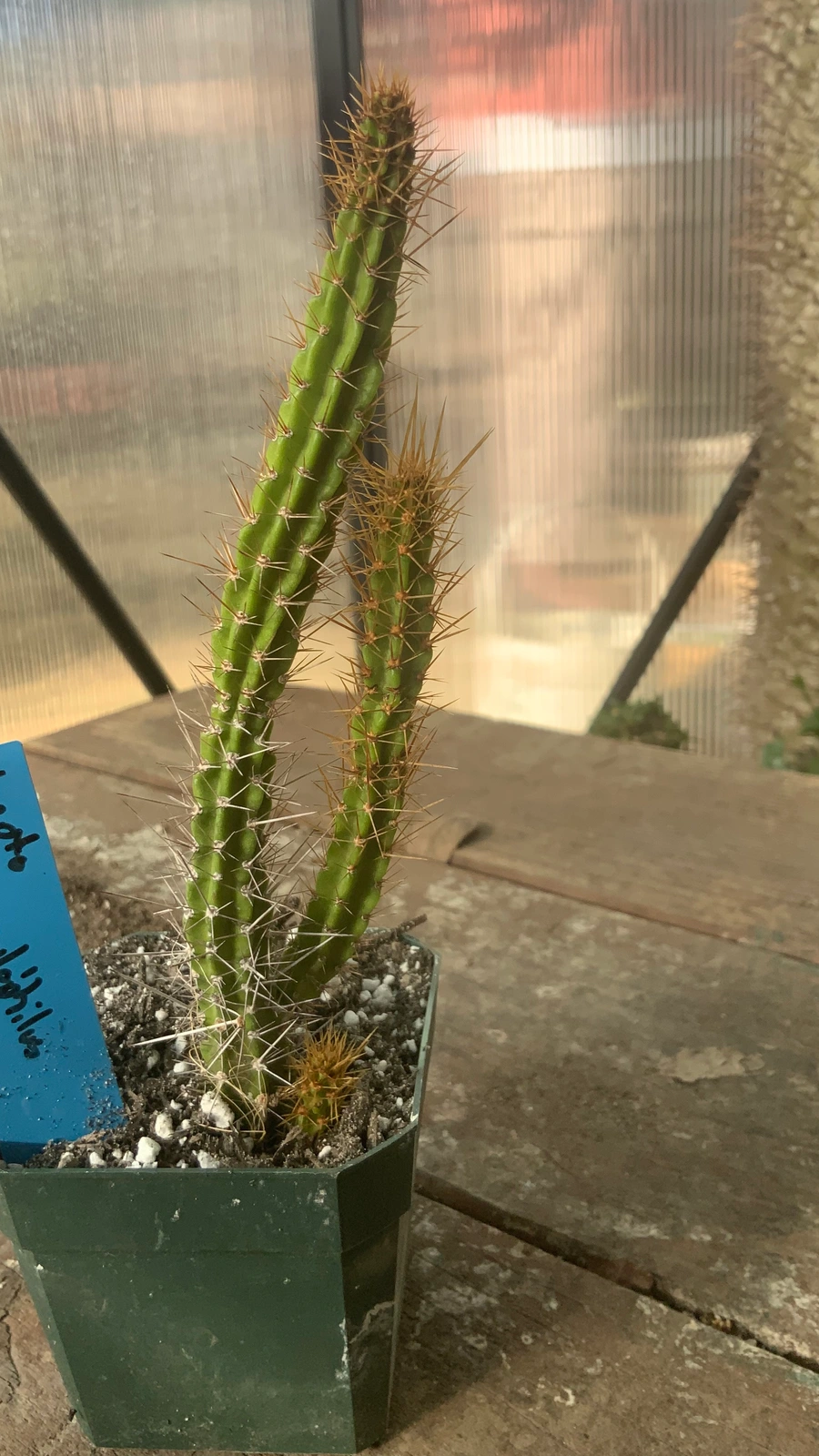 Reference image
Cuban Cliff Cactus
Leptocereus scopulophilus is a critically endangered, tree-like cactus species belonging to the family Cactaceae. Confined to highly restricted limestone habitats, this species represents a prime subject for botanical conservation and specialized succulent collections 1.
Classified under the genus Leptocereus, its specific epithet scopulophilus translates from Latin to 'cliff-loving,' a direct reference to the steep rocky outcrops where the plant is typically encountered in the wild 2.
Endemic to Cuba, specifically within the Pan de Matanzas region, this cactus thrives on karstic limestone hills (mogotes) and within seasonally dry tropical scrub forests 1.
This arborescent cactus features woody trunks with deeply ribbed branches. The green joints are covered with clusters of grayish-brown spines. It produces nocturnal, greenish-white tubular flowers followed by fleshy, spine-clad fruits 2.
In cultivation, it requires bright indirect light and a highly mineral, well-draining substrate. Because it is calcicolous in its native habitat, incorporating small amounts of limestone grit into the soil mix can enhance its growth. Water deeply only when the medium is completely dry.
Overwatering combined with poor air circulation is the most frequent cause of root and stem rot. Exposing this tropical species to temperatures below 10°C during winter months will result in significant frost damage.
Prefers generous amounts of bright, indirect sunlight; protect from intense midday sun.
Water thoroughly only when the soil is dry to the touch; keep nearly dry in winter.
Superb drainage is essential; use a mix of pumice, coarse sand, and a bit of limestone.
Equipped with sharp spines; keep out of reach of children and domestic pets.
Requires careful water management and winter warmth, making it moderately difficult.
This cactus is strictly endemic to Cuba, native to the rugged limestone cliffs and steep, rocky hills known as mogotes in the seasonally dry tropical zones of Matanzas.
