
Light
Bright Indirect Light
Prefers bright, indirect light or filtered sun; avoid scorching afternoon direct rays.
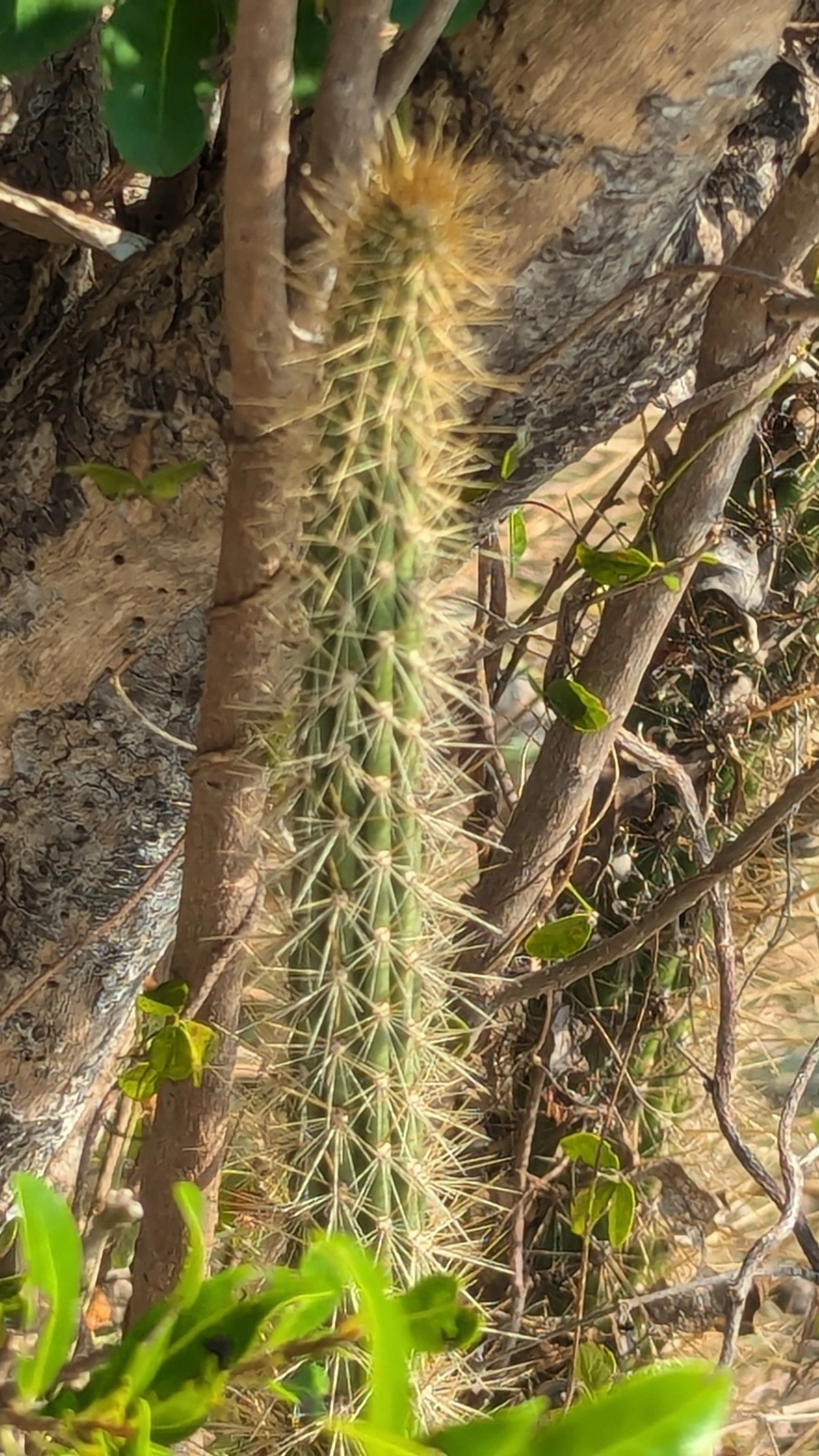 Reference image
Northern Leptocereus
Leptocereus septentrionalis is an extremely rare and critically endangered shrubby cactus species within the Cactaceae family 1. Native to the Caribbean islands, this species is characterized by its slender ribbed stems and branching habit. Due to severe habitat loss, it is a high-priority species for botanical conservation.
Belonging to the genus Leptocereus, this species was formally described by Areces 2. The specific epithet "septentrionalis" translates to "northern" in Latin, reflecting its northerly distribution compared to some other members of the genus in the region.
This cactus is strictly native to the Dominican Republic in the Caribbean 1. It thrives primarily in seasonally dry tropical forests, colonizing rocky limestone cliffs and arid scrublands.
The plant develops thin, cylindrical stems with prominent ribs. Spines ranging from yellow to brownish protrude from the areoles. Its tubular, nocturnal cream-greenish flowers are adapted to attract moths and other nocturnal pollinators.
Adapted to seasonally dry climates, it tolerates high heat but is extremely frost-sensitive. It requires bright, indirect sunlight or partial sun. Substrates must mimic its natural limestone habitat with excellent drainage.
Overwatering during the dormant winter period is the primary cause of root rot. Lack of adequate air circulation combined with low-light conditions often leads to etiolation and weak stem growth.
Prefers bright, indirect light or filtered sun; avoid scorching afternoon direct rays.
Allow soil to dry out fully between waterings; scale back drastically in winter.
Requires highly mineral cactus soil mixed with pumice, coarse sand, and limestone grit.
Its spines are sharp; handle with protective gloves. It is non-toxic to pets.
Requires moderate care due to strict watering and temperature requirements.
Found exclusively on rocky limestone outcrops within the seasonally dry tropical forests of the Dominican Republic.
