
Light
Full Sun
Thrives best under full, direct sunlight throughout the year.
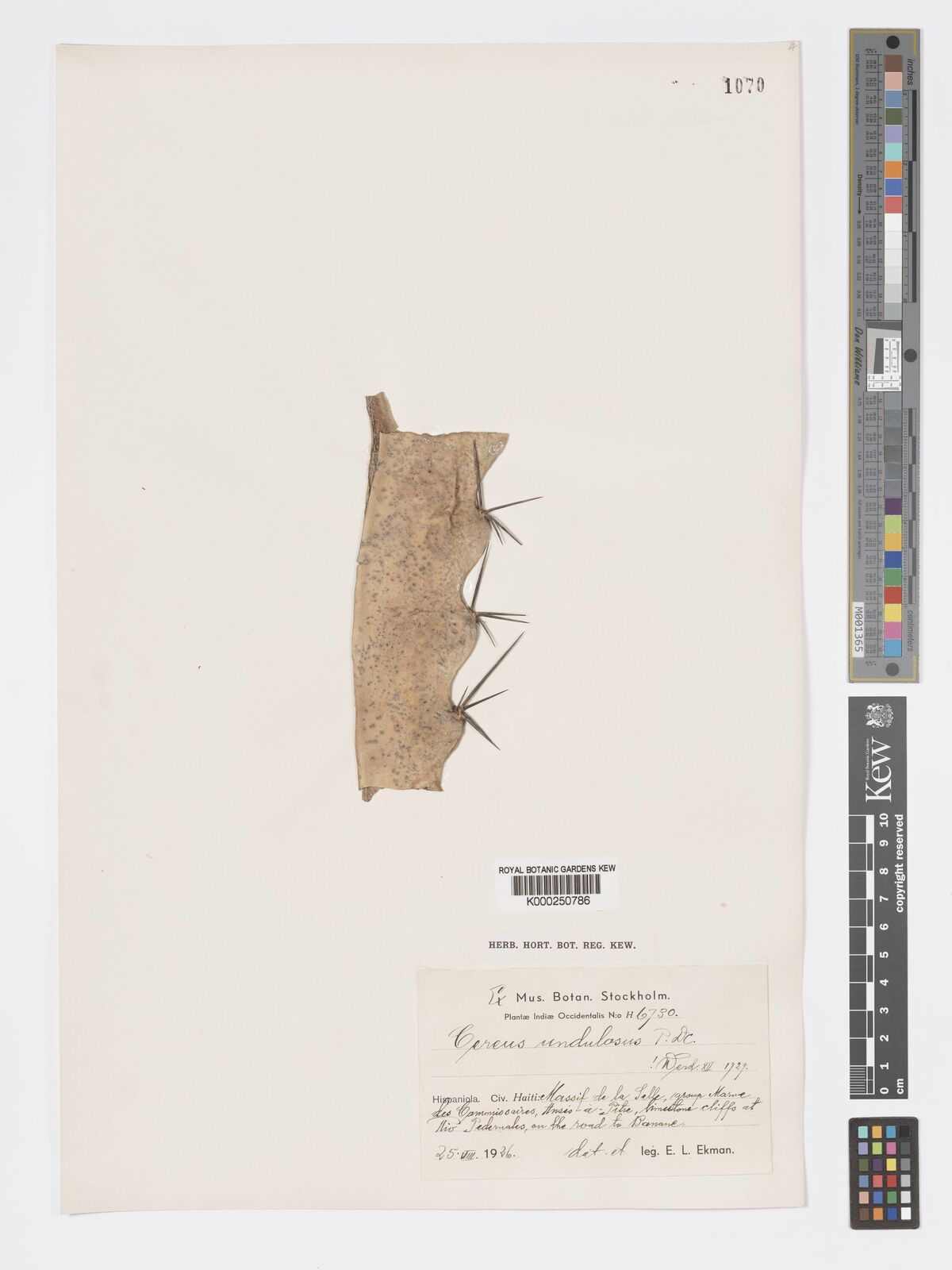 Reference image
Wavy Columnar Cactus
Leptocereus undulosus is a rare, tree-like or shrubby cactus species belonging to the Cactaceae family 1. Native to the dry forests of the Caribbean, it is characterized by its distinct wavy ribs and arborescent growth habit.
This species was historically placed in various genera, including Dendrocereus, but modern taxonomy recognizes it under the genus Leptocereus 2. The specific epithet 'undulosus' refers to the wavy or undulating margins of its stem ribs.
Leptocereus undulosus is endemic to the island of Hispaniola, spanning both Haiti and the Dominican Republic 1. It thrives in seasonally dry tropical forests, rocky coastal slopes, and arid scrublands.
This arborescent cactus features branching, woody stems that can reach several meters in height. The stems are green to grayish-green with deeply undulating ribs. Areoles bear sharp, grayish-brown spines. The nocturnal flowers are greenish-white and open briefly to attract pollinators.
In cultivation, it requires a position with full sun exposure to maintain its robust growth and shape. Watering should be done thoroughly but only when the potting substrate is completely dry 2. It demands a coarse, highly porous mineral substrate to prevent waterlogging.
Overwatering during the cooler winter months is the most frequent cause of root rot. Insufficient sunlight will cause the stems to etiolate, making them weak, thin, and prone to bending.
Thrives best under full, direct sunlight throughout the year.
Water thoroughly only when the soil is completely dry. Keep dry in winter.
Excellent drainage is essential. Use a grit-rich, mineral-based cactus mix.
Sharp spines pose a physical hazard. Keep away from pets and active areas.
Moderately easy if overwatering is strictly avoided.
Native to the dry, seasonally arid tropical scrublands and rocky cliffs of the Hispaniola island. It is highly adapted to long periods of drought and high solar radiation.
