
Light
Bright Indirect Light
Filtered sunlight or bright indirect light is best; protect from scorching midday sun.
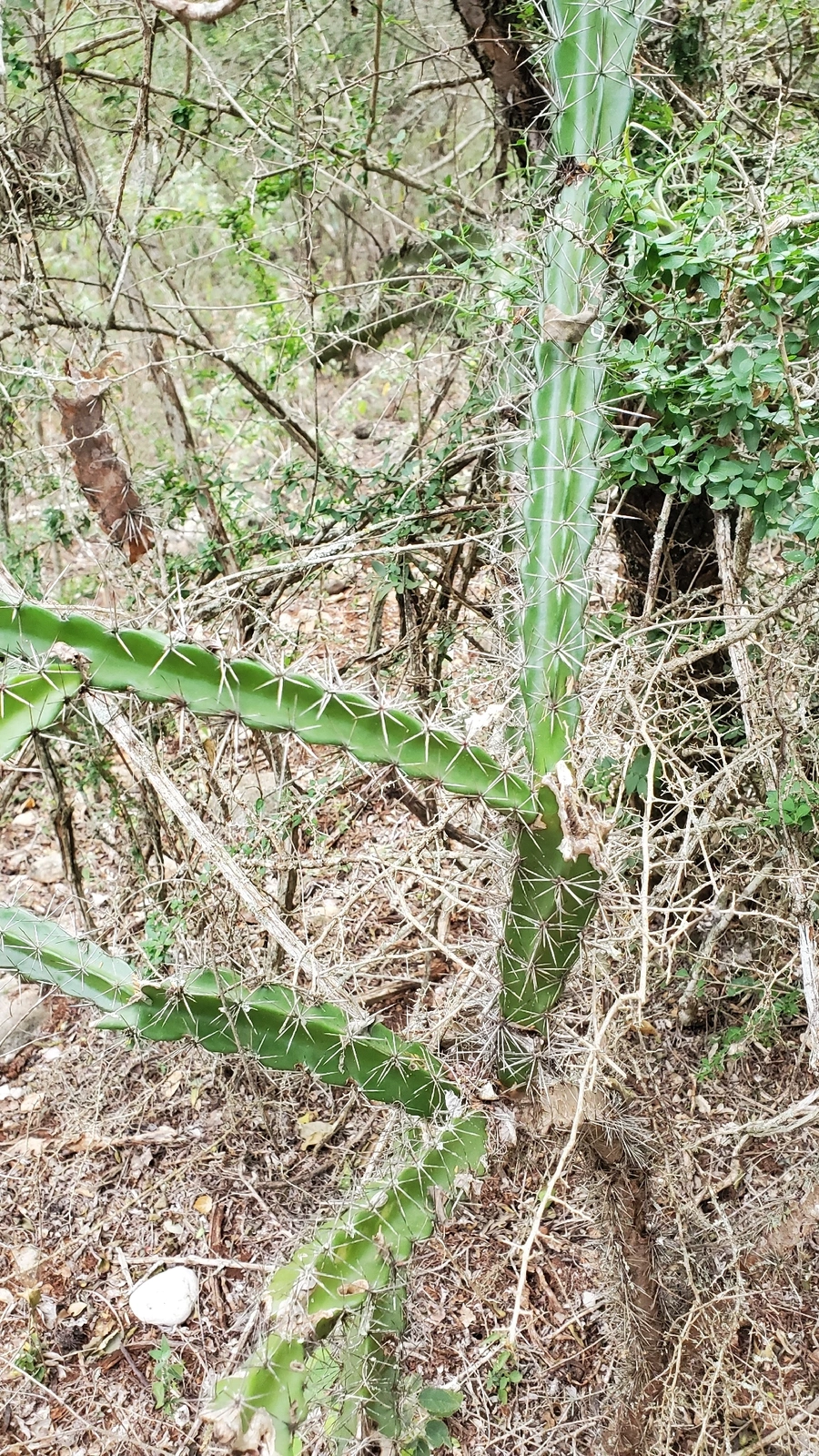 Reference image
Veloz's Slender Cactus
Leptocereus velozianus is an extremely rare, endemic shrubby cactus belonging to the Cactaceae family. Due to habitat loss, it is currently categorized as highly threatened in its wild environment.
Classified within the genus Leptocereus, this species was named in honor of Dominican botanical contributions 1. It represents a specialized evolutionary lineage native to the Caribbean islands.
This species is strictly endemic to the Dominican Republic (Hispaniola) 2. It thrives primarily in seasonally dry tropical biomes, establishing itself on limestone outcrops and rocky hillsides within deciduous forests.
It features slender, semi-scandent or erect segmented stems with distinct ribs and clusters of small needle-like spines. The flowers are typically nocturnal, nocturnal-opening, displaying pale greenish-white hues, followed by small spiny fruits.
In cultivation, it requires bright, indirect sunlight or filtered sun. Reflecting its tropical dry origin, it must be protected from frost (keeping temperatures above 10°C) and watered sparingly during the winter dormancy.
Overwatering and poor soil drainage are the most common causes of failure, quickly leading to root rot. Insufficient lighting can lead to etiolation, causing the stems to become weak, thin, and pale.
Filtered sunlight or bright indirect light is best; protect from scorching midday sun.
Water thoroughly only when the soil is dry in summer; restrict to once a month in winter.
Use a highly porous mineral mix enriched with pumice, perlite, and a bit of limestone.
Equipped with sharp spines; handle with gloves. Safe for pets as it contains no known toxins.
Moderate difficulty due to strict requirements for warmth and high-drainage substrates.
Indigenous to the dry limestone forests and rocky coastlines of the Dominican Republic.
