
Light
Bright Indirect Light
Thrives in bright, filtered sunlight or partial shade. Protect from scorching midday sun.
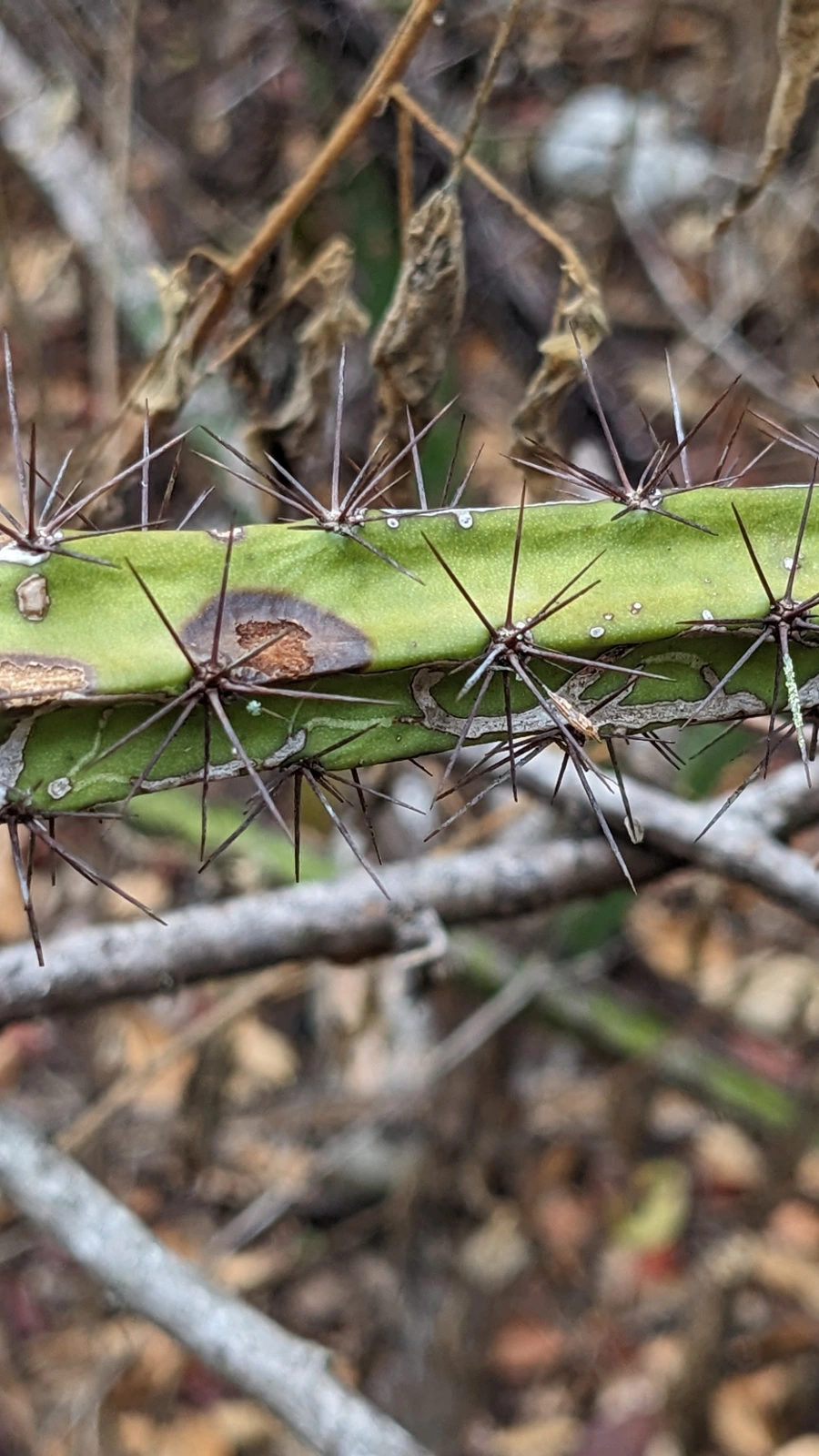 Reference image
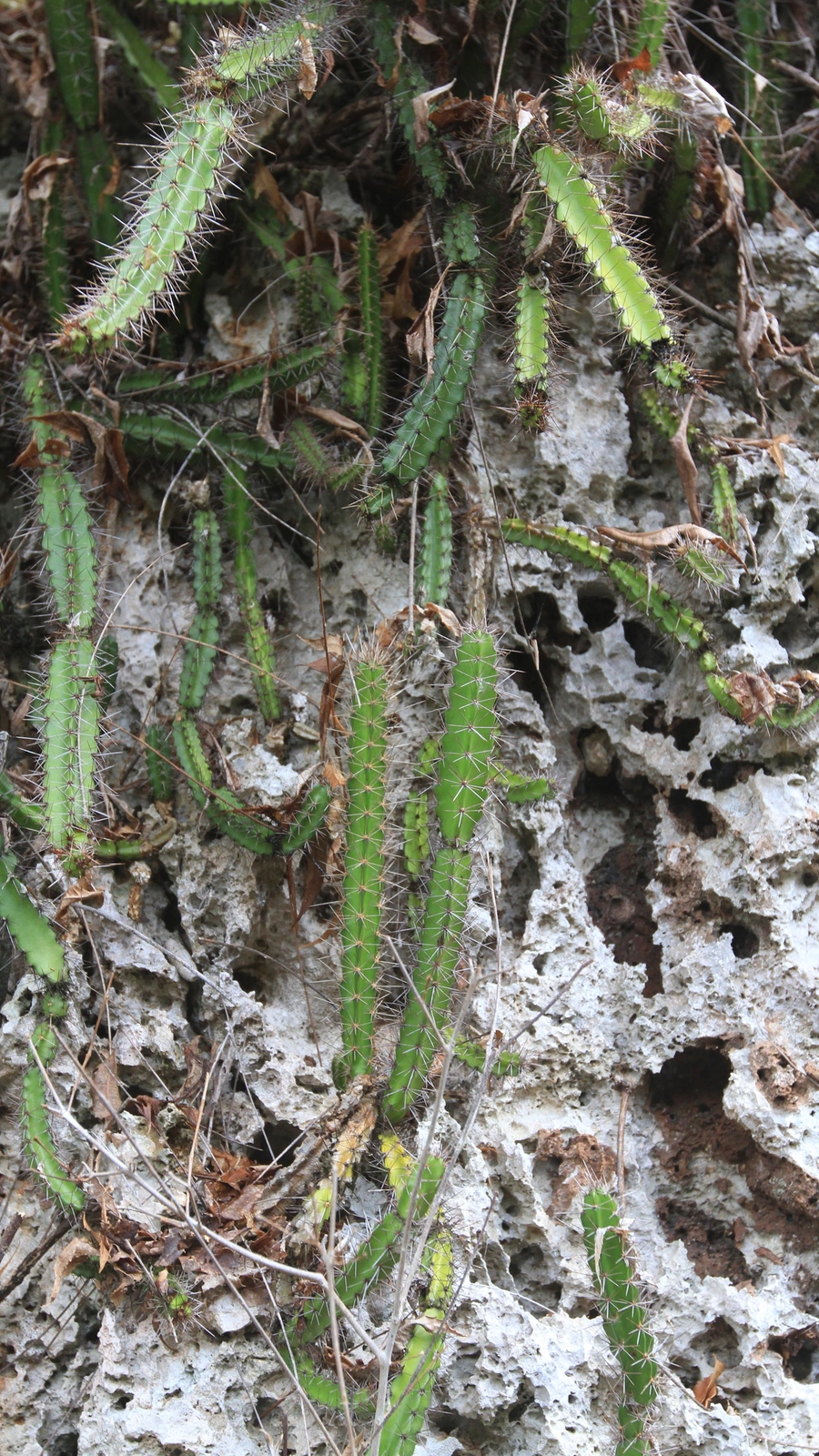 Reference image
Weingart's Leptocereus
Leptocereus weingartianus is a rare, scrambling or shrubby cactus species belonging to the Cactaceae family. Endemic to the Caribbean, this species is primarily found in the dry shrublands and seasonally dry tropical forests of Hispaniola 1. It is characterized by its slender, heavily spined stems and branching habit.
Within the Cactaceae family, the genus Leptocereus represents a group of relictual cacti unique to the Caribbean islands. The specific epithet honors Wilhelm Weingart, a German businessman and prominent amateur cactus specialist 2. It is accepted under its current binomial name, while historically carrying several regional synonyms.
This cactus is native to the Caribbean, specifically found in the Dominican Republic and Haiti (Hispaniola) 1. It thrives in seasonally dry tropical biomes, often growing in limestone crevices, rocky cliffs, and dry thickets where soil accumulation is minimal but drainage is superb.
The stems of Leptocereus weingartianus are slender, ribbed, and dull green to grayish-green. The closely set areoles bear fine, yellowish-brown acicular spines that densely coat the branches. It produces small, tubular, cream-white flowers that typically bloom nocturnally, adapted to specific nocturnal pollinators.
In cultivation, it requires a highly porous substrate containing pumice, coarse sand, and minimal organic matter. It prefers bright, indirect light over harsh direct midday sun, which can scorch its stems 2. Watering should be sparse, restricted only to when the substrate dries out completely, especially during winter.
The most prevalent issue is root rot induced by overwatering or compacted soil. Additionally, insufficient light levels indoors cause etiolation, leading to weak, elongated, and pale stem growth.
Thrives in bright, filtered sunlight or partial shade. Protect from scorching midday sun.
Water thoroughly only when the soil is completely dry. Keep nearly dry during winter months.
Requires extremely well-draining, gritty cactus mix with a high ratio of pumice or perlite.
Features sharp, fine spines. Handle with gloves and keep out of reach of pets and children.
Moderate difficulty due to susceptibility to rot if overwatered and specific light needs.
Occurs naturally in the limestone-rich dry forests and coastal shrub ecosystems of Haiti and the Dominican Republic, adapted to dry tropical cycles.
