
Light
Full Sun
Requires full sun; prolonged shade will cause unsightly stretching and weakness.
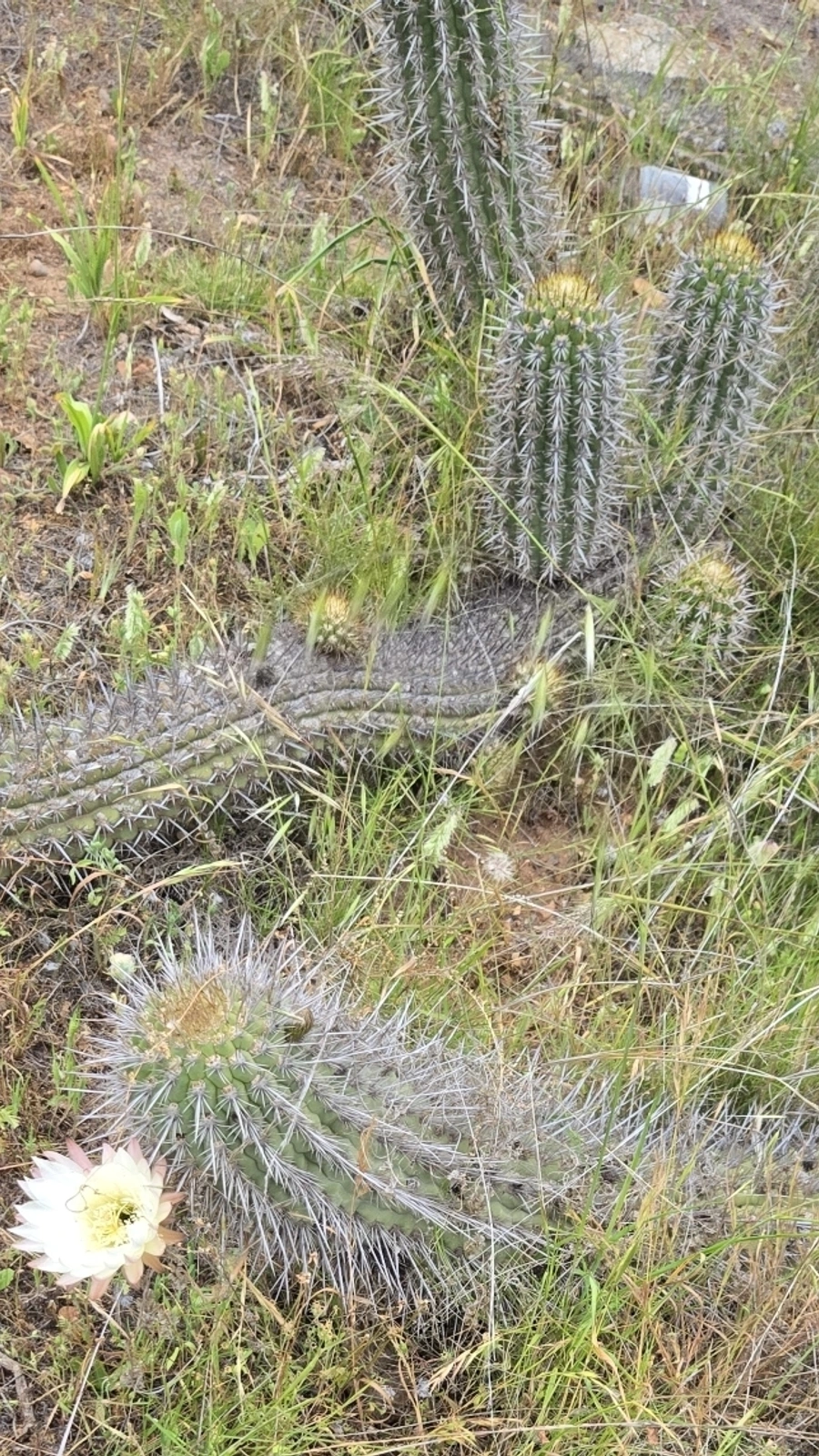 Reference image
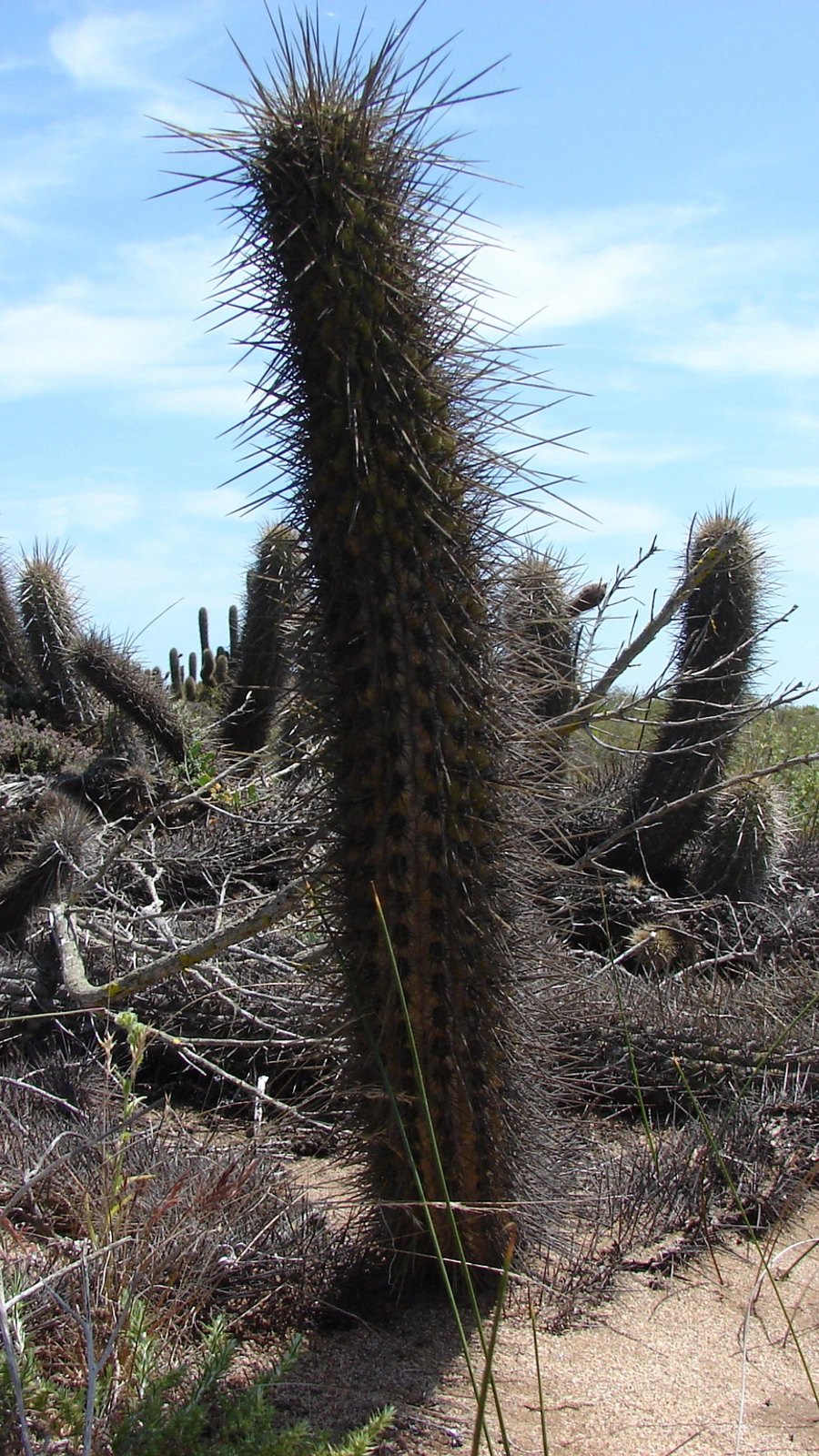 Reference image
Leucostele faundezii is a striking columnar cactus belonging to the family Cactaceae. In its native habitats, it develops into a robust succulent shrub or small tree 1. It is highly prized by succulent collectors for its dramatic, ribbed stem structures and prominent spination.
This species is classified under the genus Leucostele, a group closely related to and sometimes historically merged with Echinopsis or Trichocereus 1. Recent phylogenetic evaluations have supported its classification within Leucostele 2.
Leucostele faundezii is native to Chile, thriving in deserts and dry shrublands 1. It inhabits steep rocky slopes and arid plains, surviving under intense solar radiation and minimal rainfall.
It features erect, grayish-green columnar stems with distinct ribs. The areoles are armed with sturdy, rigid spines that range in color from gray to dark brown. Mature plants produce large, showy, funnel-shaped white flowers near the stem tips.
This desert species demands full sun and exceptionally free-draining soil. Irrigation should be deep but infrequent, adhering strictly to a 'soak and dry' method, allowing the substrate to dry completely between waterings 2.
Overwatering is the primary cause of failure, quickly leading to root rot. Placing the plant in low-light environments causes etiolation, where the stem becomes thin, weak, and pale.
Requires full sun; prolonged shade will cause unsightly stretching and weakness.
Allow the soil to dry out completely. Keep completely dry in winter.
Requires a gritty, mineral-based cactus soil mix with high pumice content.
Equipped with sharp, sturdy spines; handle with gloves and keep out of reach of pets.
Moderate; very easy if not overwatered and given adequate sunlight.
Naturally distributed across the arid valleys and dry Andean foothills of central and northern Chile.
