
Light
Full Sun
Requires full sun, ideally 6+ hours of direct sunlight daily for healthy spines.
 Reference image
 Reference image
Coastal Column Cactus
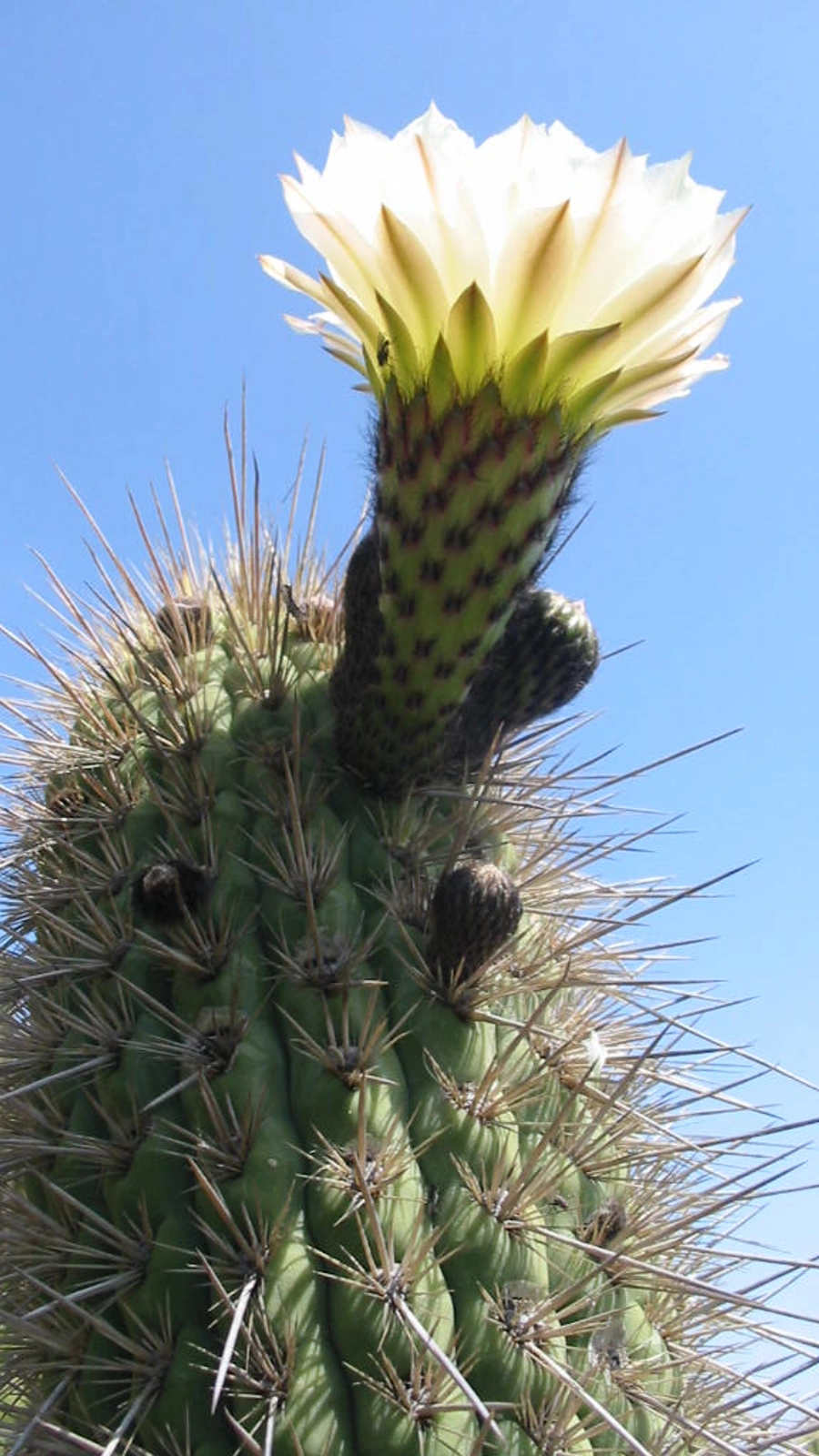
Leucostele litoralis (formerly known as Echinopsis litoralis or Trichocereus litoralis) is a robust, shrubby columnar cactus belonging to the Cactaceae family, native to the coastal cliffs of Chile 1. It is well-regarded for its adaptability to harsh seaside environments and its striking, large nocturnal white flowers.
Originally described in the 1920s as Cereus litoralis, this species spent decades under the broad genera of Trichocereus and Echinopsis. Modern molecular studies have reinstated the genus Leucostele for this group of South American columnar cacti 2. The specific epithet "litoralis" translates from Latin as "pertaining to the seashore."
This species is restricted to the coastal strip of central and northern Chile, specifically spanning the Coquimbo, Valparaíso, and Santiago regions 1. It thrives in gravelly, saline soils on steep slopes directly facing the Pacific Ocean, where it heavily relies on coastal fogs (locally known as camanchaca) for moisture during dry periods.
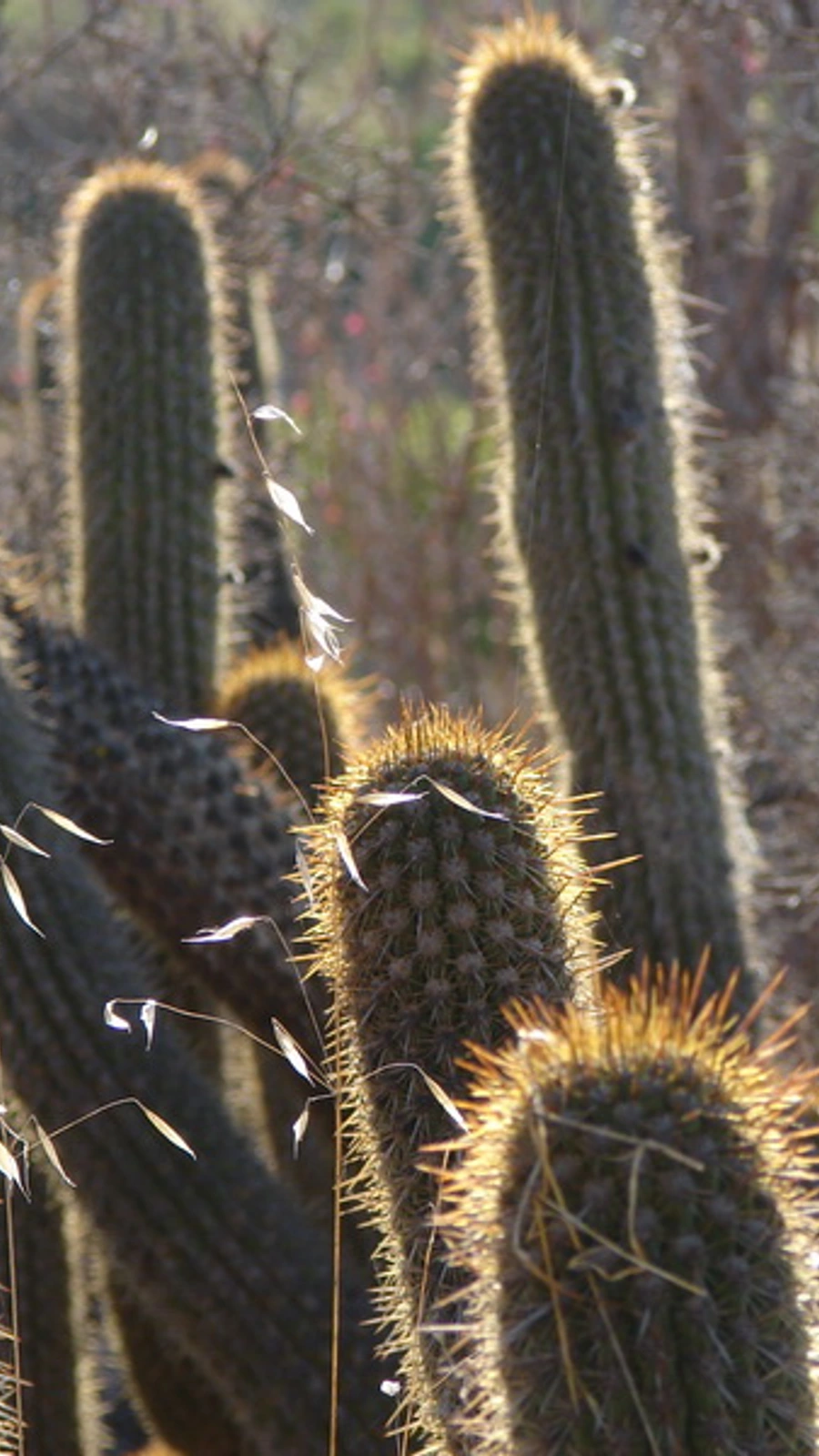
Leucostele litoralis forms multi-stemmed, dense clumps branching from the base, reaching heights of 1 to 2 meters. Individual stems are greyish-green to yellowish-green, 10–20 cm in diameter, featuring 15–20 ribs. The areoles bear stiff, yellowish-grey spines. Large, nocturnal, funnel-shaped white flowers up to 15 cm long emerge in late spring 2.
In cultivation, it requires full sun, excellent mineral drainage, and dry winter conditions. If kept completely dry during winter, it can survive brief light frosts down to -2°C. Potting media must consist of low-organic, mineral-heavy components.
Overwatering and placing the plant in heavy, moisture-retaining soils are the most common causes of root rot. Lack of direct sunlight leads to weak, thin, and pale growth (etiolation).
Requires full sun, ideally 6+ hours of direct sunlight daily for healthy spines.
Allow soil to dry out completely between waterings. Keep dry in winter.
High mineral substrate with pumice, perlite, and coarse sand. Avoid clay.
Spiny and sharp. Place away from high-traffic areas and pets.
Very easy for beginners if overwatering is strictly avoided.
Restricted to the coastal cliffs and marine terraces of central-northern Chile, adapting beautifully to wind and saline ocean air.
