
Light
Full Sun
Full sun with maximum direct light exposure; essential for keeping its dark spine coloration.
 Reference image
 Reference image
Black-Spined Torch Cactus
Leucostele nigripilis (formerly classified as Echinopsis nigripilis) is a shrubby columnar cactus in the family Cactaceae, endemic to the arid coastal regions of Chile 1. It is highly appreciated for its dense, dark spination and large, nocturnal white flowers.
First described in 1860 by Rudolph Amandus Philippi, this species has undergone various taxonomic shifts between Echinopsis and Trichocereus before being integrated into the resurrected genus Leucostele 2. The specific epithet nigripilis translates to 'black-haired' or 'black-spined' in Latin.
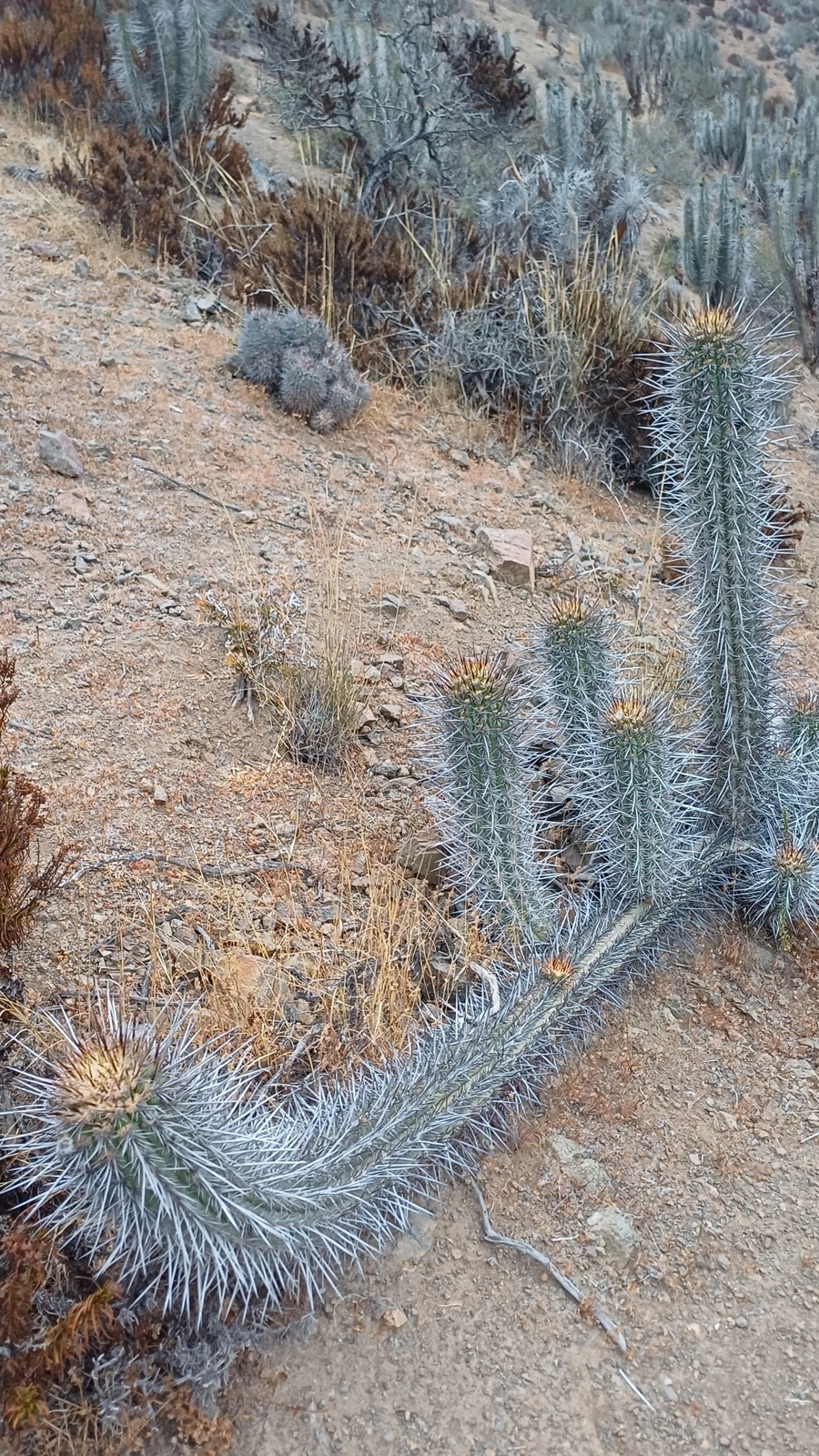
This species is native to northern and central Chile, specifically within the Atacama and Coquimbo regions 1. It thrives in dry coastal shrublands and rocky slopes, where it relies heavily on coastal fog, locally known as 'camanchaca', for moisture during the dry seasons.
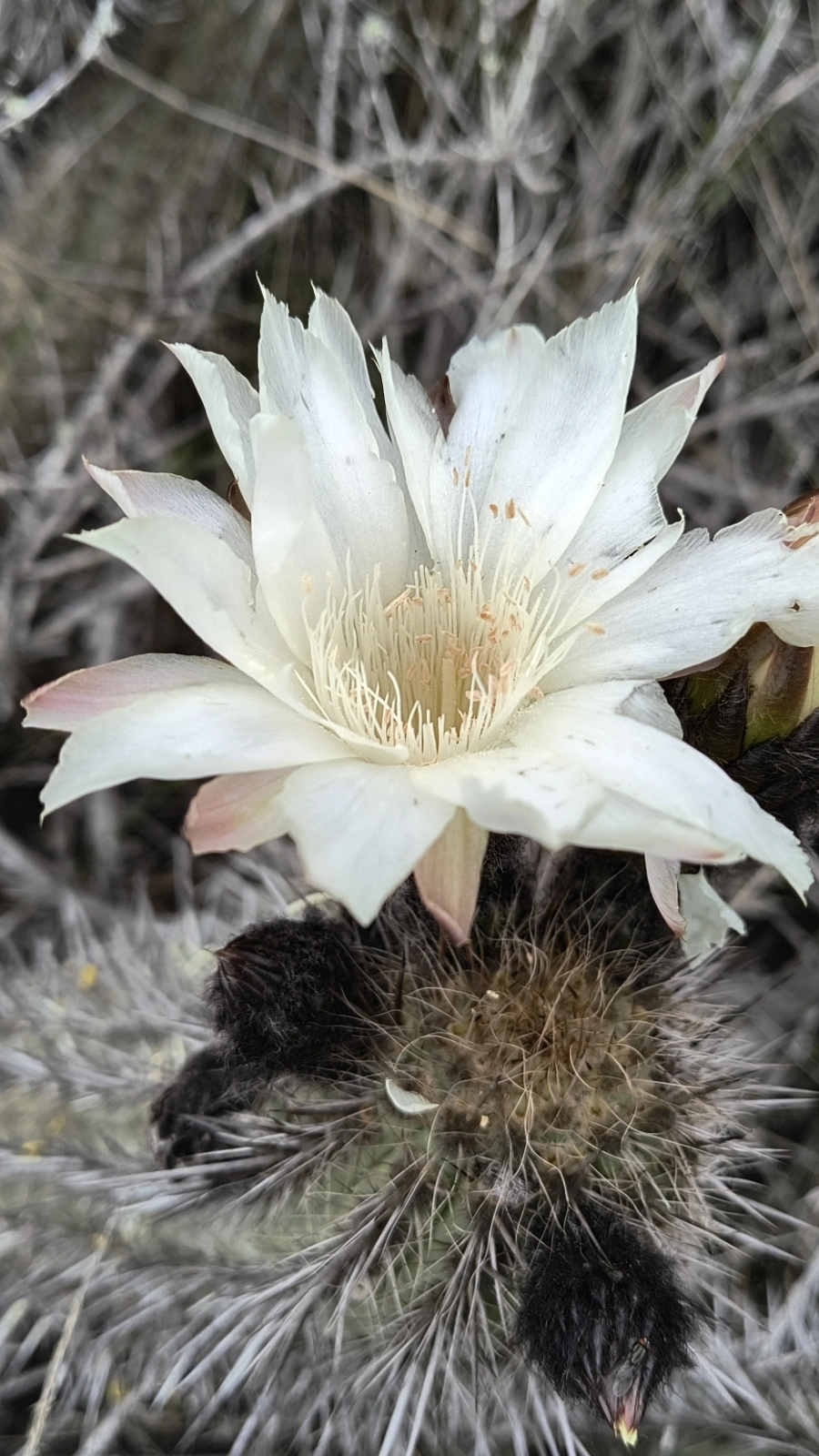
Leucostele nigripilis forms multi-branched shrubs branching from the base, reaching heights of 1 to 1.5 meters. The stems are greyish-green with prominent ribs. The sharp, needle-like spines arise from woolly areoles and are intensely black to dark grey when young. Large, funnel-shaped white flowers bloom during the summer nights, attracting nocturnal pollinators.
In cultivation, this cactus requires maximum sunlight and exceptionally well-drained mineral substrate. Water thoroughly during spring and summer only when the soil is completely dry, and maintain strict dry conditions throughout the winter to prevent rot 2. It can tolerate brief frost temperatures if kept dry.
Overwatering and poor-draining soil mixes are the leading causes of root rot. Lack of sufficient direct sunlight leads to etiolation, where the stems grow abnormally thin, pale, and weak.
Full sun with maximum direct light exposure; essential for keeping its dark spine coloration.
Water deeply in summer once soil dries out; keep completely dry in winter.
Highly porous mineral substrate containing pumice, coarse sand, and minimal organic matter.
Features very sharp spines; handle with thick gloves and keep away from pets and children.
Moderately easy if overwatering is avoided and strong direct light is provided.
Endemic to the arid coastal cliffs and dry shrublands of Chile's Atacama and Coquimbo regions, where plants rely on the local Pacific sea fog for hydration.
