
Light
Full Sun
Requires full, direct sun. Insufficient light leads to weak, stretched growth (etiolation).
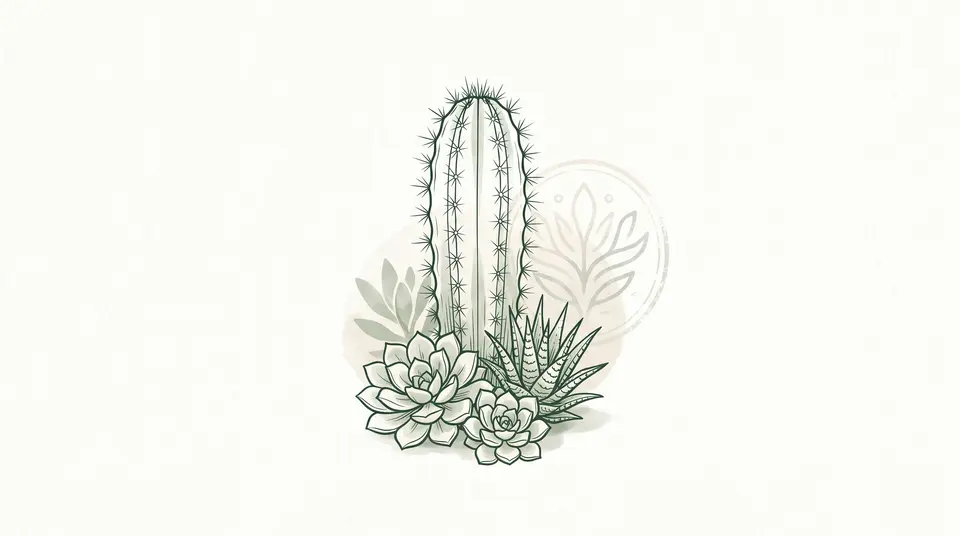 Reference image
Wavy Columnar Cactus
Leucostele undulosa is a distinctive, column-forming cactus species belonging to the family Cactaceae. Known for its heavily ribbed, wavy stems and robust spination, this species is highly adapted to arid environments and is prized among succulent enthusiasts.
Historically classified under broader genera like Echinopsis or Trichocereus, recent molecular studies and Kew's Plants of the World Online database recognize it under the resurrected genus Leucostele 1. The specific epithet "undulosa" refers to the wavy, undulating margins of its stem ribs.
This species is native to the arid and semi-arid zones of Southern South America, where it populates rocky slopes, dry shrublands, and high-altitude deserts 2. It thrives in well-drained mineral soils under intense sunlight.
It features erect, cylindrical stems with prominent, undulating ribs. The areoles are closely set, bearing stiff, greyish to yellowish-brown radial and central spines that shield the plant from harsh sun. Mature specimens produce large, nocturnal, funnel-shaped white flowers near the stem tips.
In cultivation, Leucostele undulosa requires full sun and a very porous, mineral-based potting medium. Watering should be thorough but infrequent, allowing the substrate to dry completely. During the winter dormancy, the plant should be kept dry and cool.
The most prevalent issue is root rot caused by overwatering or compacted soil that retains moisture. Lack of adequate direct sunlight leads to etiolation, where the stem becomes weak, pale, and unnaturally thin.
Requires full, direct sun. Insufficient light leads to weak, stretched growth (etiolation).
Allow soil to dry out 100% between waterings. Keep nearly dry during winter dormancy.
Use a highly gritty mineral mix with pumice, perlite, and coarse sand. Avoid heavy peat.
Armed with sharp, rigid spines. Handle with thick leather gloves and keep away from pets.
Moderate. Easy if watering is strictly controlled and winter rest is respected.
Native to the dry slopes and high-elevation deserts of Southern South America, where it thrives in rocky, well-draining substrates.
